
How to Pitch a Competitive Intelligence Retainer Clients Actually Want to Pay For
A practical guide for agencies on selling competitive intelligence retainers—includes a pitch framework, objection handling scripts, and a sample disc
Chris Edington
10 min read
How to Sell a Competitive Intelligence Retainer: A Practical Guide for Agencies
Here's the thing about selling competitive intelligence: most agencies pitch it wrong from the start.
They lead with features ("we'll track your competitors' ads across Meta, Google, TikTok and LinkedIn") and then wonder why clients shrug and say they'll think about it. The problem isn't the service. It's the framing.
The easiest way to sell a competitive intelligence retainer is to stop pitching it as reporting and start pitching it as an early-warning system that protects ad spend and feeds creative strategy every week. Clients don't pay for data. They pay for the decisions that data makes possible. So your pitch needs to connect ongoing ad monitoring directly to budget decisions, creative briefs and campaign timing, not just "here's what your competitor is doing."
I've seen agencies struggle to sell this as a line item for months, then flip the script and close it in a single call once they reframe it this way. Let's walk through exactly how to sell an ad monitoring service as an ongoing retainer.
Why clients undervalue competitive intelligence (and why that's your opening)
Most clients have a narrow mental model of "competitor research." To them, it's a one-off slide deck someone put together six months ago, skimmed once, then filed away and forgotten. Static reports don't feel like something worth paying for every month.
Here's the deeper issue: most clients have never actually seen ongoing, automated ad monitoring in action. They assume checking competitor ads is a manual task (someone on their team occasionally scrolling through the Meta Ad Library), so naturally they think, "we could just do that ourselves." And technically, they could. But they don't. Almost nobody does this consistently without a system forcing it to happen.
This gap between what clients think competitive intelligence is and what it could actually be is your opening. Agencies that reframe it as continuous intelligence, not a static report, can charge for it monthly without much pushback. They're not selling the same tired concept. They're selling something the client has never experienced before.
Here's a pattern worth pointing out on your next call: most clients only check competitors reactively. A campaign underperforms, someone asks, "Wait, what's our competitor doing differently?" and then there's a scramble to find out, usually too late to do anything useful with the answer. A competitive intelligence retainer flips that from reactive to proactive. Instead of scrambling after the fact, clients see competitor moves the same week they happen, while there's still time to respond.
How to sell a competitive intelligence retainer: a four-step framework
Once a client understands the gap, you need a structure that moves them from "interesting" to "let's start this month." Here's a four-step framework that works consistently on discovery and pitch calls.
1. Anchor the pitch on a cost the client already feels
Don't open with the tool. Open with pain. Ask about wasted ad spend, slow creative refresh cycles, or that moment they got blindsided by a competitor's surprise offer. Every marketing lead has a story like this, so get them to tell it. Once they've named the cost themselves, you're not introducing a new problem. You're offering a solution to one they already feel.
2. Show the client what your ad monitoring service finds
This is where the pitch gets real. Pull up an actual week-over-week comparison for one of their real competitors (new ads launched, ads stopped, budgets clearly scaling) and walk them through it live. This is far more persuasive than any slide deck. You're not describing an ad intelligence tool in the abstract. You're showing them, in real time, something they didn't know about their own market an hour ago.
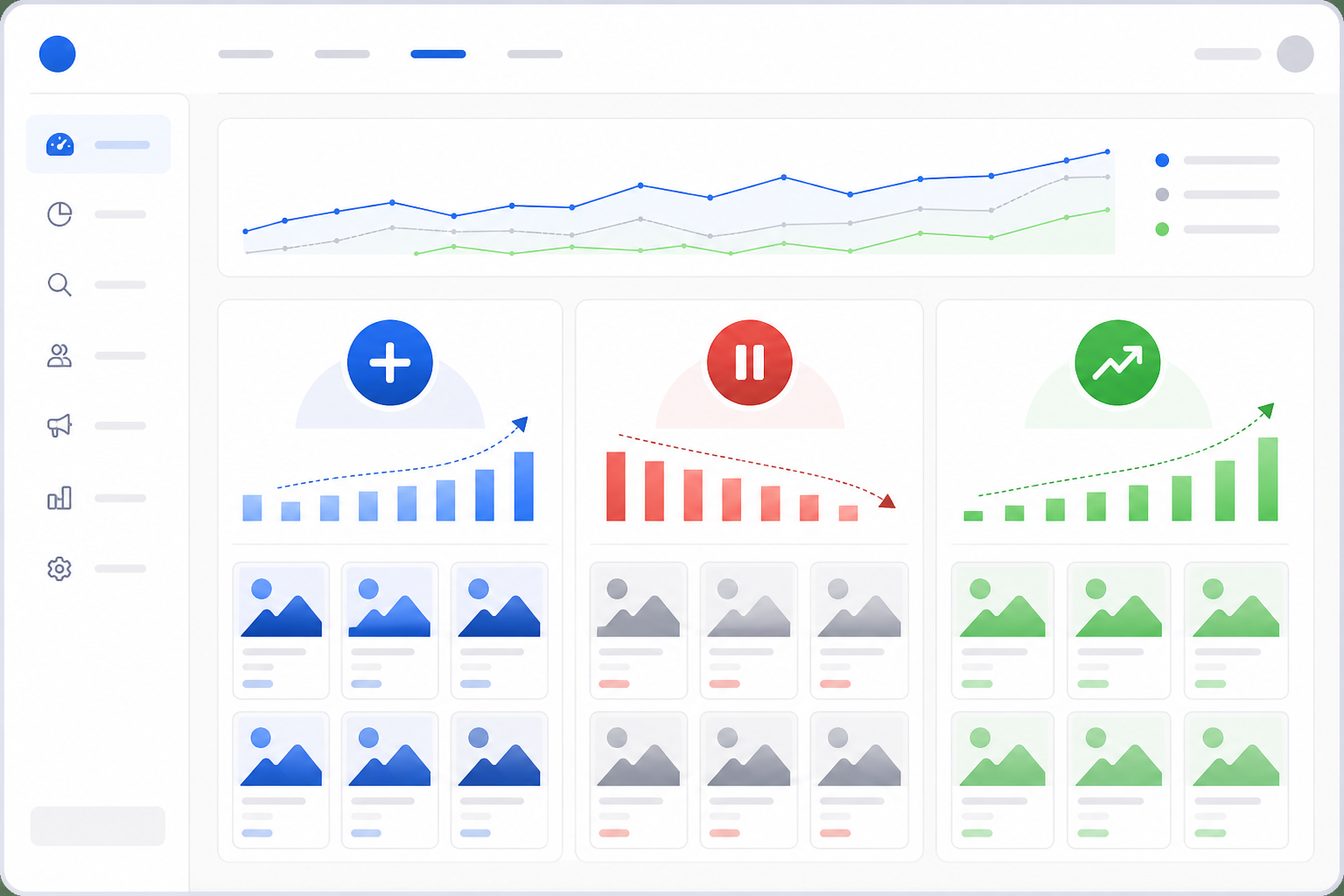
3. Translate competitor ad data into action
Raw data impresses for about 30 seconds, then clients start wondering, "Okay, but what do I do with this?" This is where AI-generated strategic analysis earns its keep. Walk through how it turns raw changes (new creative, paused campaigns, scaling budgets) into a "here's what we should do next" recommendation, the way a senior media buyer would interpret it.
You're handing over a next move, not just a list of changes.
4. Price the retainer as insurance, not overhead
Finally, reframe the monthly fee. Don't position it against other software subscriptions. Position it against the cost of one wasted ad campaign or one missed competitive shift. A few hundred pounds a month is modest compared with burning through a quarter's ad budget on a message a competitor has already proved doesn't work, or missing the window to respond to a competitor's seasonal offer before it eats into market share.
How to handle common competitive intelligence objections
Even a strong pitch runs into pushback. That's normal, and it usually means the client is actually considering it. Here's how to handle the objections that come up most often when selling an ongoing ad monitoring service.
| Client objection | Agency reframe |
|---|---|
| "We can just check Meta Ad Library ourselves." | Manual checking misses Google, TikTok and LinkedIn entirely, and realistically, nobody does it weekly without automation making it part of the process. |
| "This feels like an add-on we don't need yet." | Competitive blind spots compound quietly. The cost of not knowing is invisible, until a competitor's campaign starts outperforming theirs and you're left asking why. |
| "How is this different from the one-time competitor audit we already got?" | An audit is a snapshot. Competitors change creative, offers and spend constantly, so that snapshot goes stale within weeks, sometimes days. |
| "We don't have budget for another retainer." | Position it as a sub-line within their existing strategy retainer rather than a brand-new invoice. That single framing shift removes much of the friction. |
| "Can we trust the AI analysis?" | It accelerates strategic judgement rather than replacing it. The AI flags patterns so your team spends time on recommendations instead of manually comparing screenshots. |
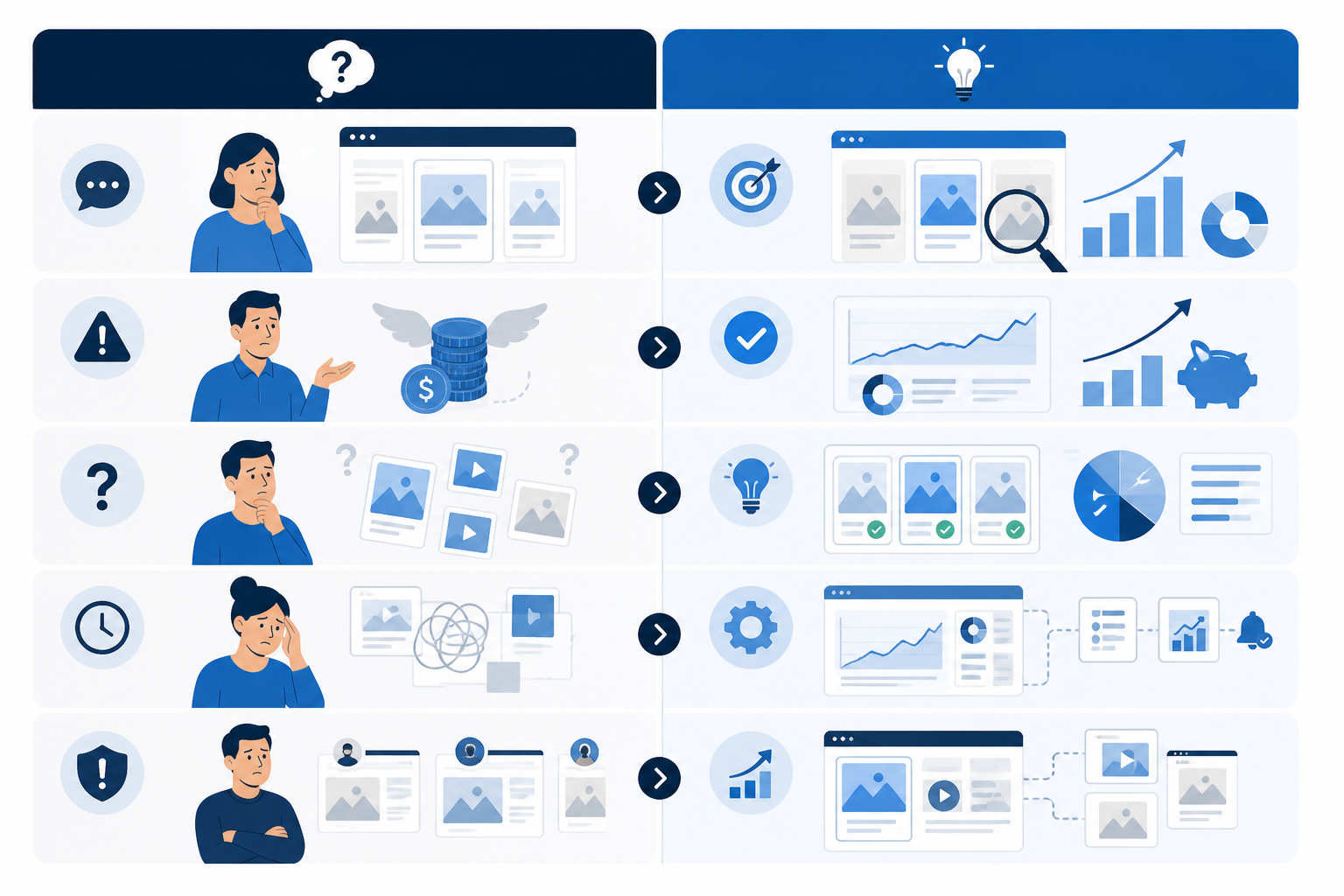
A quick note on that last objection, because it comes up more than people expect. Clients aren't worried the AI will be wrong. They're worried it will replace thinking. Make clear that the strategic analysis is a starting point for your team's recommendations, not a replacement for them. That distinction matters more than any feature you could list.
Sample competitive intelligence talk track for discovery calls
Here's a script structure I've seen work well on actual discovery calls. Adapt the wording to your own voice, but keep the sequence. It's built to move naturally from curiosity to commitment.
Open with a question, not a pitch:
"When's the last time you actually looked at what [Competitor] is running in ads right now, not six months ago, but this week?"
Most clients won't have a confident answer. That uncertainty is exactly what you want to surface early.
Follow with a credibility builder:
"These days, ad monitoring can cover Meta, Google Ads, TikTok and LinkedIn simultaneously, and you don't need access to the competitor's ad accounts. Their website is enough to detect where they're advertising."
This line does a lot of work. It signals that the service is comprehensive, not just a Meta Ad Library check, and frictionless to set up.
Introduce the weekly cadence as the differentiator:
"Every week, we'll show you exactly what's new, what's been paused and what's scaling, plus a written analysis of what it actually means for your strategy. No digging required."
Close with a low-friction ask:
"Rather than trying to monitor everyone in your space, let's start with your top two or three competitors. We can always expand from there once you see the value."
Smaller entry points reduce decision friction dramatically. Asking a client to commit to monitoring ten competitors feels like a big decision. Asking them to start with two or three feels like an easy yes. Once they're seeing weekly insight on real competitors, expanding the list becomes a natural upsell rather than a hard sell.
How to price an ad monitoring retainer
Pricing structure matters almost as much as the pitch itself. Here's how I'd think about structuring tiers:
- Tie pricing to competitors monitored, not flat generic pricing. This mirrors how many ad intelligence platforms, including Rival Ads, are structured, and it makes scaling the offer intuitive for both you and the client. More competitors, more value, more fee - simple logic, easy to justify.
- Starter tier (two to three competitors): Price this low enough to feel like a no-brainer add-on to an existing strategy or media retainer, not a new category of spend. This is your foot in the door.
- Growth tier (five to ten competitors): Position this for clients in genuinely competitive categories, like ecommerce or SaaS, where competitor activity shifts weekly rather than quarterly. These clients will see the value fastest because the pace of change is already visible to them.
- Use whitelabel delivery as a value multiplier. Because the dashboard and weekly digest can be fully whitelabelled, you're presenting your own proprietary intelligence product rather than reselling someone else's tool. That distinction supports meaningfully higher margins, because clients are paying for your agency's strategic layer, not a third-party subscription they could buy directly.
Starting price points around £29 per month per competitor tier, scaling with the number of competitors tracked, can make it realistic to build a retainer that feels substantial to you and affordable to the client.
What to include in a competitive intelligence retainer
A retainer only sticks if the deliverable clearly earns its keep every month. Here's what I'd make sure is included:
- A weekly email digest showing new, paused and scaling ads. Clients should never have to log into a dashboard to feel the value. It should land in their inbox automatically.
- A branded, whitelabelled dashboard so clients see your agency's name on the intelligence, not a third-party ad spy tool. This reinforces that it's your strategic product, not a bolt-on subscription.
- AI-generated strategic commentary alongside the raw comparisons, so clients get a "so what?" with every update, not just a list of creative changes they have to interpret themselves.
- A monthly summary call or written recap that explicitly ties competitor moves back to the client's own campaign calendar and creative pipeline. This is the step that turns intelligence into action, and it's often what separates a retainer that renews from one that quietly gets cancelled after three months.
Competitive intelligence retainer FAQs
How much should agencies charge for a competitive intelligence retainer?
Pricing varies by market, but many agencies find success anchoring the retainer to the number of competitors monitored, starting around a few hundred pounds per month for a small set of competitors and scaling up from there. The key is pricing it as a strategic add-on to existing retainers, not a standalone expense, which makes the ask feel smaller.
Do clients need to give access to their ad accounts?
No, and this is a strong selling point to mention on discovery calls. Since you're monitoring competitors rather than the client's own ads, all you need is the competitor's website. The monitoring tool detects their presence across Meta, Google Ads, TikTok and LinkedIn automatically from there.
What if a client says they already check competitor ads manually?
Acknowledge it, then gently point out the gap: manual checks are usually sporadic, cover only one platform (usually Meta), and rarely happen on a consistent weekly schedule. An ad monitoring service closes that gap by catching changes across major ad platforms automatically, every week, without anyone on the team needing to remember to check.
How is this different from a one-off competitor audit?
A one-off audit is a snapshot in time. It's useful, but stale within a few weeks because competitors constantly adjust creative, offers and spend. A competitive intelligence retainer turns that snapshot into an ongoing feed, which is what makes it valuable enough to bill monthly rather than as a single project fee.
Final takeaway: sell the decisions, not the data
Selling a competitive intelligence retainer isn't about convincing clients that competitor data matters. They already know it does. It's about showing them what consistent, automated visibility looks like and connecting that visibility directly to the decisions they're already making every month about budget, creative and timing.
Frame the service as an early-warning system, demonstrate a real week-over-week change, translate the findings into recommendations, and make the first step easy. Get that framing right, and your ongoing ad monitoring service becomes a practical growth tool, not another report or software subscription.