
Why Whitelabel Competitive Intelligence Is an Agency Growth Lever (And How to Package It)
Explore whitelabel competitive intelligence for UK agencies: package whitelabel ad monitoring, set pricing, and build profitable recurring margins.
Chris Edington
14 min read
Whitelabel competitive intelligence for UK agencies: pricing, packaging and margins
Meta description: Explore whitelabel competitive intelligence for UK agencies, including what whitelabel ad monitoring includes, how to package it, and a worked example of pricing and margins.
If you're running an agency, you've probably had this conversation more times than you'd like: a client asks what their competitors are doing, and you don't have a great answer. Or worse, a prospect asks it in a pitch meeting and you watch the deal slip because you couldn't show them something concrete.
Here's the short version: whitelabel competitive intelligence means an agency rebrands an existing ad-monitoring platform, one that tracks competitor activity across channels like Meta, Google, TikTok and LinkedIn, and resells the reporting as its own service. Platforms like Rival Ads are one example of this model. Agencies typically package the output as a retainer add-on or standalone deliverable, and depending on scope, that can be a genuinely profitable line of work.
It's not the "print money" play some vendors pitch it as, but it is a sensible way to add visible value without building anything from scratch. Below, I'll walk through what whitelabel ad monitoring actually involves, what it doesn't, and a realistic worked example of the economics, including the details that don't make it into most sales decks.
The retainer problem agencies face
Every agency owner knows the retainer stagnation problem. You land a client at a certain fee, you do good work, campaigns perform fine, and then... nothing changes. The client doesn't see a reason to pay more, because from their seat, you're just maintaining what's already there. Meanwhile your costs go up, your best people want raises, and the fee increase conversation gets harder every year.
Here's a version of this I've seen play out often: a mid-sized agency running a £3,000/month retainer for a DTC client. The account manager is good, performance is steady, but the client's marketing director keeps asking in QBRs, "what's [competitor] doing that's working?" The honest answer, most months, is "we haven't had time to check properly." That's not a capability gap. It's a time gap. Nobody on the team has three spare hours a week to manually trawl ad libraries for one client, let alone six.
The real issue isn't performance. It's that most retainers are built around reporting on the client's own campaigns. That's valuable, but it's not strategic. Clients increasingly want to know what's happening outside their own four walls, and "we don't really know" is a weak answer to give when you're asking them to renew at a higher fee.
Some agencies try to solve this in-house. An analyst manually screenshots competitor ads from Meta's Ad Library, pokes around Google's transparency tools, maybe checks LinkedIn if someone remembers to. It's slow, inconsistent, and genuinely painful to scale across multiple clients. By the time the report lands, half the ads have changed anyway. That's billable hours spent on something that feels like admin rather than strategy. TikTok coverage is usually the first thing that gets dropped, too, because manual tracking there is messier still.
This is the gap whitelabel competitive intelligence fills. Instead of building ad-tracking infrastructure from scratch, agencies plug into an existing monitoring platform, rebrand the output, and offer it as a service layer on top.
What is whitelabel competitive intelligence?
There's a lot of loose talk about "whitelabel" in martech, and the term gets applied to some fairly different arrangements. It's worth being precise, because the level of control and responsibility varies a lot between models.
| Model | Branding | Client sees vendor name? | Who handles support? | Who's accountable for accuracy? |
|---|---|---|---|---|
| Affiliate/referral | Vendor's | Yes | Vendor | Vendor |
| Reseller (badged login) | Mostly vendor, agency logo added | Often, in fine print | Vendor, agency relays | Shared, unclear |
| Co-branded | Both | Yes, visibly | Shared | Shared |
| True whitelabel | Agency's | Not typically, depending on plan | Agency (with vendor backend support) | Agency |
With a proper whitelabel ad-monitoring setup, the kind Rival Ads offers on its agency plans, you typically get:
- Agency branding on dashboards and email digests. Rival Ads' whitelabel tier lets you apply your logo and colour scheme; domain customisation depends on plan level, so it's worth confirming exactly what's included before you promise a client "your branding only."
- Control over framing and delivery, so reports can be adapted to match your agency's tone and templates.
- Team roles and competitor assignment, so account managers only see the competitors relevant to their own clients, and you can run multiple client accounts under one agency login.
- A rebranded reporting experience, rather than just a login screen with your logo pasted over someone else's product.
What whitelabel competitive intelligence does not mean is that you take on the underlying infrastructure. You're not scraping ad libraries yourself, and you're not responsible for what happens when Meta changes its API or a transparency tool goes down. That's on the platform provider. But it also doesn't mean the work disappears on your end. Someone at your agency still needs to sanity-check the data, add context the tool can't know (like a product launch or seasonal push), and decide what's actually worth flagging to the client.
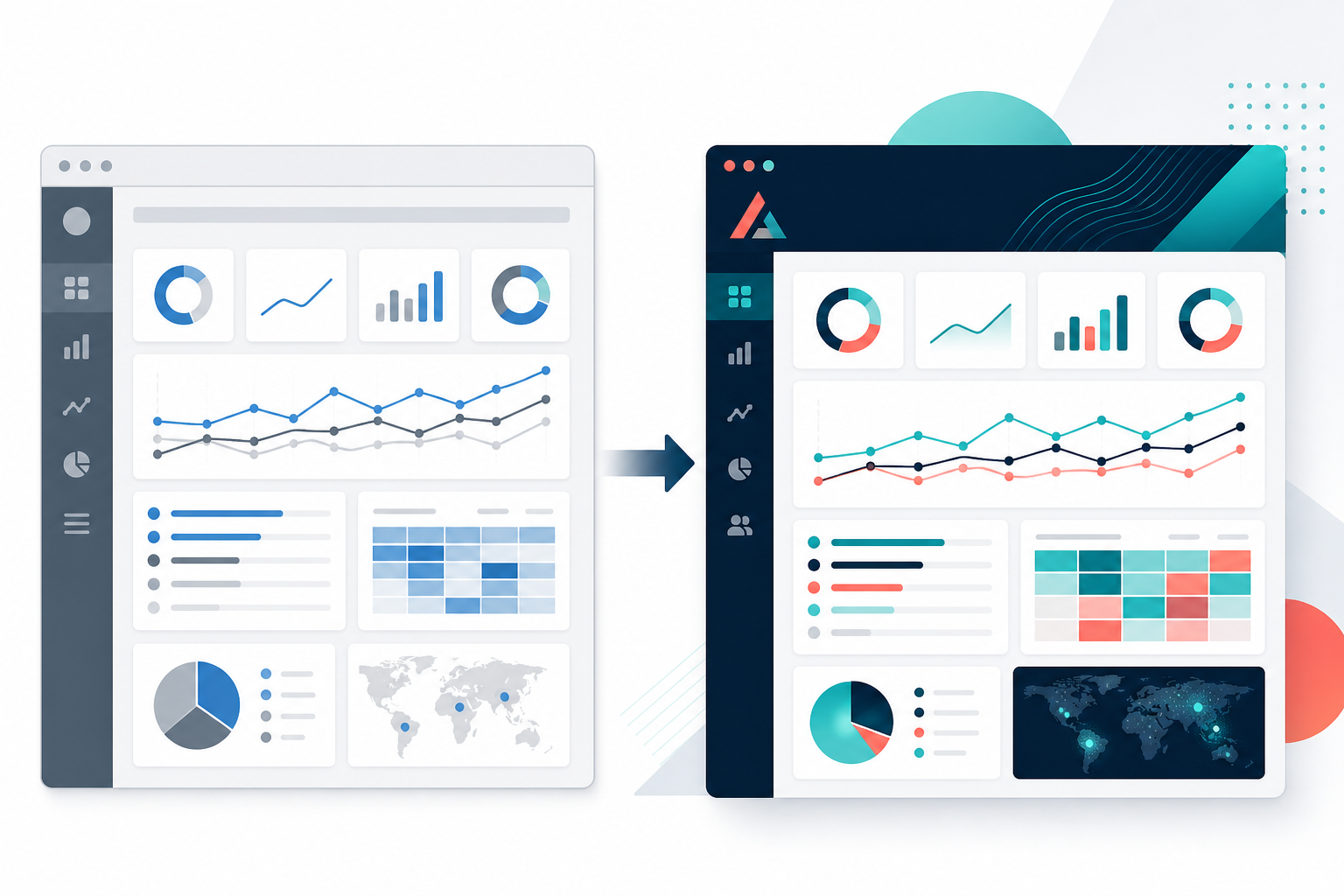 Caption: Illustrative example of a whitelabel dashboard transformation — exact branding options vary by platform and plan.
A genuinely useful way to think about it: true whitelabel competitive intelligence lets you present the reporting experience, from initial competitor setup through to the weekly breakdown, as a capability your agency offers, while being upfront internally (and, where relevant, contractually) about which parts are powered by a third-party platform.
How agencies can package competitive intelligence as a service
Once the whitelabel setup is sorted, the real question is how you sell it. There's no single right packaging model. It depends on your client base, your positioning, and how much analyst time you're willing to put against it. Here are the three approaches I've seen work, with more detail on what each actually requires.
-
Bundle it into existing retainers as a strategic add-on. Best for: existing clients where you want to justify a fee increase without a hard renegotiation. Deliverable: a monthly section added to existing reporting, covering new competitor creative, paused ads, and one or two strategic observations. Effort: roughly 1–2 hours per client per month once the platform is set up, mostly spent reviewing and adding context. Pitch: "We've added competitor ad intelligence to your monthly reporting", a much easier conversation than asking for more money for the same scope.
-
Sell it as a standalone monthly deliverable. Best for: clients who aren't ready for a full media retainer but want ongoing market visibility, common with smaller brands or those between agencies. Deliverable: a branded weekly or monthly digest plus a short written summary, without full campaign management attached. Effort: 2–4 hours per client per month, including a brief client-facing summary call if included.
-
Use it as a lead magnet or trial to win new business. Best for: pitch situations where you want to demonstrate strategic thinking before the contract is signed. Deliverable: a one-off snapshot of a prospect's competitor activity across the channels you cover, presented in the pitch meeting. Effort: a few hours of setup and interpretation per pitch, worth weighing against your typical pitch-to-win ratio.
Most platforms, including Rival Ads, offer some degree of AI-generated analysis alongside the raw creative, flagging what's new, what's been paused, and what appears to be scaling. That's a useful starting point, but it's an inference based on patterns the tool can observe, not a guarantee of what the competitor is actually doing internally. The valuable part of your service is an experienced person reviewing that output, correcting anything that looks off, and translating it into something specific enough to act on. That review step is what separates a report a client skims from one they actually bring into planning.
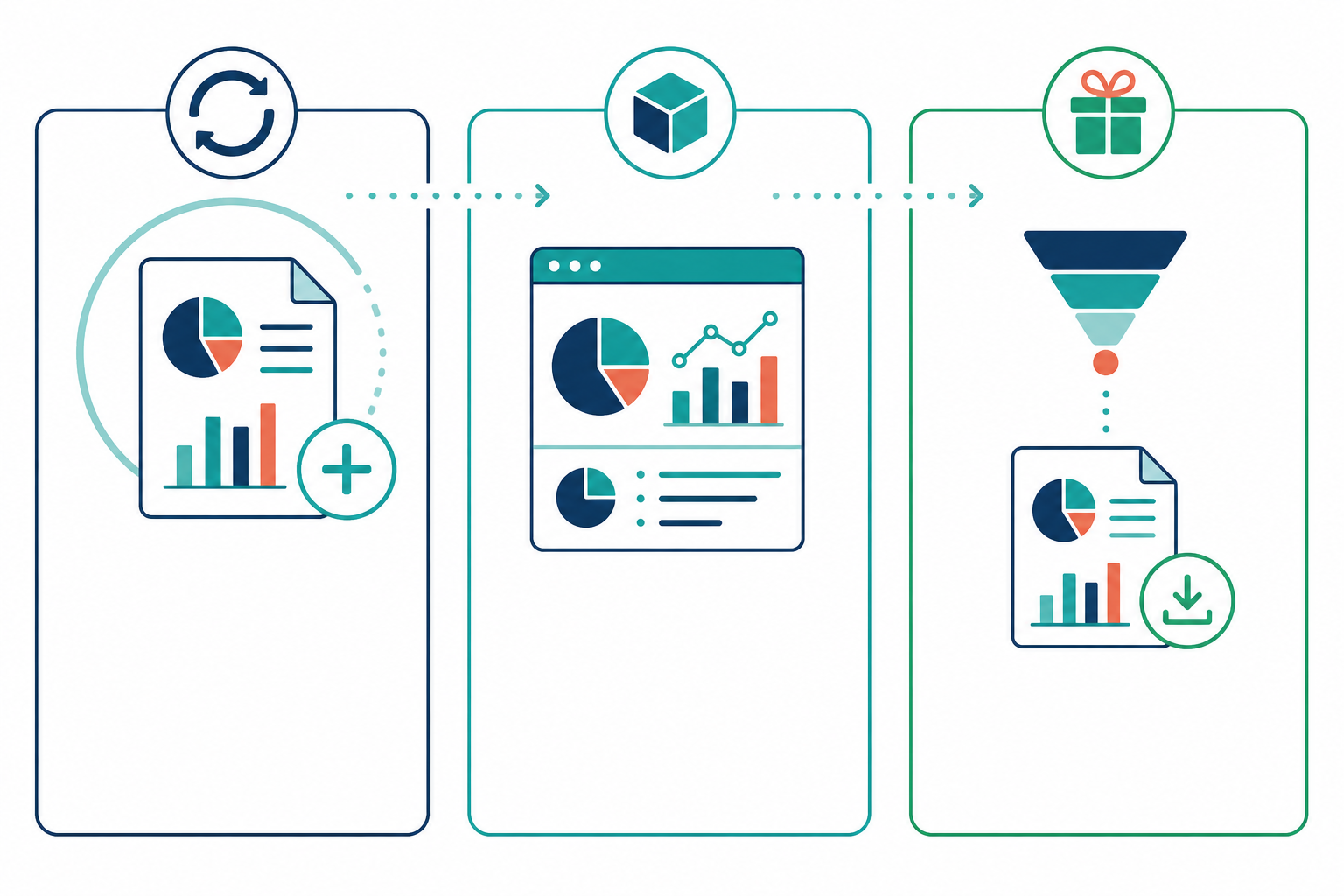 Caption: Three common packaging models for whitelabel competitive intelligence, with effort and audience varying by approach.
There's also a low-effort win in the weekly digest feature, where one exists: with light reformatting, it can double as a branded client newsletter, landing in their inbox even in weeks without a formal check-in call. It's a small thing, but it keeps your agency visibly present between meetings.
A simple whitelabel competitive intelligence launch checklist
If you're adding this as a new service line, it's worth running through a short process rather than switching it on for every client at once:
- Pick one client or use case to pilot with, ideally one where competitor visibility has already come up as a pain point.
- Agree competitor-selection rules, typically 3–5 direct competitors, reviewed quarterly so the list doesn't go stale.
- Set a reporting cadence, weekly digest, monthly summary, or both, depending on how the client prefers to consume it.
- Have a team member validate the data before it goes out, checking that flagged "new" ads are genuinely new, and that nothing obviously wrong has slipped through.
- Build it into your existing QBR or check-in structure, rather than treating it as a separate meeting. This is where the interpretation work pays off.
Whitelabel competitive intelligence pricing and positioning
This is the section where a lot of vendor content gets vague, so let's be specific with a worked example rather than just quoting a margin range.
Worked example: pricing whitelabel ad monitoring for one client
Illustrative example — mid-sized agency, one client, 5 competitors tracked:
| Item | Cost/Time |
|---|---|
| Platform allocation (share of agency plan) | ~£25/month |
| Analyst time: data review & QA | 1 hour/month |
| Analyst time: writing summary/insights | 1 hour/month |
| Account manager time: presenting in QBR | 0.5 hour/quarter |
| Total labour (at £40/hour loaded cost) | ~£80/month |
| Total internal cost | ~£105/month |
| Client price (standalone add-on) | £200/month |
| Gross margin | ~£95/month (~47%) |
This is one scenario, not a universal figure. Your numbers will shift depending on loaded staff costs, how many competitors you're tracking, whether VAT applies to the client (most UK agency services are standard-rated, so factor that into your quoted price), and how much strategic write-up you include. A bare dashboard hand-off with no interpretation costs far less to deliver and should be priced accordingly; a fully interpreted report presented in a QBR costs more in time and can justify a higher fee.
Platform pricing for tools in this category varies by vendor and competitor-tracking volume. Rival Ads' entry tier starts at $29/month at the time of writing, though pricing and tiers can change, so it's worth confirming current rates directly rather than relying on this figure long-term. Agencies reselling this kind of service have reported charging clients anywhere from roughly £150 to £500 a month, depending on competitor count and depth of analysis. Treat that as an illustrative range rather than a benchmark you're guaranteed to hit, especially early on while you're still proving the value.
A few positioning details affect what clients are willing to pay:
- Language matters. "Competitive intelligence retainer" reads as a strategic, ongoing service. "Ad spy report" sounds like a one-off novelty. Same underlying data, different perceived value.
- Tier by competitor count, mirroring how most platforms price. It keeps your margin maths simple and gives clients a clear upgrade path.
- Bundle with creative strategy or media buying work where it fits. When competitive intelligence sits alongside paid media work, it feeds directly into campaign decisions rather than existing as a standalone report, which tends to reduce price sensitivity.
- Don't underprice just because the platform is cheap. A low platform starting price reflects the cost of the tool, not the value of your interpretation, QA, and client-specific context. Those take real time, even if the per-client hours are modest.
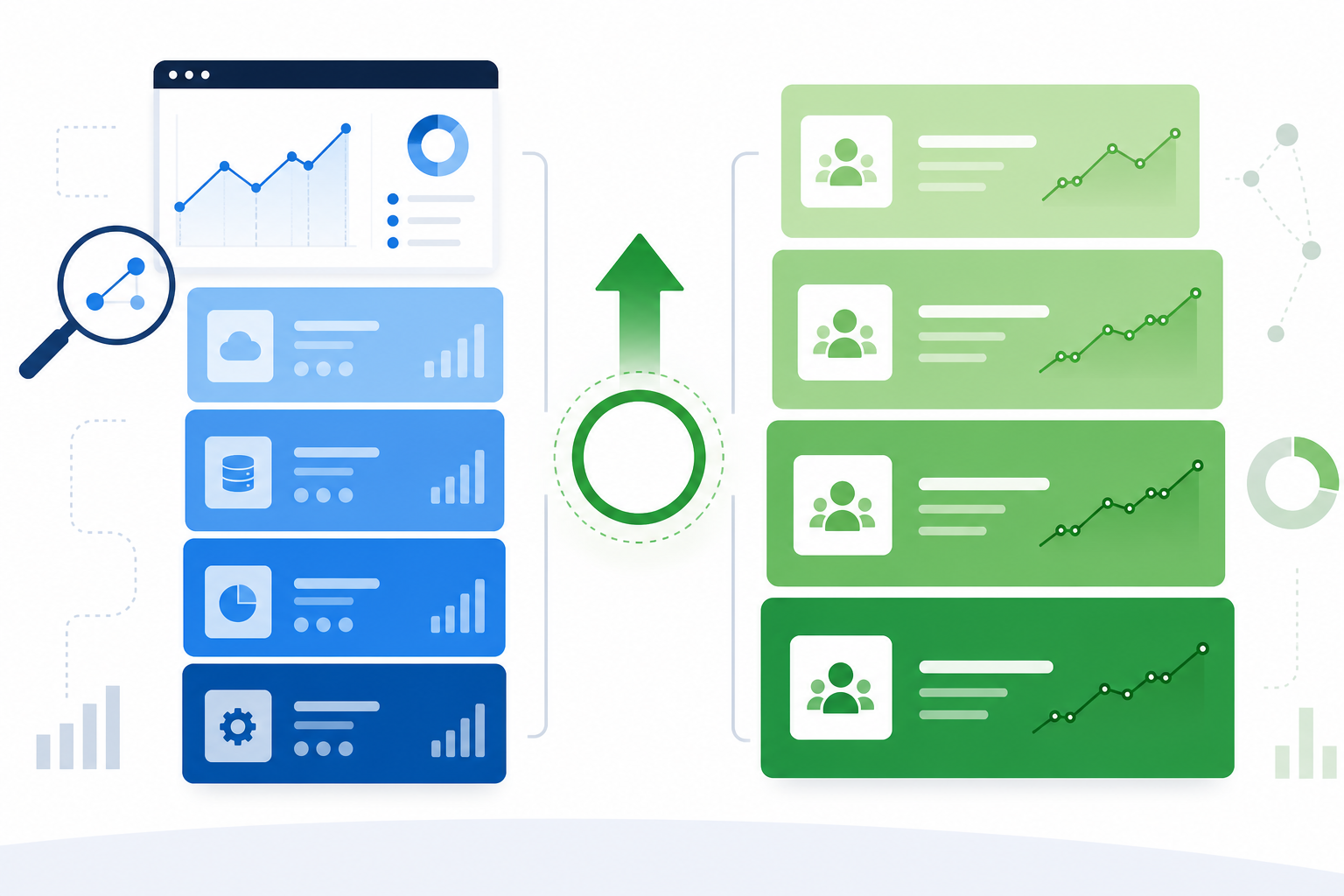 Caption: Illustrative platform cost vs. client pricing ranges. Figures are examples only — confirm current platform pricing directly with the vendor and calculate your own margin based on loaded labour costs.
Why UK agencies are considering whitelabel ad monitoring
A few UK-specific factors make this a reasonable time to look at adding competitive intelligence to your service stack, though it's worth keeping the claims proportionate.
Since the iOS14 privacy changes, clients across sectors have gotten more comfortable asking harder questions about performance context: "what are competitors doing differently?" comes up in reviews more often than it used to. Budget scrutiny has also tightened, particularly in retail, hospitality and B2B SaaS, where procurement teams are comparing agency fees more closely and want to see value beyond standard media management.
For smaller and mid-sized UK agencies specifically, this levels the field somewhat against larger networks. Enterprise-level competitive intelligence used to require dedicated analysts and bigger budgets. Whitelabel platforms lower that bar, letting a five-person agency offer a comparable standard of competitor monitoring to a much larger shop. The interpretation quality still depends on your team's experience, though, not just the tool.
One practical note on onboarding: platforms like Rival Ads can typically start tracking a competitor from just a website URL, without needing access to the competitor's ad accounts (which you wouldn't have anyway). Detection speed and channel coverage can vary. Meta and Google tend to be reliably covered, while LinkedIn and TikTok detection depth is worth testing with a real competitor before you promise specific turnaround times to a client. It's a lower-friction setup than most alternatives, but "automatic" doesn't mean "instant and complete" across every channel and account size.
On VAT and contracting specifics: if you're billing this as a separate line item to an existing UK client, standard VAT rules apply as they would to any other agency service. There's no special treatment for reselling a SaaS tool, so build that into your pricing rather than treating the margin figures above as net-of-VAT.
How to get started with whitelabel competitive intelligence
If you're weighing this up, the lowest-risk way in isn't to roll it out agency-wide on day one. Pick one client where competitor visibility has already come up as a gap, run the five-step checklist above, and see how much actual analyst time it takes before you set pricing for everyone else. The economics above are a starting point, not a promise. Your margin will depend on your labour costs, your competitor count, and how much interpretation you build in.
If you're evaluating platforms, it's worth asking any vendor directly about branding limits, channel coverage by plan, and typical detection timelines for competitors outside the US and major EU markets, since UK-specific coverage isn't always guaranteed by default. A short trial with one real client is a better test than any pricing page.
Frequently asked questions about whitelabel competitive intelligence
What is whitelabel competitive intelligence?
It's a competitive intelligence platform, typically covering ad monitoring across channels like Meta, Google, TikTok and LinkedIn, that agencies can rebrand with their own logo (and in some cases domain) and resell to clients. The agency manages the client relationship and adds interpretation; the underlying platform handles the data collection and reporting infrastructure. Exact branding and coverage depend on the specific vendor and plan.
How can agencies resell competitive intelligence tools?
Most whitelabel platforms let agencies create client-specific dashboards and branded digests, assign competitors to accounts, and manage multiple clients under one login. Agencies typically bundle this into existing retainers, sell it as a standalone service, or use it as a trial to support new business pitches. In all cases, it's worth having someone review the platform's output before it reaches a client, since automated analysis can occasionally misread a paused test or a creative refresh as something more significant.
What should agencies charge for competitor ad reports?
There's no fixed market rate. Pricing depends on competitor count, depth of analysis, and whether it's bundled with other services. Some agencies charge in the range of £150–£500 per month, but that figure isn't independently verified across the market, so it's best treated as a starting point for your own calculation rather than a benchmark. Work out your actual labour cost per client first, then price to a margin you're comfortable with.
Do I need technical skills to set up whitelabel ad monitoring?
Generally no. Most platforms, including Rival Ads, let you start by entering a competitor's website URL rather than connecting ad accounts. That said, "automatic detection" varies by channel and competitor size, so it's worth testing with a real client's actual competitors before committing to specific turnaround promises in a sales conversation.