
The Ultimate Guide to Ad Spy Tools for Marketers in 2025 (Buyer's Guide)
Use this buyer’s guide to compare ad spy tools by platform coverage, refresh rate and analysis quality before choosing one for your team.
Chris Edington
11 min read
How to Choose the Best Ad Spy Tool: A Buyer's Guide for UK Marketing Teams
Meta description: Use this buyer’s guide to compare ad spy tools by platform coverage, refresh rate and analysis quality before choosing one for your team.
If you've spent any time this year manually clicking through the Meta Ad Library, trying to remember which competitor changed their offer last week, you already know the problem. Here's the short version: a good ad spy tool should do three things well. It needs to cover the platforms your competitors actually advertise on, refresh often enough that you catch changes while they're still useful, and turn raw ad data into strategic insight rather than just handing you a pile of screenshots to squint at.
Most tools nail one of these three. Maybe two if you're lucky. Almost none do all three well, which is exactly why the buying decision comes down to asking the right questions before you sign a contract.
I've spent a lot of time evaluating competitive ad intelligence software—partly because I work at Rival Ads, and partly because I wanted to understand what actually separates a useful tool from an expensive bookmark manager. This guide is the framework I wish existed when I started looking.
What Should an Ad Spy Tool Actually Do?
Let's move past the dictionary definition. “Spying on competitor ads” sounds simple, but the job to be done is more specific than that. What you actually want is a system that tracks new creative launches, catches messaging shifts and flags offer changes without you having to manually check anything.
More importantly, you want to see what's scaling versus what's been quietly paused. A static snapshot of “here are the ads running right now” tells you almost nothing on its own. What matters is the trend—is your competitor doubling down on a particular angle, or did they test something for two weeks and kill it? That distinction is the whole ball game for competitive strategy.
The real value proposition of any ad monitoring tool is time. UK marketing teams I talk to are often spending several hours a week manually checking the Meta Ad Library, the Google Ads Transparency Center and occasionally remembering to look at TikTok Creative Center. That's hours that could go towards actually building campaigns instead of screenshotting other people's.
A useful ad spy tool should help you:
- Discover competitor ads across the major advertising platforms
- Track new, active, paused and recurring campaigns over time
- Monitor changes in creative, copy, offers and landing pages
- Compare competitor messaging and positioning
- Receive clear insights instead of unstructured ad data
- Share findings with your marketing team or clients
Which Platforms Should an Ad Spy Tool Cover?
Here's where most ad spy tools quietly fall short. They cover one platform brilliantly and treat the rest as an afterthought—or ignore them entirely. That's a real problem because competitors don't stay in one channel. A brand shifting budget from Meta to TikTok, or launching a LinkedIn push ahead of a product launch, simply won't show up if your tool only watches Facebook and Instagram.
Each native ad library also has real limitations worth understanding before you rely on it.
Meta Ad Library
The Meta Ad Library is the broadest of the four public repositories, covering Facebook, Instagram, Messenger and Audience Network. But for ordinary commercial ads, it's mostly focused on what's currently active rather than a full historical archive. That seven-year retention only applies to political and social-issue ads, not your typical product campaign.
Google Ads Tracking and the Ads Transparency Center
Google Ads tracking through the Ads Transparency Center is advertiser-centric rather than built for competitive research. Search results can vary by country, language and verification status, which means search ads in particular are genuinely harder to monitor consistently than display or video creative.
TikTok Creative Center
TikTok Creative Center gives you Top Ads, Keyword Insights and trend data—useful for spotting creative patterns, but it's a curated sample of high performers, not a complete index of everything running. You'll overrepresent viral hits and miss ordinary, newly launched campaigns.
LinkedIn Ads Library
LinkedIn's Ads Library is narrower still, with less standardised historical depth. It's genuinely valuable for B2B positioning research, but spend, impressions and targeting details are often incomplete—and no third-party tool can reliably fill those gaps.
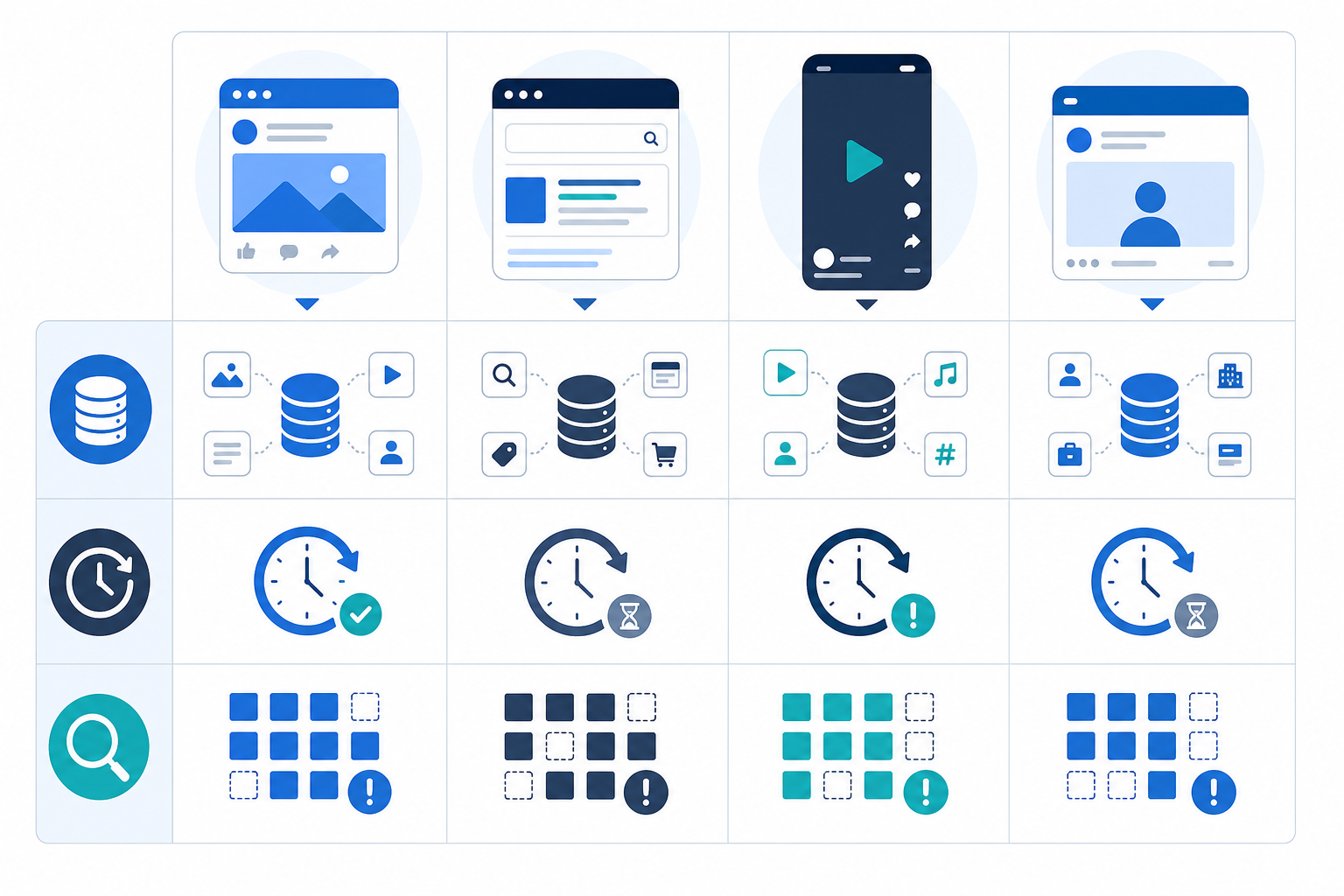
The practical takeaway: native libraries expose creative and some delivery metadata, but none of them reveal conversion rates, margins or full campaign structure. So when you're evaluating a tool, judge it on how well it indexes history, captures landing pages and normalises data across platforms—not on how many ads it can display in a demo.
This is precisely why we built Rival Ads around needing only a competitor's website. You give us the URL, and we auto-detect their presence across Meta, Google Ads, TikTok and LinkedIn—no separate searches and no remembering which platform to check this week.
How Important Is Data Freshness for Ad Monitoring?
Here's a distinction that trips up a lot of buyers: there's a big gap between a tool that claims “real-time” monitoring and one that actually crawls fresh data on a meaningful schedule. Some platforms re-check the same stale dataset daily and call it a refresh, which looks good on a sales page but doesn't actually tell you anything new.
In practice, weekly monitoring tends to be the sweet spot for strategic decision-making. Ads typically run for days or weeks before they're edited or paused, so a weekly cadence catches meaningful shifts without burying your team in minor daily noise that doesn't actually change your strategy. The exception is genuinely fast-moving categories—if you're in a sector where competitors iterate creative multiple times a week, you'll want to press any vendor on exactly how real their real-time claims are.
At Rival Ads, we fetch every active ad weekly, including the real creatives, exact copy and links—not just a metadata summary. That means when you open your dashboard on a Monday, you're looking at what actually changed, not a rehash of last week's data with a new timestamp slapped on it.
Does the Tool Provide Strategic Analysis or Just Raw Ad Data?
This is probably the most underrated part of choosing an ad spy tool, and it's where the gap between “useful” and “expensive noise” really shows up.
A lot of tools hand you a feed of screenshots and call it competitive intelligence. That's not intelligence—it's a filing cabinet. Real value comes from what you do with the data, and specifically from three things:
- Week-over-week differences that clearly show what's new, what's been stopped and what's continuing to scale—rather than making you compare two static lists yourself
- Strategic interpretation, not just a change log—did a competitor add urgency messaging because a promotion is ending, or are they testing a new positioning angle entirely?
- AI-generated analysis that reads changes the way a senior media buyer would, spotting patterns a junior analyst might miss after their third coffee
- Delivery that fits your workflow—a dashboard for deep dives plus a weekly email digest for the person who just needs the highlights before a Monday meeting
- Clarity on “why it matters”, not just “what changed”—this is the single best question to ask any vendor during a demo
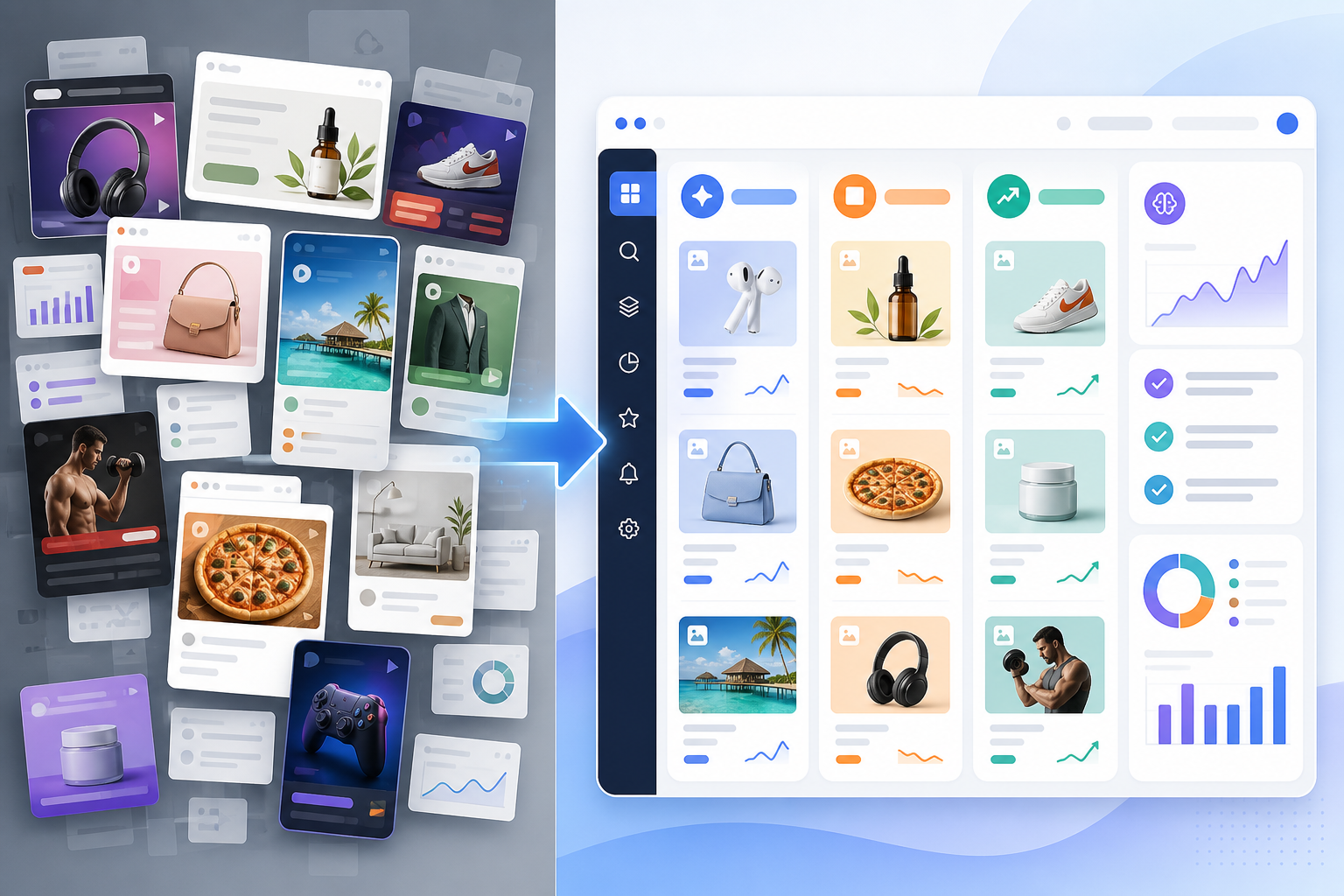
This is exactly the gap we tried to close with Rival Ads. We use Claude to generate a strategic analysis layer on top of the raw ad differences, so instead of just seeing “12 new ads detected,” you get an interpretation of what those changes actually suggest about a competitor's positioning, budget priorities or upcoming launch. It's the difference between a report and an analyst.
Do You Need to Connect Your Ad Accounts?
Here's a question that doesn't get asked enough during procurement: does this tool need access to your ad accounts, or just the ability to look at a competitor's public presence?
Some ad spy tools require OAuth access into your own Meta, Google or LinkedIn accounts to function. That raises legitimate security and compliance concerns, especially for agencies juggling multiple client accounts—you’re essentially granting a third party a door into systems that hold real spend data and account permissions.
Website-only detection sidesteps this entirely. You provide a competitor's URL, the tool identifies where they're advertising and that's it—no account linking, no permissions review and no security questionnaire from your IT team. For agencies managing dozens of competitors across multiple clients, this isn't a nice-to-have; it's genuinely simpler to deploy at scale. It's also one of the core design decisions behind how Rival Ads works—competitor monitoring shouldn't require handing over the keys to your own accounts.
Questions to Ask Before You Buy an Ad Spy Tool
Before you commit to any competitive ad intelligence software, run through this checklist. It'll save you from discovering the gaps after you've already paid for a year upfront.
- Which ad platforms does it actually cover, and how deep is that coverage? Ask specifically about Meta, Google, TikTok and LinkedIn—not just whether it “supports” them.
- How often is data refreshed, and is that guaranteed or best-effort? Push for specifics, not marketing language like “real-time”.
- Does it just show ads, or does it explain what's changing and why? This is the analysis question—ask to see an example output, not just a feature list.
- Can my whole team use it, with roles and competitor assignments? If you're a team of five tracking fifteen competitors, you need proper collaboration features, not one shared login.
- If I'm an agency, can I whitelabel this and resell it as my own? Some tools support this natively; others make it awkward or forbid it in the terms.
- What's the pricing model—per competitor, per seat or flat rate? This matters a lot as you scale coverage over time.
- Is there a free trial or low-cost entry tier to test data quality first? Never buy competitive intelligence software on a demo alone—test it against a competitor you already know well.
A Simple Framework for Evaluating Ad Spy Tools
If you take nothing else from this guide, remember the three pillars: platform coverage, data freshness and analysis quality. Every ad spy tool on the market is a trade-off between these three, and the right choice depends on which trade-offs actually matter for how your team works.
We built Rival Ads around closing all three gaps at once—full coverage across Meta, Google Ads, TikTok and LinkedIn, a weekly refresh that captures real creatives and exact copy rather than stale metadata, and AI-powered strategic analysis that interprets changes instead of just logging them. No ad account connection required, whitelabel available for agencies and team collaboration features built in from the start. Plans start at £29/month equivalent tiers based on how many competitors you're tracking, which tends to make it accessible whether you're a solo marketer keeping tabs on three rivals or an agency managing dozens of client accounts.
Whoever you end up choosing, don't buy based on a features page. Ask the questions above, test the tool against a competitor you already know inside out and see whether the output actually saves you time or just relocates the manual work into a different browser tab.
Frequently Asked Questions About Ad Spy Tools
What features matter most in an ad spy tool?
Three things separate genuinely useful tools from glorified screenshot collections: platform coverage (does it track Meta, Google, TikTok and LinkedIn, or just one?), refresh rate (how often is the data actually updated?) and analysis quality (does it just show you ads, or does it tell you what's changed and why it matters strategically?). If a tool nails all three, it'll save your team real hours every week.
How do ad spy tools get their data?
Most legitimate ad spy tools pull from public ad transparency sources—like Meta's Ad Library and Google's Ads Transparency Center—then structure and enrich that data for easier analysis. The best tools automate this collection on a schedule, daily or weekly, so you're not manually checking each platform yourself. Some tools, like Rival Ads, only need a competitor's website URL to automatically detect and monitor their presence across all major ad platforms.
Do ad spy tools require connecting my ad accounts?
It depends on the tool. Some require you to connect your own Meta, Google or LinkedIn ad accounts via OAuth, which can raise security and permissions concerns—especially for agencies managing multiple clients. Others, like Rival Ads, work purely from a competitor's website address with no account connection required at all, which tends to be faster to set up and less risky from a data access standpoint.
Is a weekly refresh rate enough to catch competitor ad changes?
For most strategic use cases, yes. Ads typically run for days or weeks before they're refreshed or paused, so a weekly cadence usually catches meaningful shifts without burying your team in minor noise from daily fluctuations. The exception is if you're in a fast-moving, high-spend category where competitors iterate creative multiple times a week. In that case, ask any prospective tool exactly how “real-time” its real-time claims really are.