
7 Ways Agencies Win New Clients With Whitelabel Ad Monitoring
Win new agency clients with whitelabel ad monitoring: use free competitor audits and branded reports to strengthen pitches and convert prospects faster.
Chris Edington
14 min read
The fastest way to win new agency clients isn't a flashier pitch deck. It's showing a prospect what their competitors appear to be doing on Meta, Google, TikTok and LinkedIn before you've even signed them. Whitelabel ad monitoring tools like Rival Ads let you generate a branded competitor snapshot in minutes, turning cold outreach into a warmer conversation and giving your sales team a concrete reason to follow up.
I've sat through enough agency pitches to know that most of them sound the same. "We'll grow your ad account." "We'll optimise your funnel." "We'll bring fresh creative ideas." None of these promises are wrong, exactly. They're just abstract, and abstract promises rarely close deals on their own. What tends to get a prospect leaning forward is something specific: a competitor's actual ad, sitting on screen, with the copy and creative they're currently running.
That's the shift I want to walk you through in this post. Instead of treating whitelabel ad monitoring purely as a retention tool for existing clients (which it also is), let's look at how UK agencies are using it as a prospecting tool. Here are seven ways to use whitelabel ad monitoring before a contract is even signed, along with a few honest caveats about what this kind of tool can and can't actually tell you.
1. Use a free competitor audit as a pitch opener
Most agencies say they'll grow accounts. Very few walk into a first call already holding intelligence on the prospect's biggest rival. That gap is your opening.
Here's why the "we'll grow your ad account" pitch tends to fall flat: it's a promise about the future, and prospects have heard some version of it from a dozen other agencies. Showing them a competitor's live ad creative and copy is different. It's evidence, not a promise. It shows you've already done some homework before they've paid you anything.
The practical workflow is fairly simple, though it's worth being precise about what's actually happening. With a tool like Rival Ads, you typically enter a competitor's website, and the platform scans public ad libraries and placements to surface ads it can find running on Meta, Google Ads, TikTok and LinkedIn. In a few minutes you'll usually get a snapshot of creative, copy and destination links for ads that are currently live and publicly visible. It's worth being upfront with yourself and your prospect: this reflects what's publicly detectable, not necessarily every ad a competitor is running, and it can't tell you actual budgets, only what's visibly active or has recently changed.
What makes this useful in a sales conversation is the week-over-week change data: new ads that have appeared, ads that seem to have stopped running, creative that's been refreshed. These are observations, not confirmed facts about strategy or spend, but they're still useful talking points when framed honestly. Something like: "Your competitor added three new Meta creatives last week and a couple of older ones seem to have come down. Worth digging into what that might signal." Framed as a hypothesis rather than a certainty, it still makes a discovery call feel more like a strategy session than a pitch.
A simple three-step version of this for your own pitching:
- Pull up the competitor's site in the tool and let it surface current ad activity.
- Scan for anything that's changed in the past 7–14 days: new creative, paused ads, or an obvious new offer.
- Pick one genuinely interesting observation and build your opening conversation around that single insight, not the full data dump.
One thing I'd flag: frame the audit as a genuinely useful bit of insight, not as leverage. The moment it feels like a sales trick, prospects get defensive. The moment it feels like honest curiosity about their market, they tend to get curious back, and that's usually what earns you the second meeting.
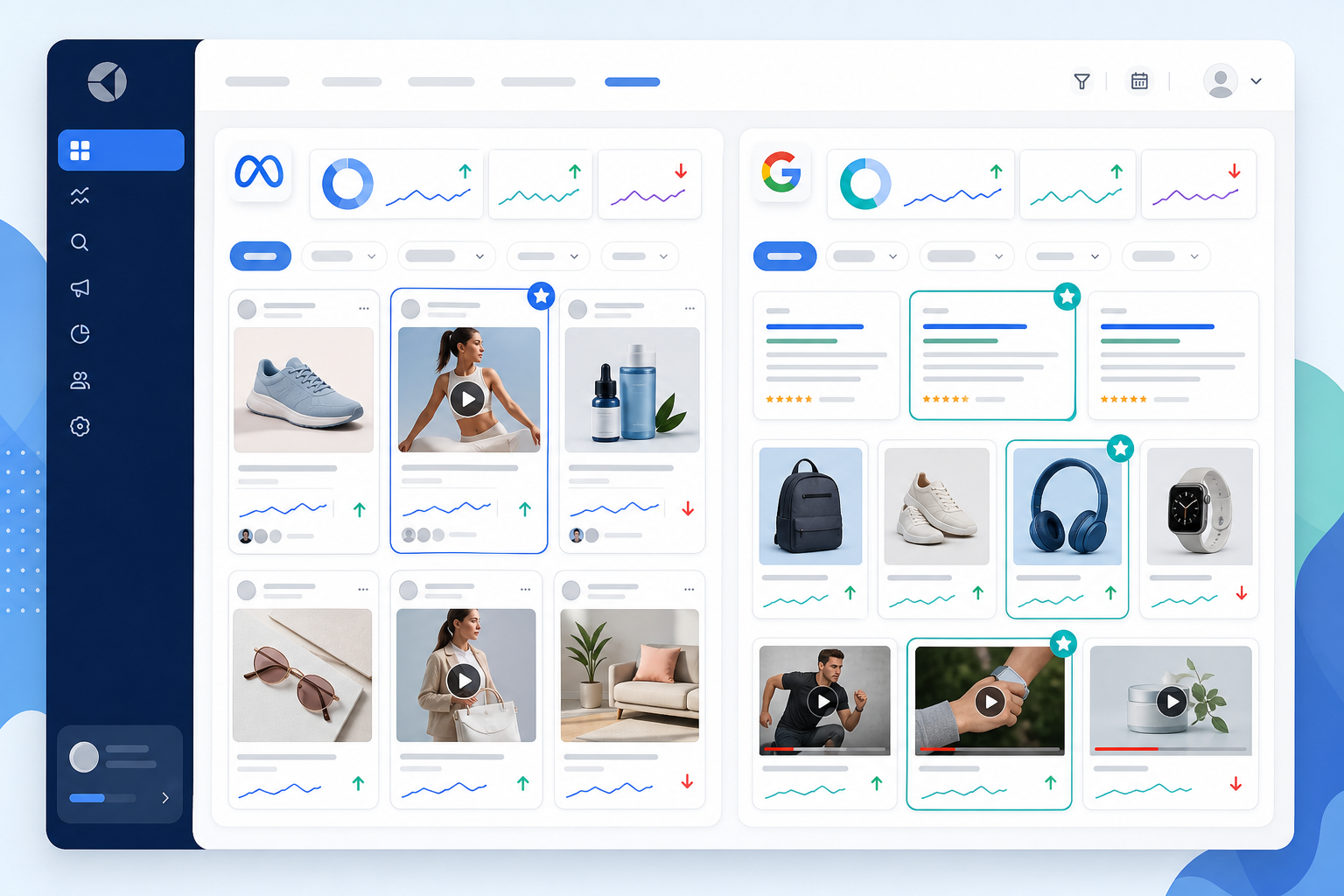
2. Turn competitor ad insights into a sales deck slide
Once you've got audit data, don't just email a PDF and hope for the best. Build it into your actual sales deck. One well-designed slide can do more work than ten slides of agency credentials.
A simple slide formula that works well:
- Observation: What you noticed, such as "Competitor X launched two new Meta creatives in the last 10 days."
- Implication: What this might mean for the prospect, such as "They may be testing a new offer or targeting a new audience segment."
- Recommended next step: What you'd test or investigate if you were managing the account.
- The question it raises: Something that invites discussion, like "Is this something your current approach is set up to respond to quickly?"
A few practical notes:
- Pick one or two standout ads, not the whole library. A "here's what they're doing that you're not" slide lands better than a data dump.
- Use AI-generated analysis as a starting point, not gospel. Rival Ads includes an AI-generated strategic summary of what's changed, which can give you a useful first draft of an interpretation. Treat it as a hypothesis to sense-check, not a confirmed insight, before you put it in front of a client.
- Keep it visual. Actual ad creative tends to land better than a paragraph describing it.
- Don't overwhelm them. One strong insight beats five mediocre ones. Save the deeper competitor breakdown for after they've signed.
- Be careful with attribution. If you're displaying a competitor's actual ad creative, keep it factual and avoid disparaging language. You're presenting market observation, not a judgement on their strategy.

3. Offer whitelabel ad monitoring as a limited-time onboarding perk
Signing a new client is only half the battle. The first few weeks of onboarding are where trust either builds or quietly erodes. Accounts need setting up, creative needs briefing, strategy needs agreeing. It can feel slow from the client's side, even when you're working flat out behind the scenes.
This is where a free 30-day competitor monitoring window can earn its keep. You might position it as a signing incentive: "While we build out your campaigns properly, we'll also track your top two or three competitors across Meta, Google and TikTok so you're not flying blind." Whitelabel ad monitoring tools are generally affordable enough to make this viable. Rival Ads, for example, has entry-level plans in the region of £25–£30 a month depending on how many competitors you're tracking. It's worth checking current pricing directly, since plans and features do change. The point isn't that it's free to you, it's that the cost is low enough relative to the perceived value that it's an easy inclusion.
Be upfront with clients about what this includes: how many competitors, which platforms, how often reports go out, and what happens after the 30 days, whether it rolls into a paid add-on or stops. A clear, honest offer builds more trust than a vague "we'll keep an eye on things."
The weekly email digest is genuinely useful here. Instead of the client wondering what's happening during onboarding, they're getting a regular, branded update on competitor activity: new ads, paused campaigns, anything that's visibly shifted. It keeps them engaged and reassured that you're already adding value before their own campaigns even go live.
4. Bundle competitor ad monitoring with existing retainer packages
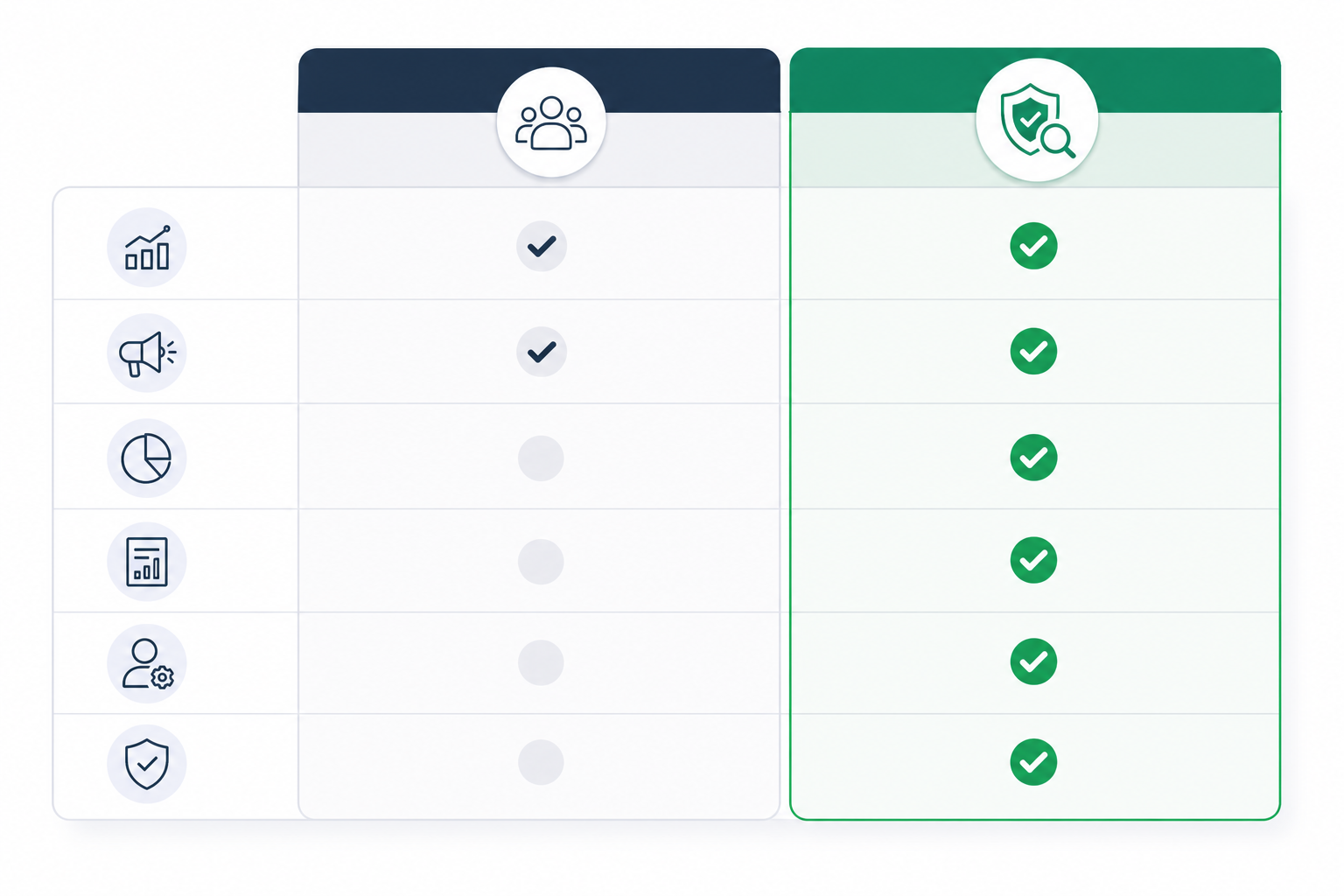
If you're not offering competitor ad monitoring as part of your retainer tiers yet, it's worth considering. This is one of the more straightforward wins on this list because the cost to you is relatively low, while the impact on perceived value can be meaningful.
| Feature | Standard Retainer | Retainer + Ad Monitoring |
|---|---|---|
| Campaign management | ✅ | ✅ |
| Creative production | ✅ | ✅ |
| Monthly reporting | ✅ | ✅ |
| Competitor ad tracking (Meta, Google, TikTok, LinkedIn) | ❌ | ✅ |
| Weekly competitor digest | ❌ | ✅ |
| AI-generated summary of competitor activity | ❌ | ✅ |
| Perceived value to client | Standard | Premium |
The economics are fairly simple: whitelabel ad monitoring plans typically start somewhere around £25–£30 a month for tracking a handful of competitors. Check current pricing before you commit, as tiers vary by provider and the number of competitors tracked. Bundling this into a mid- or top-tier retainer usually has a modest impact on your margin.
From the client's side, with full whitelabel branding, it looks like an in-house capability rather than a bolted-on third-party tool. There's no "powered by" logo. That said, it's worth being clear internally that whitelabel branding means the interface looks like yours; it doesn't mean the underlying data or detection capability is something your agency built. Be honest with clients about what the tool can and can't do, even if the branding is seamless.
5. Showcase case studies from existing clients
Prospects trust proof more than promises, and a well-told case study is proof in its most digestible form. If you're already using ad monitoring with existing clients, you likely have a story worth telling. You just need to shape it properly and be honest about what actually happened.
Here's a hypothetical example of the kind of story this could produce, illustrative rather than an actual client result. Imagine a UK skincare brand you work with. Your weekly digest flags that its main competitor has launched a new Meta creative promoting a limited-time bundle offer. You bring this to the client within a couple of days, they approve a similar promotional push, and it goes live inside a week. Whether that leads to a measurable lift depends entirely on execution and market conditions, but the story itself demonstrates responsiveness, which is often what clients are actually buying.
If you have a real example with actual client permission and real numbers, use that instead. It will always be more persuasive than a hypothetical. A few things to keep in mind either way:
- Anonymise, don't fabricate. "A UK skincare brand we work with" is enough context while protecting confidentiality.
- Zoom in on a specific moment, rather than a vague "we monitor competitors for our clients."
- Be honest about outcomes. If you don't have a measured result, say so, or label the example as illustrative rather than implying it's a verified case study.
- Always get client permission first, and keep the presentation agency-branded throughout, in line with the whitelabel setup you're using elsewhere.
6. Position your agency against competitors without whitelabel ad monitoring
Here's a reasonably safe assumption: many UK agencies still aren't offering structured competitive intelligence to their clients, simply because building or buying the capability has historically felt like overhead. That gap can work in your favour, at least for now.
Rather than bad-mouthing other agencies, which rarely lands well, a more neutral approach is to ask the prospect a genuine discovery question: "How does your current agency keep you updated on what your competitors are running on Meta and TikTok?" Sometimes the answer is that they do have a process, in which case that's useful information too. Often, the answer reveals there isn't a structured process at all, and you don't need to editorialise that. The gap speaks for itself.
The key is to keep the framing focused on what you provide: weekly ad intelligence, a dashboard they can check anytime, a clear point of contact for questions. Not on what someone else isn't doing.
7. Follow up with ongoing whitelabel monitoring reports
Not every prospect signs after the first meeting, and that's fine. It's actually an opportunity. Ad monitoring gives you a natural, non-pushy reason to stay on their radar without resorting to generic "just checking in" emails that everyone ignores.
A cadence that tends to work:
- Send the initial audit during or right after the first meeting, focused on one or two standout observations.
- Wait two to three weeks. If the prospect has gone quiet, don't chase with a status update. Chase with new information, and only if there's something genuinely worth sharing.
- Send an updated competitor snapshot highlighting anything that's visibly changed: a new creative, a paused campaign, a clear shift in messaging.
- Frame the follow-up around the data, not the sale. A short template that works well: "Thought you'd want to see this, looks like [competitor] just launched a new push on TikTok. Happy to talk through what we'd do differently if useful, no pressure either way."
- Only send when there's something meaningful to report. Manufacturing an update for the sake of staying in touch usually backfires. People notice when there's nothing actually new.
- Track which follow-ups convert into replies or meetings. Over time you'll likely notice that certain types of competitor moves, new offers and obvious creative shifts for example, prompt faster responses than others.
This turns whitelabel ad monitoring into an ongoing part of your prospecting process, rather than something you only think about once, at the pitch stage.
Limitations of whitelabel ad monitoring
Before you build a whole sales process around this, it's worth being clear-eyed about what whitelabel ad monitoring tools can and can't do. They typically surface ads that are publicly visible in ad libraries or detectable placements. They generally can't show you exact spend, true campaign performance, or confirmed strategic intent. "New creative appeared" is an observable fact. "They're scaling this aggressively" is an interpretation, and it's worth treating it as one, both internally and with clients.
Coverage can also vary by platform and region, and very small advertisers or highly targeted campaigns may not always surface. None of this makes the approach less useful. It just means honest framing, "here's what we're seeing" rather than "here's exactly what they're doing", tends to build more credibility than overclaiming.
Frequently asked questions about whitelabel ad monitoring
How can competitive intelligence help win new agency clients?
It gives your sales team something concrete and visual to show prospects, rather than talking about strategy in the abstract. Seeing a competitor's actual ad creative and recent changes tends to make the value of working with a data-savvy agency clearer, faster, than a generic pitch would. It's not a guaranteed shortcut, but it's a genuinely useful conversation starter.
What's a good way to use a free competitor audit in a sales pitch?
Keep it focused and specific. Pull one or two of the most interesting observations, a new creative, a paused campaign, a shift in messaging, and build a short, honestly framed narrative around it. The goal is to spark curiosity and show that you pay attention to the market, not to hand over a 20-page report before you've had a real conversation.
Can whitelabel ad monitoring replace or complement existing agency services?
For most agencies, it works best as a complement rather than a replacement. It sits alongside your existing creative, media buying or SEO services as an added layer of insight, something you can bundle into retainers or offer as a standalone perk, rather than something that overhauls your core service offering.
Does whitelabel ad monitoring require access to a client's or competitor's ad accounts?
No. Tools like Rival Ads generally only need a competitor's website to start surfacing publicly visible ad activity across Meta, Google Ads, TikTok and LinkedIn. This makes it possible to run audits on prospects' competitors without needing account access, though it's worth remembering this shows what's publicly detectable, not a complete or fully verified picture of a competitor's advertising.
How to start using whitelabel ad monitoring for agency prospecting
If there's one thing I'd want you to take from this, it's that whitelabel ad monitoring doesn't have to sit at the bottom of your service list, reserved for clients who've already signed. Used honestly, with realistic claims about what it shows and doesn't show, it's one of the more persuasive things you can put in front of a prospect, because it's not a claim about what you might do for them. It's a demonstration of what you're already paying attention to, before they've spent a penny.
A simple way to test this next week: pick one prospect currently sitting in your pipeline, choose two of their competitors, run a short audit, and pull out one genuinely interesting observation. Build it into a single slide or a short email, and send it as a low-pressure, no-strings follow-up. Track whether it gets a reply. Do that consistently across your pipeline for a month, and you'll have a much clearer sense of whether whitelabel ad monitoring earns a permanent place in your sales process, rather than taking my word for it.