
Weekly vs. Real-Time Ad Monitoring: Which Cadence Actually Wins for Marketing Teams?
Discover why weekly ad monitoring delivers clearer ad intelligence than real-time alerts, reducing noise and sharpening competitor tracking.
Chris Edington
11 min read
Ad Monitoring Cadence: Why Weekly Ad Intelligence Beats Real-Time Alerts
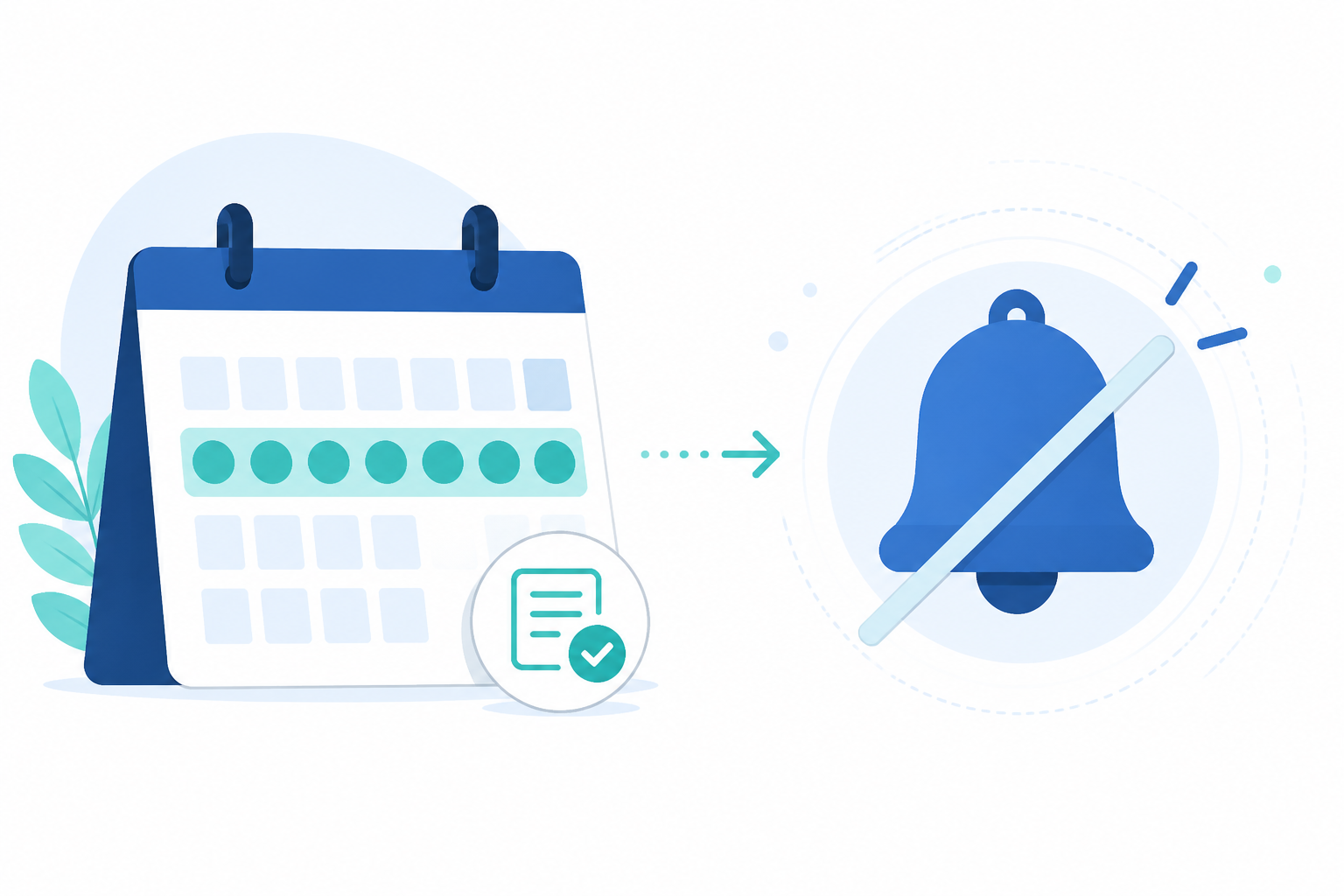
Here's the short answer: for most marketing teams, a weekly ad monitoring cadence delivers more useful competitive intelligence than real-time alerts. Ads simply don't change fast enough, category by category, to justify constant pinging, and the noise from live alerts tends to bury the strategic signals you're actually looking for.
Real-time tracking earns its keep in specific situations: a major product launch, a shortlist of top-tier competitors, or a fast-moving sale period like Black Friday or the January sales. Outside of those windows, though, a weekly digest that clearly shows what's new, paused, or still running will serve you better than a notification feed you'll eventually start ignoring.
Let's unpack why, because "real-time" sounds like the premium option. In practice, for competitor ad intelligence, it usually isn't.
The appeal (and trap) of real-time ad monitoring alerts
There's something appealing about real-time monitoring. It feels like you're plugged straight into what your competitors are doing, watching every move as it happens: no waiting, no lag, just instant visibility into what your rivals are doing on Meta, Google Ads, TikTok, and LinkedIn. It's FOMO, basically. Nobody wants to be the marketing lead who missed a competitor's big campaign launch because they only checked in once a week.
But here's the trap: constant alerts create constant noise. Imagine a team getting 40 notifications in a single day because a competitor is running standard A/B tests on headlines and thumbnails. After the tenth alert, most people stop reading them properly, which means the one alert that actually matters, say a competitor pulling all their ads and rewriting their entire value proposition, gets scrolled past along with everything else. This pattern is well documented in usability research on notification fatigue, and it's the same reason most of us long ago muted push notifications on our phones.
There's also a hidden cost that's easy to overlook: someone on your team has to triage every alert. Is this new ad a real strategic shift, or just routine testing? Is that landing page change significant, or cosmetic? Multiply that decision-making effort across dozens of alerts a day, and you've eaten up all the time real-time monitoring was supposed to save. What started as an efficiency play turns into a part-time job nobody signed up for.
Why a weekly ad monitoring digest reduces noise
This is where a weekly ad monitoring cadence quietly wins. Instead of a constant stream of individual pings, you get one consolidated view showing exactly what's changed over seven days, and just as importantly, what hasn't.
A quick note on definitions, since "weekly" gets used loosely: the most useful version is a rolling seven-day lookback, refreshed on a consistent day (Monday morning works well for most teams), rather than a single fixed snapshot. That way you're comparing a full week of activity against the week before, not just two isolated moments in time.
Here's why this works well in practice:
- Week-over-week comparisons surface meaningful change. Instead of seeing every micro-adjustment, you see new creatives that launched and campaigns that stopped running.
- Minor tweaks get filtered out automatically. A single headline swap on a Google responsive search ad, or a slightly recropped video on TikTok, isn't a strategic pivot. It's routine optimisation, and a weekly view doesn't waste your attention on it.
- Batching makes pattern recognition easier. When you're tracking multiple competitors, seeing everything side by side in one digest makes it easier to spot industry-wide trends, like three rivals all pushing the same seasonal offer at once.
- Analysis improves with more data. A single snapshot doesn't give a human analyst, or an AI tool, much to work with. A full week of activity gives far more context for judging whether something looks like continued investment, creative fatigue, or a genuine strategic shift. Worth noting: public ad libraries rarely expose spend or reach directly, so "scaling" is usually inferred from ads staying active or reappearing across repeated checks, not from confirmed budget data.

What you actually miss by waiting a week for ad intelligence
I won't pretend a weekly cadence catches everything instantly. It doesn't. There are genuine edge cases where waiting matters, and I'd rather be precise about them than gloss over the risk.
Most competitor ad activity is iterative, not strategic. A brand testing three video hooks on TikTok, or rotating headlines through a Google responsive search ad, isn't making a bold new move. It's optimising within an existing strategy. Google's responsive search ads support up to 15 headlines and four descriptions served dynamically, so what looks like daily change is often just the platform serving different combinations of the same underlying assets. Watching this in real time doesn't give you strategic insight; it mostly shows you noise the ad platform's own machine learning is generating.
But here's where I want to correct something rather than gloss over it: a standard weekly digest genuinely can miss short-lived, time-sensitive activity. If a competitor launches a flash sale on Monday and it ends by Friday, a digest reviewed the following Monday won't help you respond in time. The offer will already be gone. That's a real limitation, not a minor caveat, so build your cadence around it rather than assuming a weekly review always catches things "while they're fresh."
A simple response-time matrix helps decide when weekly isn't enough:
| Type of activity | Strategic weight | Recommended check frequency |
|---|---|---|
| Ongoing messaging, positioning, always-on creative | High strategic value, low urgency | Weekly digest |
| Time-limited offers (flash sales, seasonal promotions) | Medium value, high urgency | Daily checks during the known promotional window |
| Product launches or major campaign shifts | High value, high urgency | Real-time or daily monitoring during the launch period |
| Reactive PR moments (an ad pulled after public criticism) | High value, very high urgency | Manual, event-triggered check, not something any fixed cadence catches reliably |
The practical takeaway: keep weekly as your default, but build in daily or near-real-time checks for a known, dated event, like a UK retailer's Boxing Day sale, a competitor's product launch week, or a Black Friday period, rather than trying to catch everything, all the time, for every competitor.
How competitor ad change frequency varies by platform and category
I'd love to give you a single, cited statistic for how often competitor ads change week to week. Honestly, no robust, publicly available benchmark exists that covers Meta, Google, TikTok, and LinkedIn consistently. Change frequency depends heavily on category, platform, and what you count as a "change." So rather than presenting invented numbers, here are practical patterns worth watching for, based on how creative testing and platform mechanics typically behave:
- Always-on campaigns often run visually unchanged for weeks. What shifts behind the scenes is spend, targeting, or bidding, and none of that is visible in public ad libraries, in the UK or elsewhere.
- Creative refresh cycles vary by platform. Meta and TikTok tend to see more frequent creative rotation due to format fatigue and testing culture, while Google Search ads often persist longer because responsive formats absorb a lot of experimentation internally.
- Highly promotional categories move faster. Ecommerce, travel, food delivery, and fintech brands adjust offers and urgency language more often, particularly around UK shopping moments like Black Friday, Boxing Day, and the January sales. Even here, the underlying strategic concept usually holds for weeks at a time.
- A lot of visible "change" is asset-level, not strategy-level. A new thumbnail, a recut testimonial, or a swapped call-to-action rarely signals a new direction. It's routine creative testing within an existing campaign.
What this means practically: checking weekly, you'll rarely miss a genuine strategic pivot. You're mostly avoiding the temptation to react to noise the platforms generate on their own. That's a reasonable, defensible position, just not one backed by a single universal statistic. Treat it as a working heuristic, not a proven rule.
Matching your ad monitoring cadence to risk, not just team bandwidth
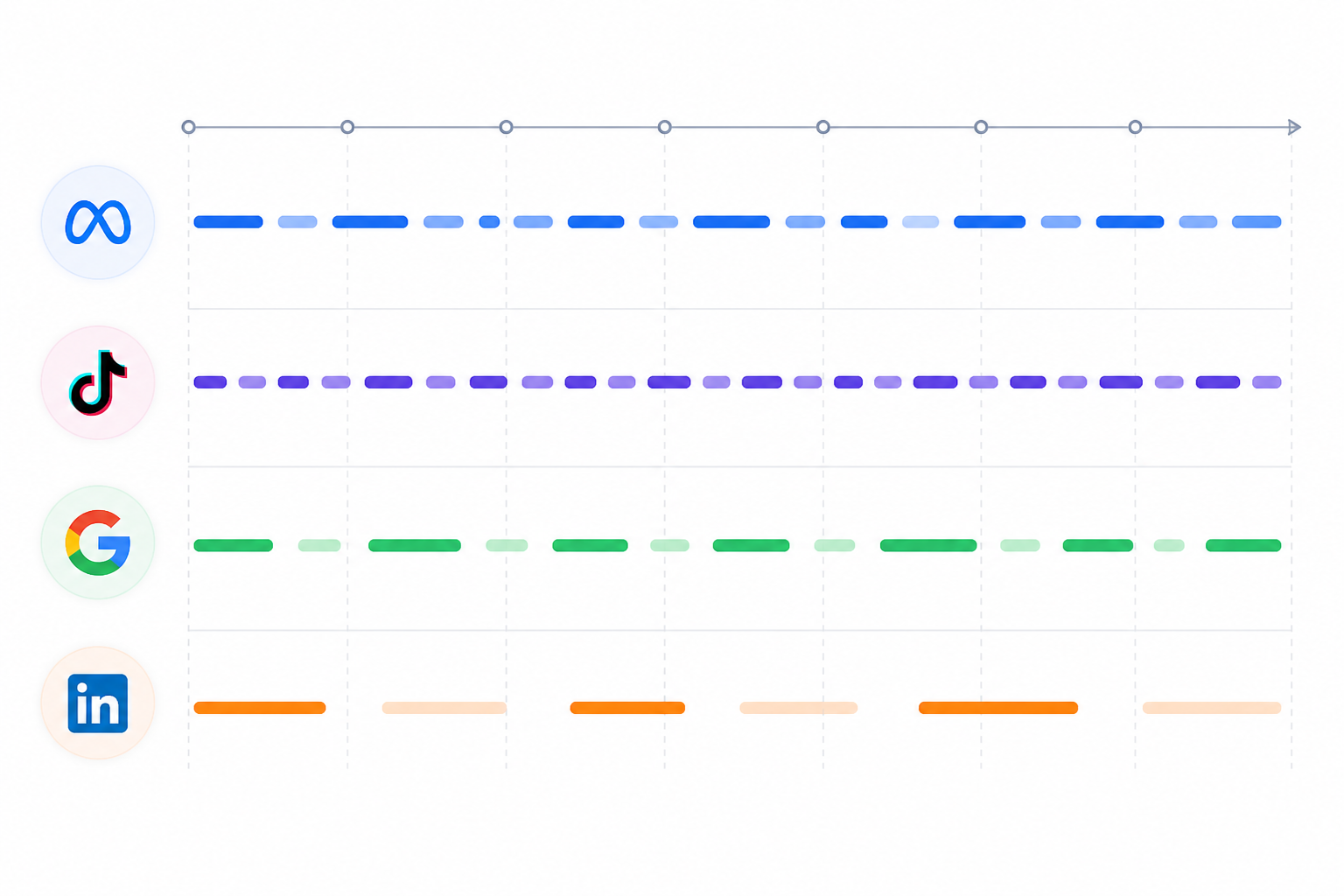
The right ad monitoring cadence isn't one-size-fits-all, and team size is only one factor. It's worth weighing four things together: how many competitors you're tracking, how commercially exposed you are to their moves, how volatile their category is, and how quickly you could actually act even if you spotted a change.
| Team type | Competitor count | Campaign volatility | Response time needed | Recommended cadence |
|---|---|---|---|---|
| Solo marketer or small in-house team | 1–5 | Low to medium | Days | Weekly digest |
| Agency managing multiple client accounts | Many, across clients | Varies by client | Days | Weekly digest per client, standardised |
| Larger team with a dedicated competitive strategist | 5–15 | Medium to high | Hours to days | Weekly digest plus manual deep-dives on flagged changes |
| Any team during a known high-stakes period (launch, sale season) | 1–3 priority competitors | High, time-boxed | Hours | Temporary daily or real-time checks, then revert to weekly |
For agencies, this matters even more. Monitoring competitors across dozens of client accounts with real-time alerts on everything would be unmanageable. A consistent weekly rhythm, ideally one you can present as part of your own client reporting, keeps things sustainable without sacrificing insight.
Building a weekly ad intelligence cadence that sticks
Having the right tool is only half the equation. You also need a process your team will actually follow. Here's a simple framework:
- Assign clear ownership. Decide who reviews the weekly digest and what they do with it: flagging insights, briefing the creative team, or updating positioning.
- Set a recurring calendar slot. Pair your competitor review with your own campaign planning cycle, so competitive insight informs decisions rather than sitting unread in an inbox.
- Define the output, not just the habit. Each review should produce something concrete: up to three meaningful changes worth acting on, the implication for your own campaigns, an owner, and a decision on whether it needs escalating beyond the weekly cycle.
- Reserve tighter checks for priority moments. Keep a short list of top competitors or known dated events, a launch, a sale period, an industry announcement, where daily or real-time monitoring is worth the extra attention, with a clear start and end date.
- Review your cadence quarterly. Bandwidth, competitive intensity, and what worked last quarter can all shift as your market evolves.
How Rival Ads fits into this ad monitoring approach
As an example of what this looks like in practice: this is the philosophy we've built into Rival Ads. Rather than flooding you with real-time pings, we've designed the platform around a structured weekly ad monitoring cadence, with the option to tighten checks manually around specific events.
Here's how it works, in practical terms: you give us a competitor's website, and Rival Ads checks their presence across Meta, Google Ads, TikTok, and LinkedIn's public ad libraries, no ad account connections needed. Each week, we pull the ads that are visible in those libraries at that time, including creative and copy where the platform makes it available. To be upfront, public ad libraries have real limitations: coverage, spend data, and targeting details vary by platform and region, including under UK and EU transparency rules, so we're showing you what's publicly visible, not a complete picture of every competitor decision.
Every week, you get a breakdown of what's new, what's stopped, and what's continued to run. Our AI-assisted analysis, built on Claude, helps interpret those changes, flagging likely patterns and pointing out what looks worth a closer look, though we'd frame it as a useful first pass rather than a replacement for your own judgement.
Results land in your dashboard and via a weekly email digest, with team roles and competitor assignment for collaboration. Agencies can whitelabel the whole thing to resell as part of their own reporting. If a structured weekly cadence sounds like what your team needs, it's worth a look, but the underlying principle in this article holds regardless of which tool you use.
FAQ: ad monitoring cadence and competitive ad intelligence
Is real-time competitor ad tracking worth the noise? For most teams, no. Real-time alerts generate a constant stream of minor updates that are hard to distinguish from genuinely strategic moves, and someone still has to triage them. The exception is a small shortlist of top-priority competitors during a known high-stakes window, like a launch or a major sale period.
How much do competitors' ads actually change week to week? There's no single reliable industry benchmark, since it varies by platform and category. In practice, a lot of visible change is asset-level testing rather than strategic shifts, and always-on campaigns often run for weeks with only minor adjustments to spend or targeting happening out of public view. Treat weekly review as a practical, defensible cadence rather than a scientifically proven one.
What cadence do most marketing teams actually use? For broad competitor tracking, a weekly digest is often the most sustainable starting point. Teams typically increase the frequency to daily or real-time monitoring for a limited period when they are managing a product launch, flash sale, seasonal promotion, or another high-stakes event.
What should trigger a daily or real-time check instead of waiting for the weekly digest? A known, dated event with real commercial stakes: a competitor's product launch window, a flash sale or seasonal promotion with a fixed end date, or a reactive PR moment where a brand pulls or rewrites an ad in response to criticism. Outside of these, weekly is usually sufficient.
Can I switch between weekly and real-time monitoring depending on the situation? Yes, and this hybrid approach tends to work best in practice. Use a weekly digest as your default rhythm for broad competitor tracking, then tighten the cadence temporarily, with a clear start and end date, around known high-stakes moments like product launches or sales events.