
How to Reverse-Engineer a Competitor's Ad Funnel (Step-by-Step Method)
Learn how to reconstruct a competitor ad funnel from public ad data by analysing creative, copy, links, landing pages, offers, and retargeting clues.
Chris Edington
14 min read
How to Reverse-Engineer a Competitor Ad Funnel: A Step-by-Step Method
You can reconstruct most of a competitor ad funnel just by watching their public ads closely over time: study the creative and copy for the angle, follow the link to see the landing page and offer, then track how the ads change week to week to build an evidence-based (not proof-based) view of what they're testing and pushing. No ad account access needed—just consistent observation, a bit of scepticism, and a system for recording what you see. This is what people mean by ad intelligence or competitive ad intelligence, and it's a genuinely useful skill for any UK marketer trying to understand a crowded market without a huge research budget.
I know that sounds almost too simple. It's not a hack, and it won't give you a rival's actual conversion rates or ad spend. But it is genuinely how a lot of experienced media buyers build their competitive playbooks—by watching what's public, doing it consistently, and being careful about the difference between what they've observed and what they're guessing. Let me walk you through exactly how to reverse-engineer a competitor ad funnel, including the bits that are easy to get wrong.
Why Reverse-Engineering a Competitor Ad Funnel Works—with Caveats
Ad libraries like Meta's Ad Library, Google's Ads Transparency Center, TikTok's Commercial Content Library, and LinkedIn's Ad Library show you more than a quick glance suggests. Depending on the platform, you can often see the ad copy, the creative, sometimes the destination link, and how long an ad has been live. That last part gets talked about a lot in this space, so it's worth being precise about what it actually tells you.
Here's the honest version: ad longevity is a signal worth investigating, not proof that an ad is converting or profitable. An ad can run for six weeks because it's genuinely scaling—or because it's evergreen brand awareness spend, because nobody got round to pausing it, because it's a duplicated "dark post" running alongside dozens of near-identical variants, or because the budget behind it is tiny and it's just ticking along. Public ad libraries generally don't show you spend, so a long-running ad and a long-running-but-barely-funded ad look identical from the outside. Treat duration as one clue among several, not a verdict.
The platforms also aren't equivalent, which matters more than most guides admit:
| Platform | What you can typically see | Key limitations |
|---|---|---|
| Meta Ad Library | All ads currently running, including non-political ads in most regions, plus first-seen date | No spend data for standard ads, limited historical archive once an ad stops running |
| Google Ads Transparency Center | Search, Display, and YouTube ads from verified advertisers | Coverage can be patchy for smaller advertisers; destination links aren't always shown clearly |
| TikTok Commercial Content Library | Ads from larger/verified advertisers, mainly in the EU and a growing list of markets | Much smaller advertiser coverage than Meta; UK availability has been inconsistent |
| LinkedIn Ad Library | Ads from pages that have run any ads, EU-focused rules | Search and filtering are limited; historical depth is thin |
If you're UK-based, it's worth knowing that some of these libraries lean on EU transparency rules for their functionality, so coverage and depth can differ from what US-based guides describe. Always check what's actually visible for your specific competitor before assuming a platform gives you everything.
What you can build from all this, even with the caveats, is a genuinely useful hypothesis about a competitor's funnel—solid enough to inform your own creative and offer strategy, as long as you keep labelling it a hypothesis rather than a fact.
Start With the Ad Creative and Copy
This is where every good reverse-engineering exercise begins. Before you think about landing pages or offers, you need to understand what story the ad itself is telling—and you need somewhere consistent to record it.
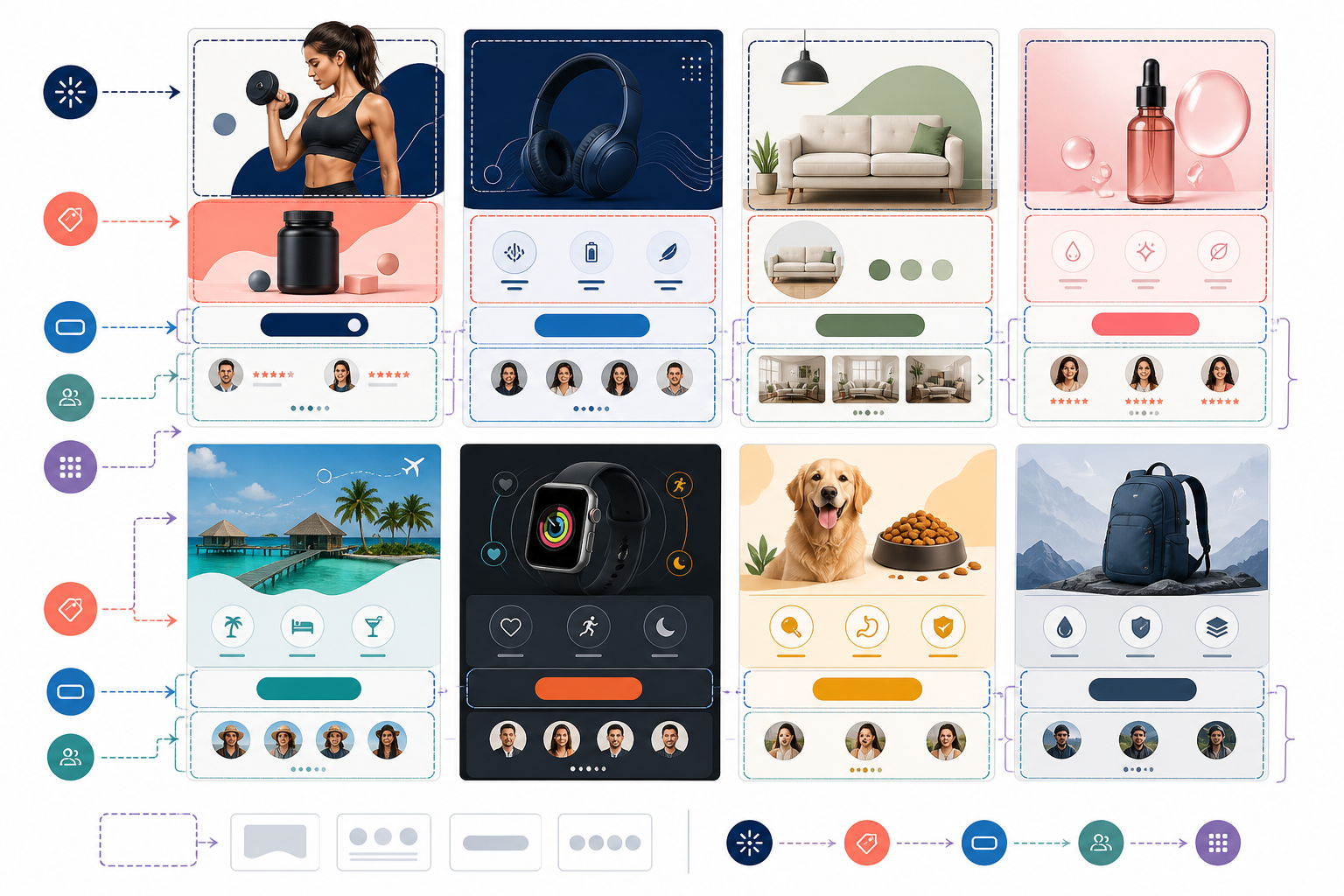
- Catalogue every active ad from the competitor. Note the format (video, carousel, static image), the hook in the first three seconds or first line of copy, the visual style, and the CTA. Do this for every ad you can find, not just the ones that catch your eye.
- Look for repeated angles across multiple creatives. If three different ads open with the same pain point—"tired of spreadsheets?" or "stop losing customers to slow shipping"—that's worth flagging as a tested angle they've likely decided is worth scaling.
- Read the copy closely for offer language. Discounts, urgency phrases ("ends Friday"), social proof ("trusted by 10,000 teams"), guarantees—these tell you what levers they believe move their audience, whether or not those levers are actually working.
- Track which creatives persist versus which disappear. An ad running for a month has earned some scrutiny; one that vanished after three days might have underperformed—or it might have been a limited seasonal promo that was only ever meant to run briefly. Note it, don't assume it.
Here's a simple template I'd suggest using, whether in a spreadsheet or a doc—it's the difference between vague impressions and something you can actually act on:
| Date observed | Platform | Ad ID/URL | Format | Hook | CTA | First seen | Last seen | Confidence | Next check |
|---|---|---|---|---|---|---|---|---|---|
| 3 Mar | Meta | fb.me/xyz123 | Video, 15s | "Still doing this by hand?" | "Try free" | 3 Mar | Still live | Medium – single ad, no pattern yet | Recheck in 7 days |
| 3 Mar | Meta | fb.me/abc456 | Static | "Trusted by 10,000 teams" | "See pricing" | 18 Feb | Still live | High – 3rd ad with same social-proof line | Compare against landing page |
The "confidence" column is the important bit. A single ad tells you almost nothing. Three ads repeating the same hook over three weeks tells you something real.
Doing this properly for even one competitor takes real time. Doing it for five competitors across four platforms, every week, is where most people quietly give up—which is the specific gap tools like Rival Ads are built to close. More on that later, once we've covered the full manual method.
Follow the Link to the Landing Page
Once you've got a feel for the creative and copy, follow the breadcrumb trail to where that traffic actually lands. This is where a lot of real funnel logic gets revealed—and where a lot of assumptions need checking.
- Click through or check the destination URL. Most ad libraries show the link, or you can click straight through from the ad itself. See exactly where the competitor is sending cold traffic. Note: use a private/incognito browser window so cookies and past behaviour don't skew what you're shown.
- Compare the landing page messaging to the ad. Does it match directly, or is there a bridge page—an advertorial, a quiz, a "learn more" step before the actual offer? A mismatch can tell you something about how sophisticated (or rushed) their funnel is.
- Check for forms, quizzes, or gated content. These usually signal a lead-generation funnel rather than a direct sale. If they're capturing an email before showing pricing, they're playing a longer game than the ad alone suggests. If you fill in a form to see more, be mindful of what data you're handing over—treat it the same way you'd want a competitor to treat yours.
- Look at the page structure. Single simple offer? Multi-step checkout? Upsell sequence after purchase? Each tells you something different about how they monetise traffic once it lands. Be aware you're only seeing what's shown in your specific session—region, device, and even browser history can change what a page displays.
- Screenshot and archive pages regularly. Competitors update landing pages constantly, often without touching the ad creative at all. If you only check once, you'll miss the iteration entirely.
That last point is one people underestimate. I've seen competitors run the exact same ad creative for six weeks while swapping the landing page three separate times—testing different price points, different guarantees, different layouts. If you only looked at the ad, you'd think nothing had changed. The real experimentation was happening one click deeper.
Map the Competitor's Offer Structure
Once you understand the creative and the landing page, you can start piecing together the actual offer—and this is often where the most useful competitive ad intelligence lives.
- Identify the core offer. Specific price point, bundle, free trial, or freemium hook leading to a paid upgrade? This shapes everything else about their funnel.
- Watch for seasonal or promotional shifts. Sales events, new bundles, price testing around Black Friday, January, or the UK tax year end in April—these moments reveal what they consider their strongest offers.
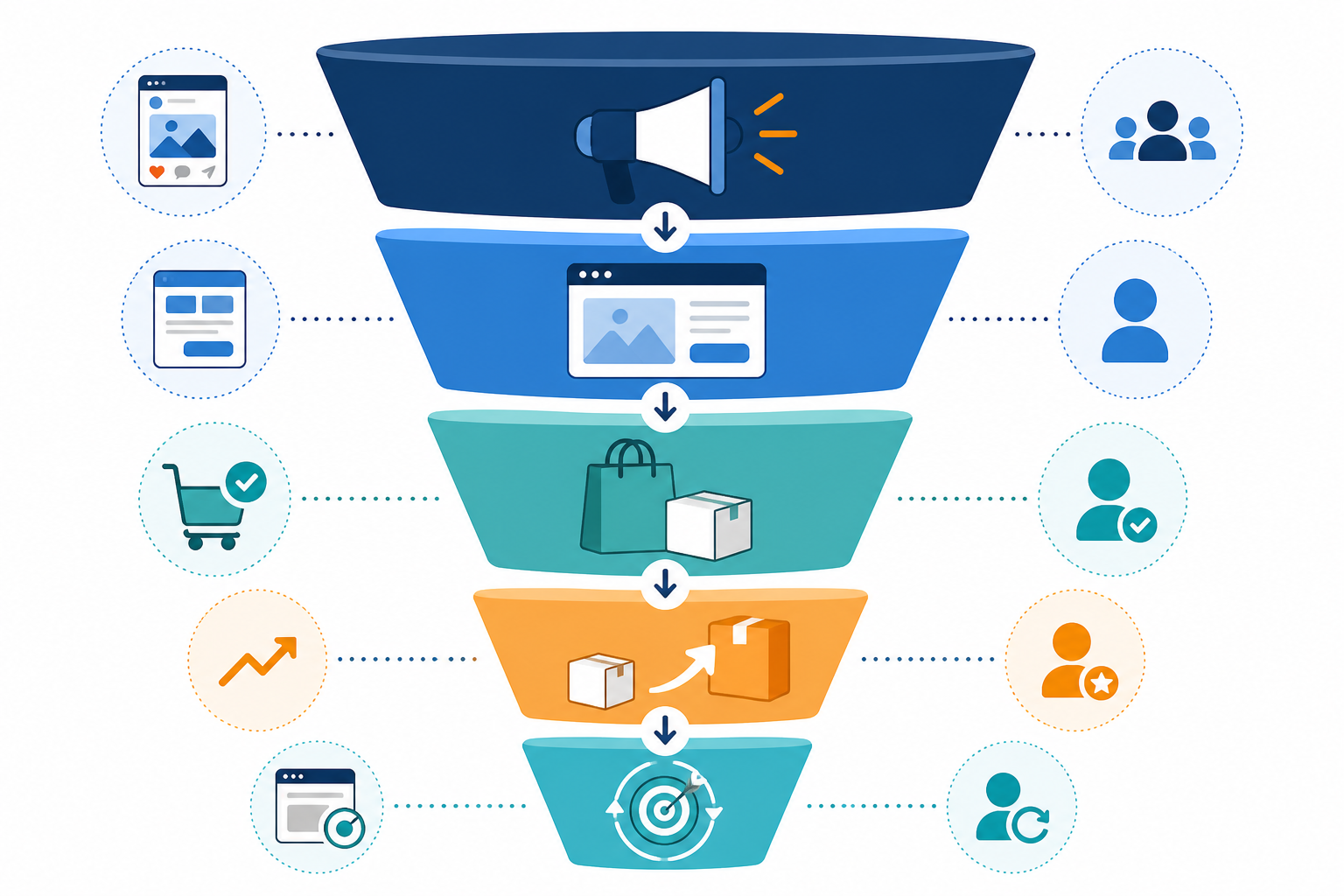
- Compare offers across platforms. What a competitor runs on Meta often looks completely different from Google or LinkedIn. Meta might be top-of-funnel awareness with a soft CTA; Google captures high-intent search traffic with a direct "buy now" offer; LinkedIn targets decision-makers with a more consultative pitch. Comparing across platforms often reveals different funnel stages you'd never spot from just one.
- Note any lead magnets. Free tools, calculators, templates, or guides used to capture an email before the paid pitch suggest a nurture sequence rather than a push for immediate sale.
A quick matrix makes this easier to compare at a glance:
| Platform | Price/offer shown | Trial length | Guarantee | Lead magnet? | Likely buyer stage |
|---|---|---|---|---|---|
| Meta | "From £29/mo" | 14 days | None shown | No | Awareness/consideration |
| "£29/mo, cancel anytime" | 14 days | Money-back | No | High intent | |
| "Book a demo" | N/A | N/A | Guide download | Early consideration |
Spot Clues Consistent With Retargeting—not Proof of It
This is the part that feels like detective work, and it's genuinely useful—but it's also where it's easiest to overstate what you actually know. Public ad libraries generally don't show you audience membership, ad-set structure, or sequencing. You can't confirm someone saw ad one before ad two. What you can do is spot patterns that are consistent with retargeting, then hold that as a hypothesis rather than a fact.
- Reused creative with a shifted CTA. Same visual or video, but now with added urgency, a discount code, or a testimonial overlay—consistent with a warm-audience layer, though it could also just be a creative refresh or a regional variant of the same campaign.
- Apparent sequential storytelling. Ads that seem to reference or build on an earlier one, like chapter two of a story. This looks deliberate, but without audience data it's an interpretation, not a confirmed sequence.
- Multiple similar ads with the same offer but different creative. This is often described as "testing ad sets," but note that public libraries usually don't expose actual ad-set structure—you're seeing multiple ads, and inferring the campaign logic behind them.
- Longevity patterns by position. Ads that persist for weeks are often (not always) lower-funnel, closer to the sale, while quickly-rotating ads are often top-of-funnel tests. Treat this as a weak-to-moderate signal, not a rule.
When you log these, add a confidence label and an alternative explanation, the same way you would for the creative table above. It keeps you honest and stops a plausible story turning into an assumed fact.
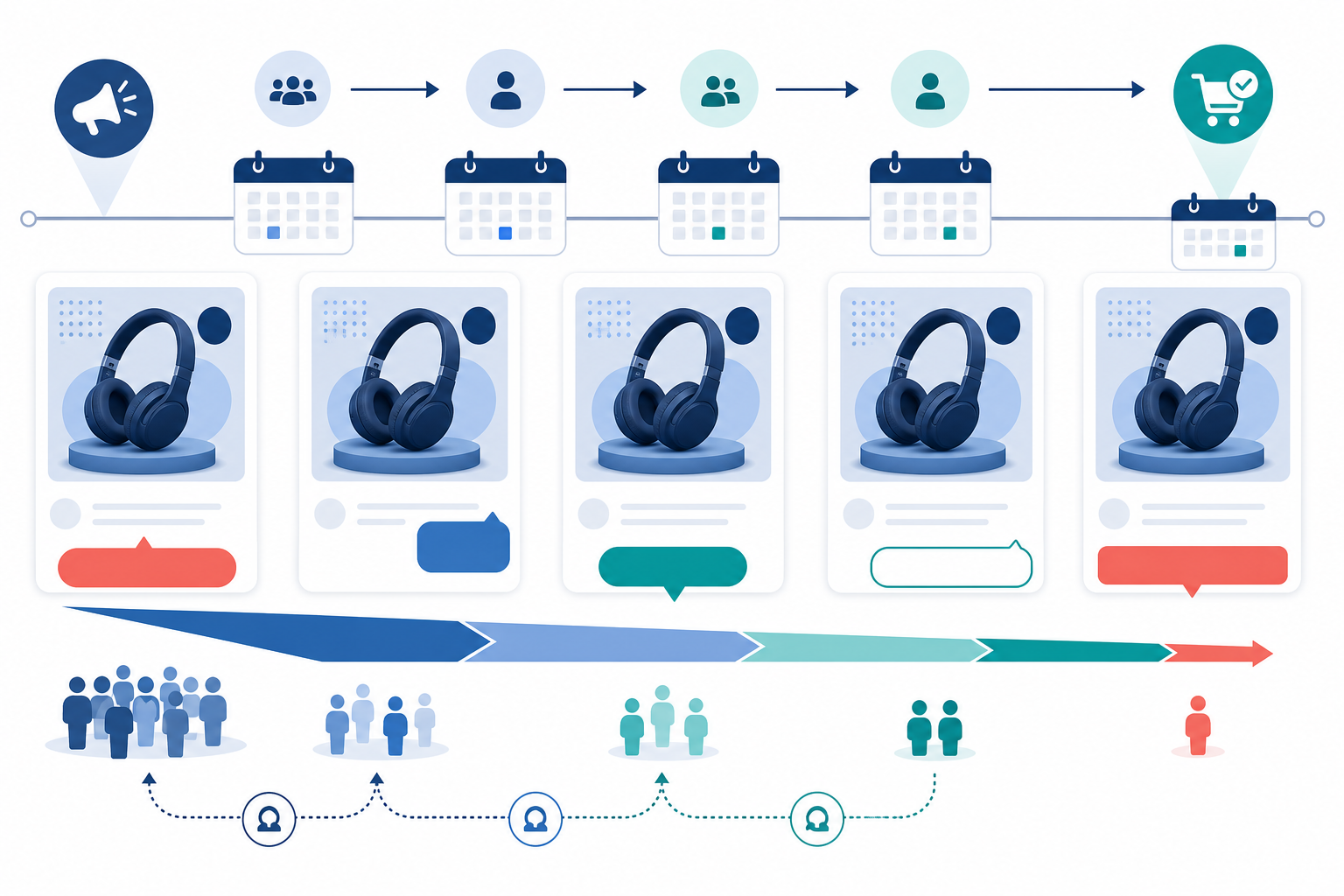
Once you start looking for these patterns, it's hard to unsee them. You'll often notice something that resembles a three-stage sequence: broad awareness, a mid-funnel comparison or objection-handling ad, then a bottom-funnel urgency push. Even as a hypothesis, that structure is worth more than most paid competitive research reports—as long as you keep testing it against new evidence rather than treating it as settled.
Build Your Own Competitor Ad Funnel Hypothesis
At this point you've gathered creative patterns, landing page behaviour, offer structure, and retargeting clues. Now put it together into something usable, using a format that keeps observation and interpretation separate.
For each stage, write out:
- Observation: what you actually saw (ad copy, URL, page element)
- Interpretation: what you think it means
- Confidence: low / medium / high, based on how many data points support it
- Implication: what this suggests for your own strategy
- Test: how you'd validate or challenge this before betting on it
Example: Observation — same testimonial ad has run for five weeks, landing page changed twice. Interpretation — this angle is a durable performer, offer is still being optimised. Confidence — medium. Implication — the pain point behind the testimonial is worth testing in our own creative. Test — run a small-budget version of a similar angle and compare early engagement, don't assume it'll perform the same for us.
A few ground rules:
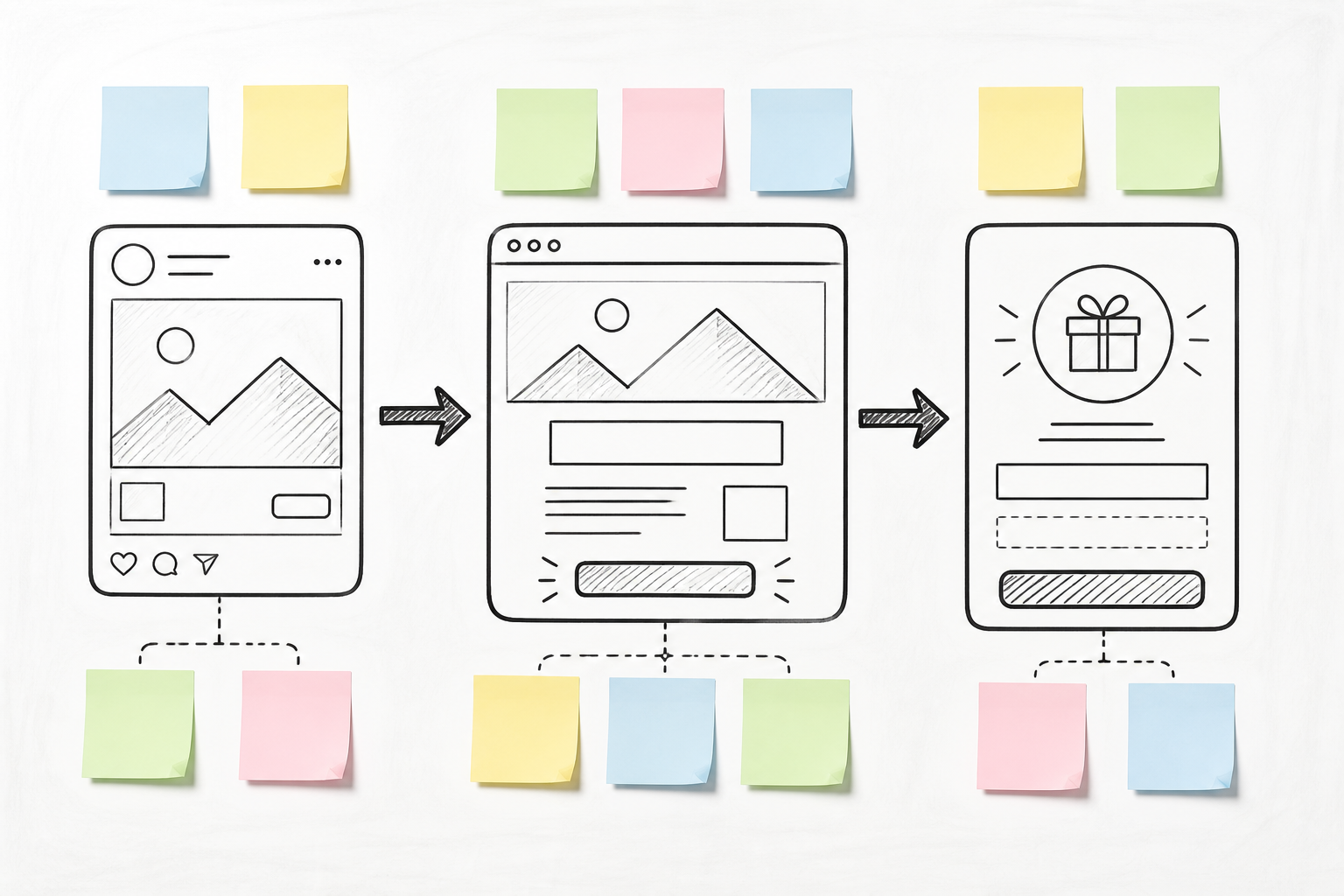
- Sketch the funnel stages you've observed, even roughly: awareness ad → landing page → core offer → retargeting ad → discount close.
- Keep assumptions clearly separate from confirmed facts. You know for certain what ad copy says and what a landing page shows. You're inferring performance and intent.
- Don't copy their funnel outright. Use it as a starting point, then build something addressing the same pain points with your own positioning and proof.
- Revisit weekly. Funnels shift constantly. What you mapped last month might be outdated, especially after a competitor launches a new offer or pivots creative.
Why Manual Competitor Ad Intelligence Gets Painful Fast
Everything above works, and plenty of sharp media buyers do exactly this by hand. But the honest downside is real: ad libraries are clunky to search, they don't show historical changes cleanly, and there's no built-in way to compare this week's ads to last week's. Tracking one competitor casually is manageable. Monitoring five or ten across Meta, Google, TikTok, and LinkedIn, every week, becomes a part-time job you didn't sign up for—and it's easy to lose track of which observations were confirmed and which were guesses.
That's the specific gap we built Rival Ads to fill. You enter a competitor's website—no ad account connections required—and it detects their presence across the major platforms, then pulls active ads on a weekly basis, archiving the creative, copy, and links automatically. The part I find most useful is the week-over-week diff: what's new, what's paused, what's still running. It also generates a written analysis flagging apparent angle shifts, offer changes, and patterns worth investigating further.
To be clear about what it doesn't do: it won't show you spend, verified conversion data, or confirmed audience targeting, because that data isn't publicly available anywhere. It removes the manual grind of checking four libraries by hand—it doesn't replace the judgement calls in the sections above. You still need to treat its output the same way you'd treat your own notes: as evidence-based hypotheses, not certainty.
Frequently Asked Questions About Competitor Ad Funnels
Can I see where a competitor's ad links go?
Usually, yes—most ad libraries show the destination URL, or you can click through directly from the ad. Coverage varies by platform (Google and LinkedIn are less consistent about this than Meta), and competitors sometimes swap landing pages without changing the ad creative, so it's worth checking links regularly rather than relying on one click-through.
How do I map a competitor's funnel from their ads?
Catalogue the ad creative and copy for recurring angles, then follow the link to see the landing page and offer structure. Watch how ads change week over week—new creative, paused campaigns, shifting CTAs—and log each observation with a confidence level so you don't confuse a pattern you've spotted twice with one you've confirmed ten times.
What clues reveal a competitor's offer strategy?
Pricing language, urgency tactics, bundle structures, and whether they use lead magnets before a paid offer. Comparing the same competitor's offers across Meta, Google, and LinkedIn often shows different funnel stages targeting different buyer intents—but always treat these as informed guesses rather than confirmed facts about their strategy.
How often should I monitor competitor ads?
Weekly is a reasonable default for most categories—frequent enough to catch creative swaps and offer changes, not so frequent that you're chasing noise. If a competitor is running a live sale or seasonal push, checking every few days during that window is worth the extra effort.
Is reverse-engineering a competitor's ad funnel legal in the UK?
Working from publicly available ad libraries and public landing pages is generally acceptable, but "legal" isn't a blanket yes for every use. It can depend on each platform's terms of service, copyright and trademark protections around the creative and copy itself, database rights if you're systematically extracting large volumes of data, and how you use what you find—informing your own strategy is very different from copying assets directly. If you're building tooling that scrapes at scale, or using competitor branding in your own marketing, it's worth a quick check with someone who knows UK IP and competition law rather than assuming public visibility means unrestricted use.