
Why Whitelabel Competitive Intel Tools Boost Agency Growth
Discover how UK agencies use whitelabel competitor ad monitoring to cut churn, add recurring revenue and win bigger retainers without hiring or buildi
Chris Edington
10 min read
White-label competitor ad monitoring: a high-margin service for UK agencies
SEO title: White-Label Competitor Ad Monitoring for UK Agencies Meta description: Discover how UK agencies can resell white-label competitor ad monitoring as a recurring, high-margin service without development, extra headcount or ad account access.
White-label competitor ad monitoring lets agencies resell competitor advertising insights as their own branded service, without development work, extra headcount or access to clients' ad accounts. Connect a platform like Rival Ads, customise the dashboard and weekly reports, and start billing clients £150–£500+ a month for insights that take almost no ongoing time to deliver.
If you're running a UK agency, you've probably felt the squeeze: clients want more visible value, budgets are tighter, and everyone's hunting for ways to stand out without adding another salary to payroll. Competitor ad monitoring solves a problem clients already have, even if they don't quite know how to solve it themselves. They want to know what rival brands are doing, but most have no consistent way to track it.
Here's why white-label competitor intelligence matters, and how to turn it into a profitable recurring service for your agency.
The client retention problem every agency faces
Here's an uncomfortable truth: agency churn doesn't always happen because campaigns are underperforming. More often, it happens because clients stop seeing new value, usually around month three or four, once the initial novelty wears off.
Think about your own monthly reporting decks. Same metrics, same charts, same format. Even when the numbers are good, reporting can start to feel like busywork rather than strategy, both for the client reading it and the account manager who has to build it.
Bain & Company's research on customer retention found that even a 5% improvement in retention can lift profits by 25% to 95%, depending on the industry. Keeping clients engaged is worth a lot more than most agencies give it credit for.
We hear agency owners get asked the same question over and over: "What's our competition doing?" And a lot of the time, nobody has a confident answer. Someone might manually check the Meta Ad Library once a quarter if there's time. Often, competitor advertising just doesn't get reviewed at all.
That gap is the opportunity. Adding a visible, ongoing insight stream, something that lands in the client's inbox every week, gives them a concrete reason to stay beyond campaign performance alone. It shifts the relationship from "Are my ads working?" to "My agency is helping me stay ahead of the market."
What does white-label competitor ad monitoring include?
White-label competitor ad monitoring is simpler to launch than most agencies expect. The platform handles data collection and reporting; your agency owns the client-facing experience.
With a platform like Rival Ads, here's roughly what that looks like in practice:
- No ad account connections needed. You don't need access to a client's ad account or a competitor's account, just enter the competitor's website URL and the platform detects where they're advertising.
- Weekly monitoring across Meta, Google Ads, TikTok and LinkedIn, pulling real creatives, ad copy and destination links each week.
- Week-over-week comparisons that flag what's new, what's been paused, and what looks like it's continuing or scaling. This alone replaces hours of manually trawling ad libraries.
- AI-generated strategic analysis, powered by Claude, that tries to explain why a competitor might be scaling a creative or shifting its channel mix, not just what changed.
- Full white-label branding: your logo, your colours, your domain, across the dashboard, reports and emails. To the client, it's part of your service.
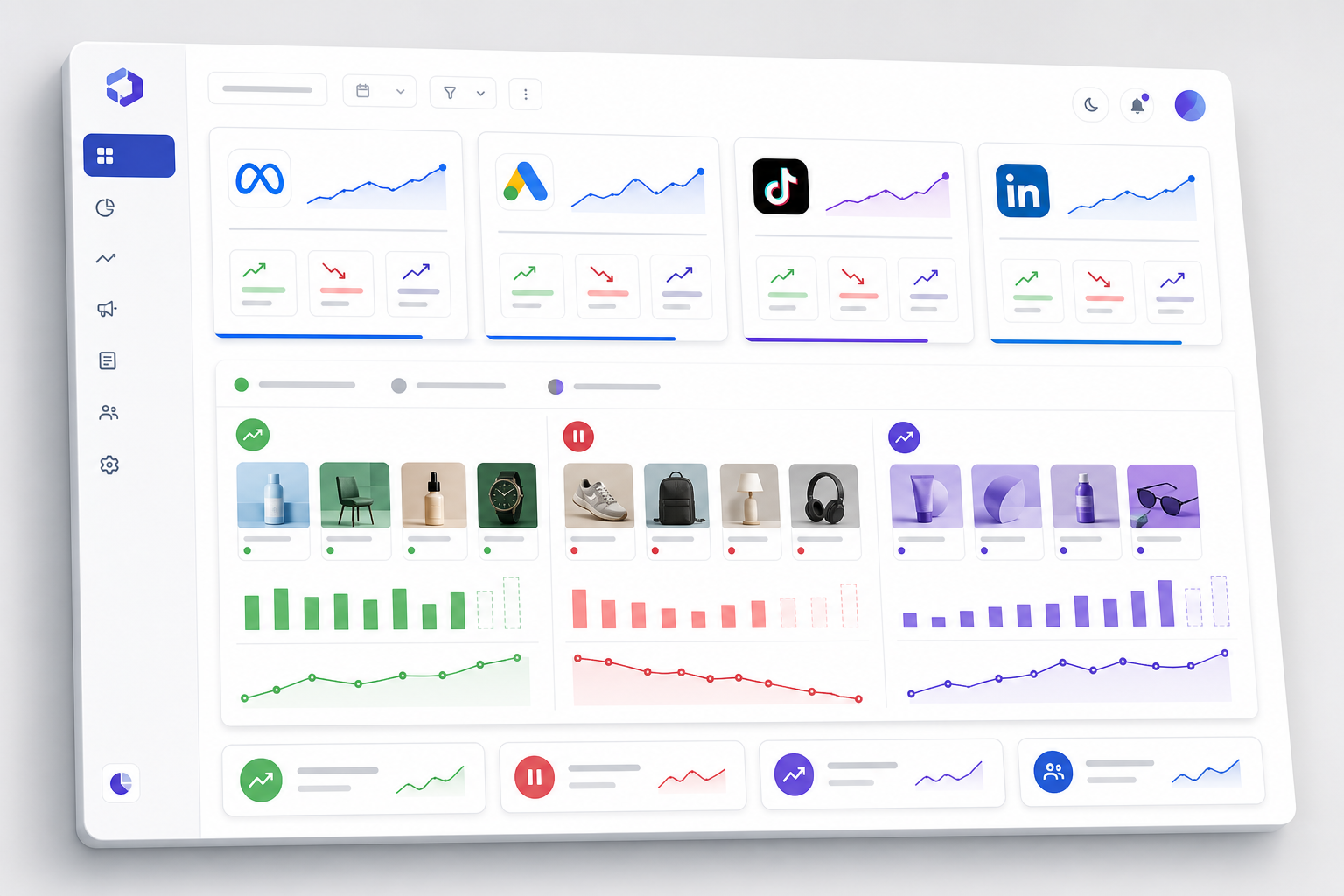
Worth being upfront about where the actual value sits here. Platforms like the Meta Ad Library and Google's Ads Transparency Center already make some of this data publicly available for free. What you're paying for, and what your clients are paying you for, is the automation, the pattern detection, the strategic interpretation, and the fact that it turns up reliably every week under your brand.
How to turn competitor ad monitoring into a billable service
Having a competitor intelligence tool is one thing. Actually monetising it is another. A lot of agencies leave money on the table by quietly folding competitor research into an existing retainer instead of packaging it as its own thing.
Here's a more practical approach:
- Package it as a standalone service. Give it a proper name, something like "Competitor Watch," "Market Intelligence," or "Ad Intelligence," with its own line item rather than burying it inside a wider retainer.
- Price it according to scope. Rival Ads' tiered plans start from $29 a month, so even a modest markup leaves a healthy margin. We've seen agencies price packages at two to four times wholesale cost, depending on how many competitors are tracked and how much strategic commentary is layered on top.
- Pick a delivery cadence that fits the client. For lower-touch accounts, an automated weekly email digest might be plenty. For higher-value clients, add a short summary into monthly strategy calls or performance meetings.
- Use the analysis in QBRs. AI-generated commentary gives account managers something substantive to talk about in quarterly business reviews, without anyone having to manually pick apart competitor creative the night before.
Once the service is set up, delivery effort stays low. You're not billing for hours spent, you're billing for timely insight that helps clients make better marketing decisions.
Why recurring revenue beats one-off competitor audits
A lot of agencies already offer competitor audits as one-off deliverables, usually a detailed PDF that gets sent once, skimmed briefly, and forgotten within a few weeks. That model takes significant upfront work and produces exactly one invoice.
A white-label competitor ad monitoring subscription works differently. Once it's configured, delivery effort drops close to zero while billing continues every month. It also creates an ongoing touchpoint with the client that keeps reminding them why your agency's strategic input matters.
| One-Off Competitor Audit | White-Label Monthly Subscription | |
|---|---|---|
| Effort | High upfront effort, repeated for each new audit | High once, then minimal ongoing effort |
| Revenue type | Single invoice | Recurring monthly revenue |
| Client retention impact | Limited, often forgotten within weeks | Ongoing touchpoint that reinforces value |
| Scalability | Each audit requires fresh time | The same setup can scale across clients |
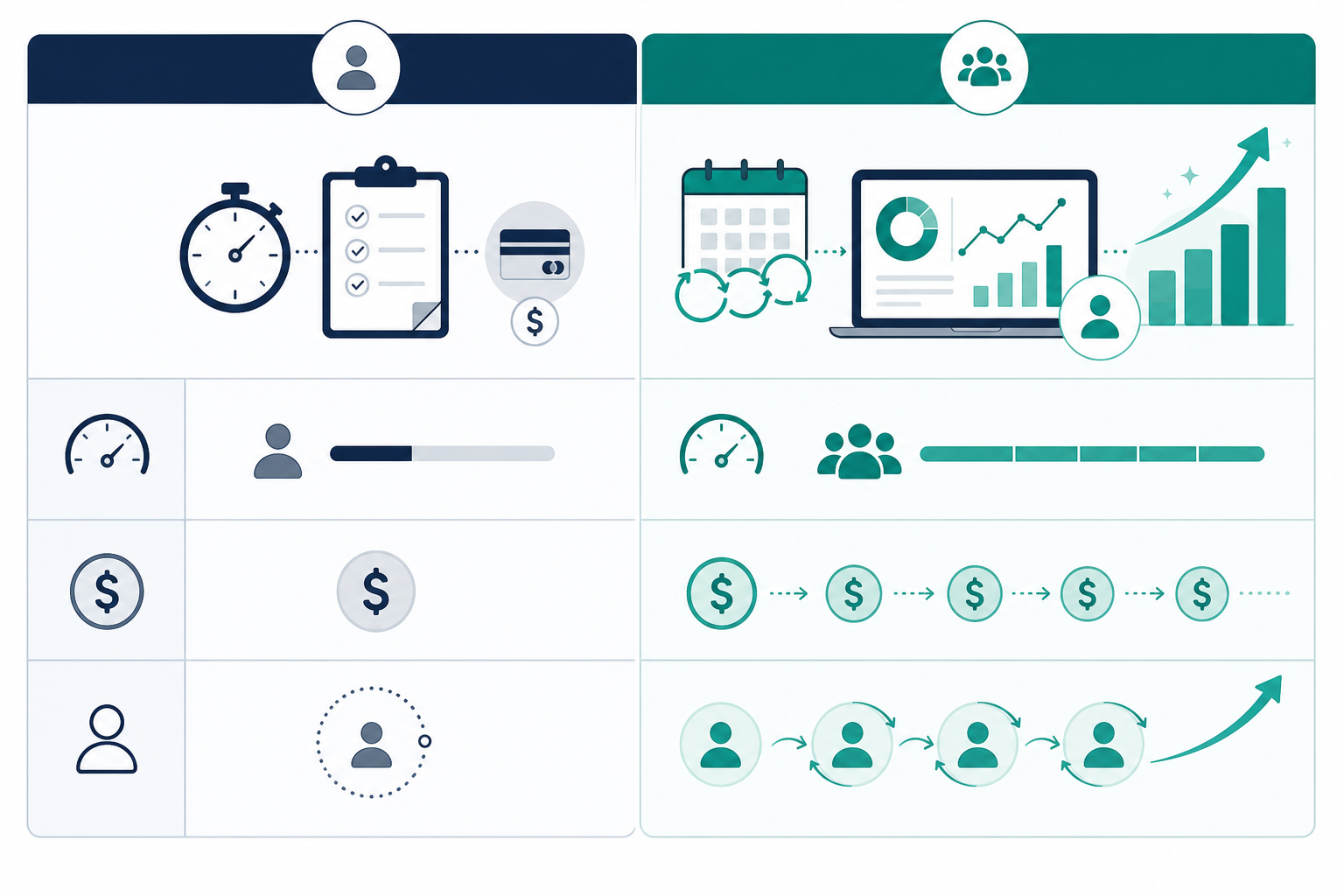
Here's a rough example of what that looks like at scale: source the service at around $79 a month and resell it at £199 per client, and ten clients could generate close to £2,000 in monthly recurring revenue against roughly £790 in cost. Actual margins will move around based on exchange rates, plan limits, VAT, and how much strategic support your team adds on top.
There's a longer-term angle here too. Zuora's Subscription Economy Index has tracked the steady growth of subscription-based business models for years. At agency level, recurring revenue makes income more predictable, and it can raise the value of your business if you're ever looking to sell or bring in investment. Buyers tend to pay more for revenue that's likely to show up again next month than for one-off projects you have to win over and over.
How to position competitor ad monitoring to clients
Pricing and packaging only get you halfway. Your pitch needs to focus on what the client actually gets out of it, not the tool behind it.
- Frame it as always-on market awareness. Clients buy outcomes, not dashboards. They want to know what's happening in their market and what to do about it.
- Lead with a live example. Pull up a competitor's current advertising during the sales process, a QBR, or a strategy call. A live insight beats a feature list every time.
- Tie insights to real decisions. Show how competitor intelligence can inform budget shifts, creative refreshes, positioning, or moves into channels like TikTok or LinkedIn Ads.
- Start small. Offer monitoring for one competitor or one platform to begin with, then expand once the client sees value in the weekly digest.
- Don't call it spying. This is publicly available advertising activity. Frame it as informed market analysis, not surveillance, especially if legal or compliance teams are in the room.
A pitch that tends to land: "We monitor your key competitors' advertising every week, flag the changes that actually matter, and explain what they could mean for your next campaign decisions, all delivered under our agency brand."
How to launch a white-label monitoring service without extra headcount
A common pushback we hear is: "We don't have the resources to manage another tool." Fair concern, but a properly configured white-label competitor intelligence platform shouldn't require a new hire or an internal dev project.
A simple rollout looks something like this:
- Choose a starter plan based on how many client competitors you need to monitor to begin with. You can scale up as you add clients.
- Set up your white-label branding once. Add your logo, colours and domain so the same branded experience carries across client dashboards and weekly reports.
- Assign team roles and competitors, using collaboration features so account managers focus only on the competitors relevant to their own accounts.
- Pilot with one or two clients first. Run it for a month before rolling it out agency-wide. This gives your team time to get comfortable interpreting the AI-generated analysis and figuring out how to present it.
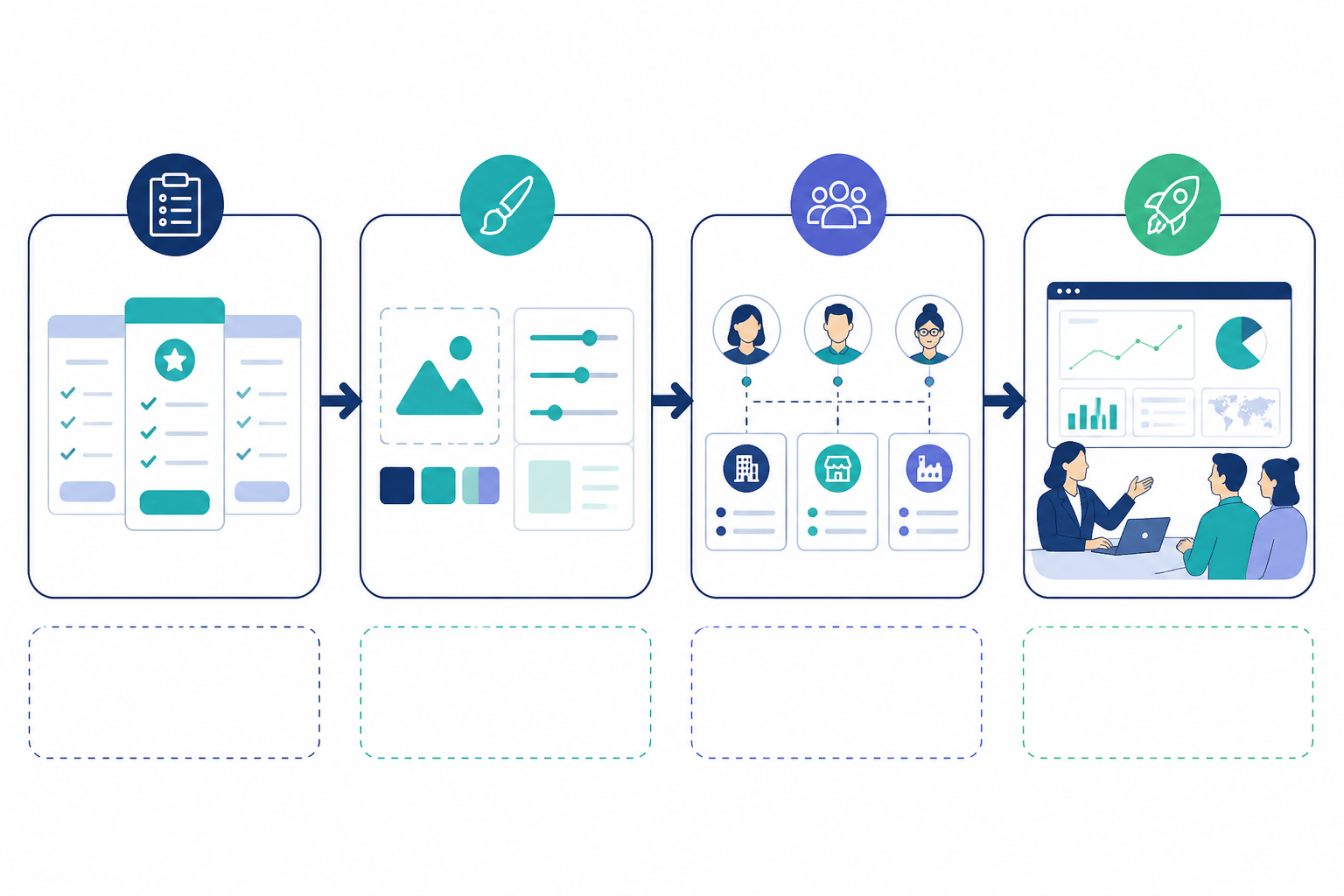
Most agencies can get a pilot running within a day. No development sprint, no engineering integration, no ad account connection, because the platform is built to collect and organise advertising activity that's already publicly visible.
FAQ: white-label competitor ad monitoring for agencies
Can agencies legally resell competitive intelligence as their own product?
White-label platforms like Rival Ads are built for agencies to present monitoring, reporting and analysis under their own brand. That said, it's worth reviewing the platform's terms, relevant advertising-library rules, and UK data protection or IP requirements before launching the service.
You're selling access to insights and analysis, not presenting competitors' copyrighted creative as your own marketing content. If you're reproducing ad images, copy or links in client reports, make sure that use is permitted and handled appropriately.
What is the typical margin on a white-label ad monitoring service?
Margins can be strong because most of the delivery is automated. Wholesale plans start from $29 a month, and we've seen many agencies price client-facing packages at two to four times that. Final pricing should reflect how many competitors are tracked, what reporting features are included, account management time, and how much strategic commentary you're layering on.
How do I pitch competitor ad monitoring to existing clients without making it feel like an upsell?
Show, don't tell. Pull up a live example of a competitor's current ads during a QBR or strategy call, point out something the client didn't already know, and explain how it could change a marketing decision.
Position it as ongoing market awareness rather than just another software line item. A short pilot or introductory package can also take the pressure off, letting the client feel the value before committing to something bigger.
Do I need technical resources to set up a white-label competitive intelligence tool?
No. Rival Ads doesn't require ad account connections or development work. You enter a competitor's website, configure your branding, and set up weekly reports. Many agencies launch a pilot within a day, though exact setup time depends on the plan and how many clients you're onboarding at once.
Start selling competitor ad monitoring as an agency add-on
For UK agencies, white-label competitor ad monitoring is a genuinely practical way to add visible value without building software or hiring anyone new. It strengthens client retention, opens up a new recurring revenue line, and gives account managers something more useful to talk about in strategy conversations than the same old metrics deck.
The simplest way in: pick a starter plan, brand the client experience, pilot it with one or two accounts, and package the results as a clear monthly service. Keep the reporting automated and the pitch focused on better decisions, not another dashboard, and competitor intelligence can become a genuinely scalable, high-margin part of what your agency offers.