How Agencies Can Resell Competitor Ad Intelligence to Clients: A Business-Model Guide
Turn agency competitor ad intelligence into recurring revenue with whitelabel ad monitoring, clear packages, smart pricing and reporting clients value.
Chris Edington
15 min read

Agency Competitor Ad Intelligence: How to Turn Weekly Ad Monitoring into Recurring Revenue
Agency competitor ad intelligence means tracking what your clients' rivals are advertising and selling those insights as a branded service. It usually takes one of three forms: an add-on retainer, a standalone subscription or a bundled strategy deliverable. Tool costs per client can be small (Rival Ads lists plans from $29/month at the time of writing, so check current pricing), which leaves room for a healthy contribution margin. The software isn't the hard part, though. The hard part is the packaging, the positioning and a reporting rhythm clients can rely on.
This guide covers what you're reselling, how to package and price it, how to deliver it under your own name, and some language you can borrow for pitches. The numbers are illustrative. Nobody publishes a market benchmark for what agencies charge for this, so treat the figures as starting points and swap in your own costs.
Why Clients Pay for Competitor Ad Intelligence
Here's the pain I hear most often: clients don't know what rivals are running until it's already hurting them. A competitor launches a discount angle, tries a new creative style on TikTok, or starts a LinkedIn push, and the client only finds out when their cost per lead creeps up. Then they ask you why.
What clients value is seeing it. Real creatives, exact copy and landing page links across every platform a competitor uses. That's concrete in a way most reporting isn't.
It can also make your retainer easier to defend. A strategy conversation that opens with 'here's what your three main rivals changed this week' gives the client something fresh to react to, which last month's click-through rates often don't. I can't promise it will save a budget review, but clients tend to value things that help them make decisions.
Picture a hypothetical Tuesday. A client emails: 'What's our competitor doing with their summer promo?' Without a system, someone loses half a day clicking through ad libraries, screenshotting and guessing what's new versus old. With a monitored archive, the account manager opens the dashboard, sees the recent changes and replies in minutes. Clients remember that speed.
What competitor ad monitoring can and can't tell clients
Free tools like the Meta Ad Library and the Google Ads Transparency Center let anyone browse public ads, so your paid service has to add something. That means consistent competitor selection, historical tracking, organisation across platforms and, above all, interpretation. Be straight with clients about the limits too. Ad intelligence shows what competitors are running. It doesn't reveal their budgets, targeting or results, and an ad that runs for a long time doesn't prove it works. Pitch it as decision support, not X-ray vision.
What You're Actually Reselling: The Client Experience
In plain English, here's how Rival Ads works, based on the product's own description. You give it a competitor's website. It detects where that brand advertises across supported platforms (Meta, Google Ads, TikTok and LinkedIn at the time of writing), then collects their active ads each week, including creative, copy and links. Coverage and features can vary by platform and plan, so check the current Rival Ads documentation and pricing page before you promise anything to a client.
Your clients experience four parts:
- A growing archive. Ads are stored over time, so you can see what ran, not just what's live today.
- Week-over-week diffs. What's new, what's stopped and what's still running. This is what turns a pile of screenshots into a story.
- AI strategic analysis. The tool uses Claude to summarise changes, such as the angle a rival seems to be testing or an offer that keeps recurring, and what it might mean. Treat it as a first draft and check it against the actual creatives.
- A dashboard plus a weekly email digest. Whitelabel options let you present both under your agency's name, logo and colours.
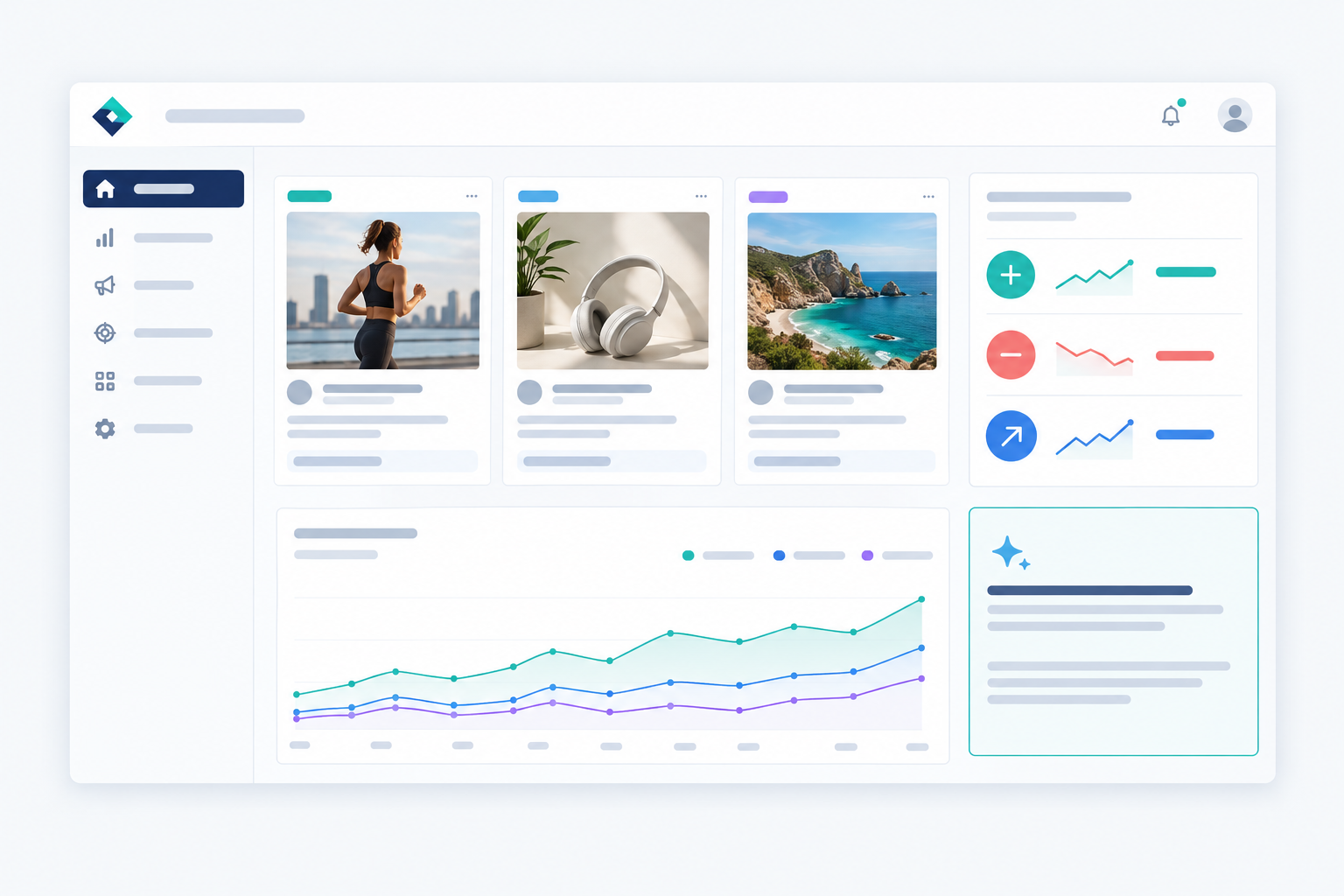
One note on labels. If your dashboard marks some ads as 'scaling', read that as the tool's observed status. It isn't evidence that spend or performance is rising. In your own commentary I'd stick to neutral wording like 'still running'.
What does the client see in a whitelabel ad monitoring service?
Here's a mock walkthrough. On Monday morning, your client gets an email from your agency's sender identity: 'Competitor Watch: your weekly ad digest'. It opens with a headline summary, say four new ads, two stopped and one still running across their three tracked rivals. Click through and they land on your branded dashboard. Each competitor has cards showing the creative, the copy and the destination link, a panel sorts the week's changes, and the AI analysis sits at the top in short, readable paragraphs.
What they don't see is the underlying vendor or how the data gets gathered. To them, it's your product. That's the whole appeal of whitelabel ad monitoring.
Three Ways to Package Agency Competitor Ad Intelligence
The tool is the same in every case. What changes is the depth of your analysis and how often you sit down with the client. Here are three packages, with prices in GBP as illustrative ranges.
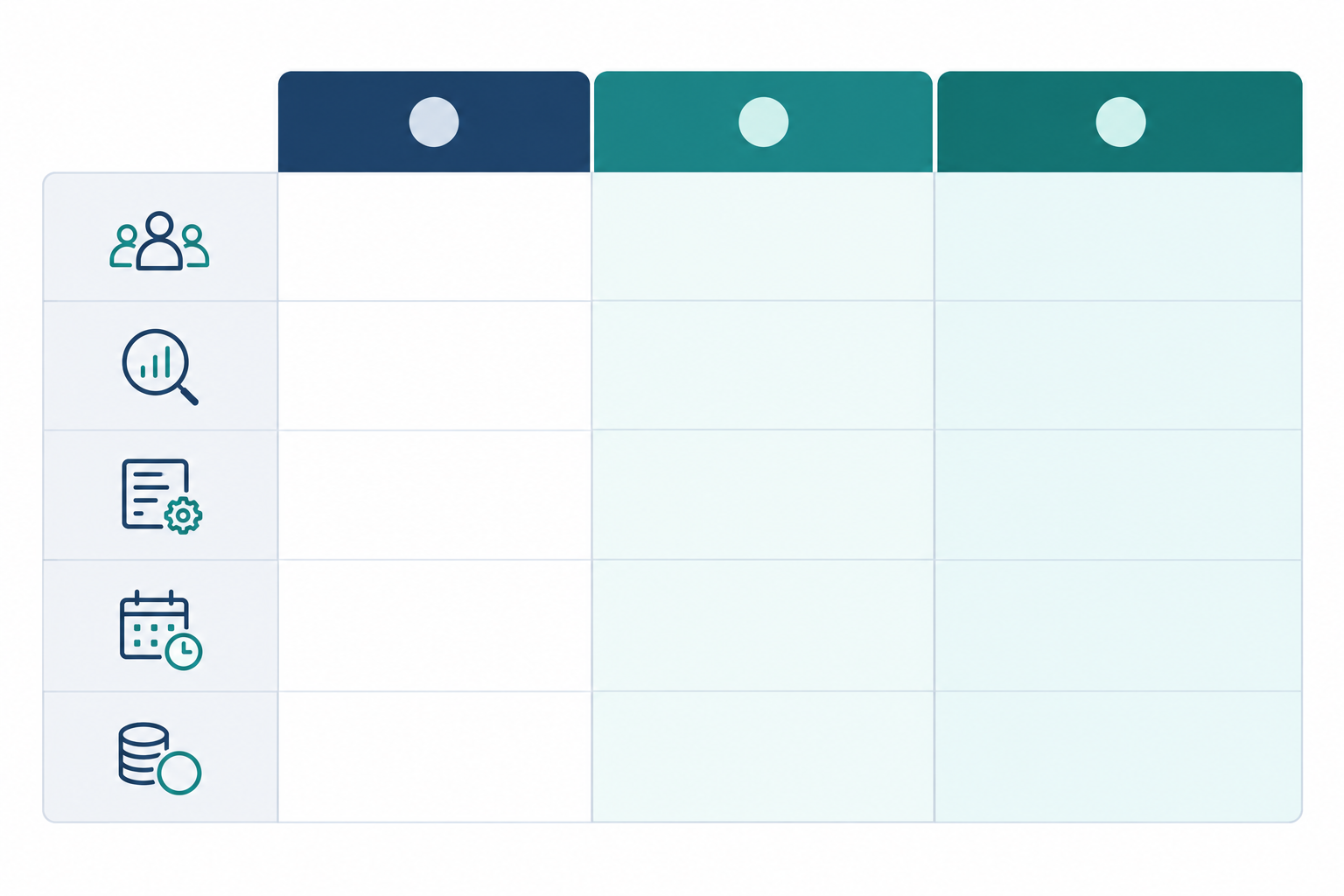
| Package 1: Add-on | Package 2: Standalone subscription | Package 3: Strategy bundle | |
|---|---|---|---|
| Ideal client | Existing retainer clients | Clients who don't buy media management from you | Clients doing audits, pitches or planning cycles |
| Competitors tracked | 3 | 5 to 10 | 5 to 8, reviewed quarterly |
| Deliverables | Branded weekly digest, light cover note | Dashboard access, weekly digest, monthly strategy call | Intel built into audits, creative briefs and a quarterly deep-dive deck |
| Cadence | Weekly | Weekly plus monthly call | Quarterly, with weekly monitoring behind it |
| Suggested price (illustrative) | £150 to £250/month | £350 to £600/month | £750 to £1,500/quarter (about £250 to £500/month equivalent) |
Package 1: Competitor Watch add-on
This is the easiest sell. Your paid social or PPC client already trusts you, so you're adding a lens, not starting a new relationship. Positioning line: Know what your competitors are testing before your customers do.
Package 2: Market Intelligence subscription
This suits in-house marketing teams, founders and brands that run ads themselves but want an outside view. The monthly call is what justifies the higher price. Positioning line: A weekly look inside your competitors' ad playbook, with a monthly plan for what to do about it.
Package 3: Strategy bundle
Here the intel gets baked into things you already sell: audits, new business pitches, creative briefs and quarterly reviews. Positioning line: Every brief we write starts with what the market is already saying.
Which competitor ad intelligence package should you lead with?
- Small agency, mostly retainers: lead with Package 1. It's quick to sell and quick to deliver.
- Mid-sized agency with a mixed book: offer Packages 1 and 2, and keep Package 3 for your best accounts.
- Strategy-led or consultancy-style agency: lead with Package 3 and let the weekly monitoring sit underneath as your evidence base.
Pricing and Margins: How Much Can Agencies Charge?
Many UK agencies could reasonably position this between £150 and £600 a month, with more for bigger competitor sets or bundled strategy calls. To be clear, that's illustrative, not guaranteed. There's no established market rate, so you're making a service-design decision, not matching a price list.
A worked margin example for agency ad monitoring
Rival Ads plans start at $29/month (roughly £23 to £25, depending on the exchange rate) and are tiered, so tool cost depends on how many competitors you monitor. I've used higher placeholder costs for the bigger packages. Your actual cost per client depends on your plan and how you spread it across clients, so it won't necessarily match these figures. I've costed your time at £40/hour, which covers reviewing the AI analysis and writing your commentary.
| Package | Client fee | Tool cost (placeholder) | Your time | Contribution | Contribution margin |
|---|---|---|---|---|---|
| Add-on (3 competitors) | £200 | £25 | 1.5 hrs = £60 | £115 | about 57% |
| Standalone (8 competitors) | £450 | £75 | 4 hrs = £160 | £215 | about 48% |
| Strategy bundle (6 competitors) | £400 equivalent | £50 | 3.5 hrs = £140 | £210 | about 52% |
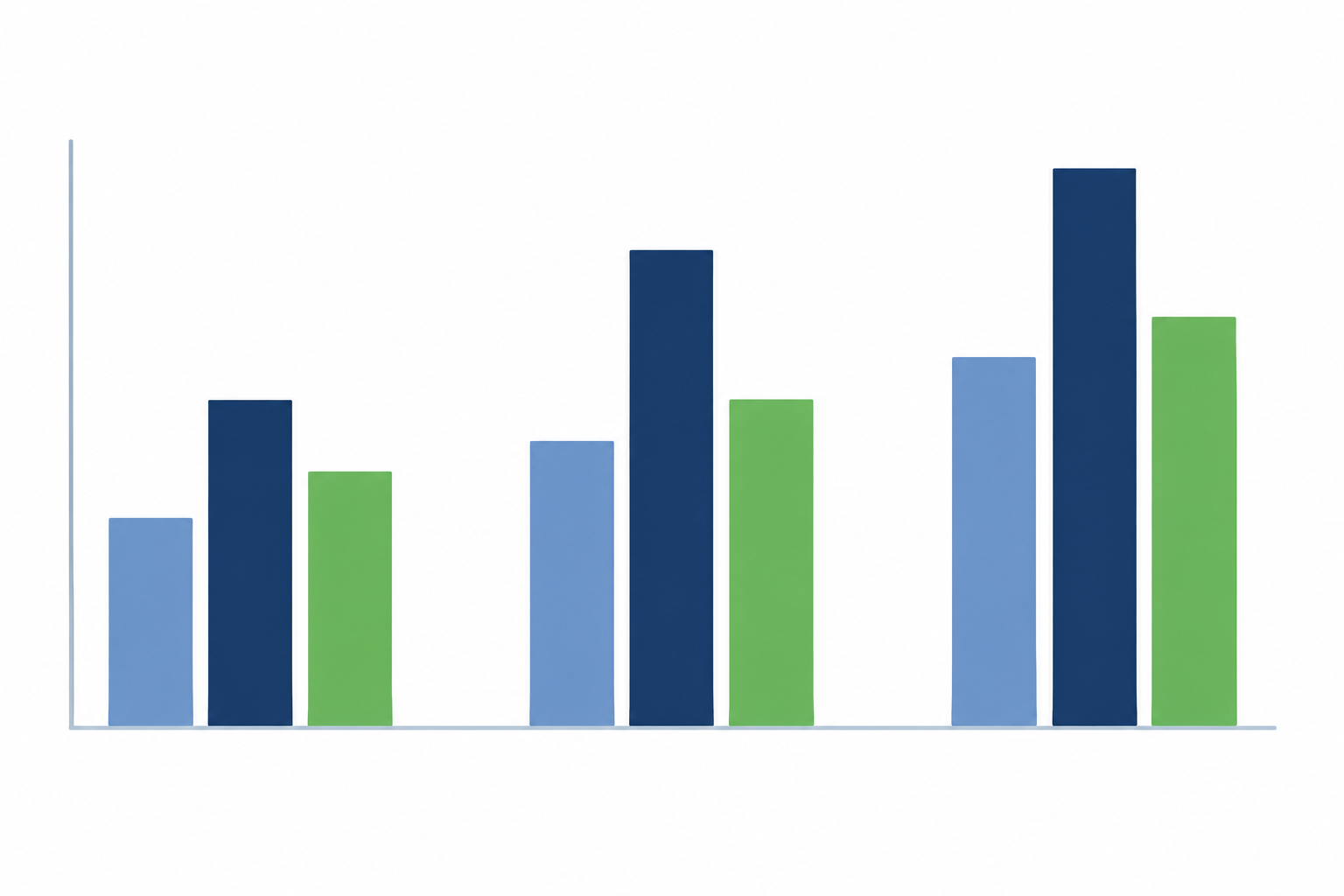
These are contribution margins: the fee minus only the tool and labour costs listed. They leave out setup time, sales effort, wider account management, payment fees, tax and general overhead, so real profitability will be lower. Don't compare them with company-wide agency net margins either. Industry reporting such as Promethean Research's has put average digital agency net profit at around 15% in 2023, but that's a whole-business figure and says nothing about what a well-run add-on should earn.
Pricing models for competitor ad intelligence
- Flat monthly fee: simple and easy for clients to approve.
- Per-competitor pricing: transparent, and it scales with your tool tier.
- Tiered packages: the three above, which let clients pick for themselves.
- Retainer uplift: bundle it in and raise the retainer by a set amount.
Price the decisions, not the tool
Cost-plus pricing is a trap here. If a client is deciding how to spend £10,000 a month on media, a £200 service that sharpens those decisions is an easy yes. Price against what the intel informs: creative tests, offer strategy, channel mix. That's also why your cover note and monthly call matter more than the dashboard itself.
UK VAT and currency considerations
The tool is billed in dollars, so build a little buffer into your pricing for exchange-rate movement. If you're VAT registered, you'll charge clients VAT on top of your fee, and you may need to account for VAT on overseas software purchases too. Speak to your accountant about how that applies to you.
How Many Competitors Should You Track Per Client?
Fewer than you think. Here's my rule of thumb:
- 3 to 5 direct competitors for most SMB clients.
- Up to 8 to 10 for enterprise brands or crowded categories.
- A mix of types: direct rivals, an aspirational brand or two, and an emerging challenger who's growing fast.
Why not track everyone? Because too much signal kills the weekly digest. If every email contains 60 changes, nobody reads it, and the one meaningful shift gets buried.
Competitor count also maps onto your commercial structure. Three competitors suits the add-on and a lower tool tier. Five to ten suits the standalone subscription and probably a higher tier. When you price, you're really pricing the size of the competitor set.
My tip for choosing: start with the client's own shortlist, then add two they haven't thought of. Those two often produce the most interesting insights.
How to Deliver Whitelabel Ad Monitoring Under Your Own Brand
Here's the setup, step by step. Exact options depend on your plan, so confirm what's available in the current documentation first.
- Set up your whitelabel branding. Add your logo and colours, and check how custom domain and email sender settings work, so digests arrive from your agency rather than a vendor.
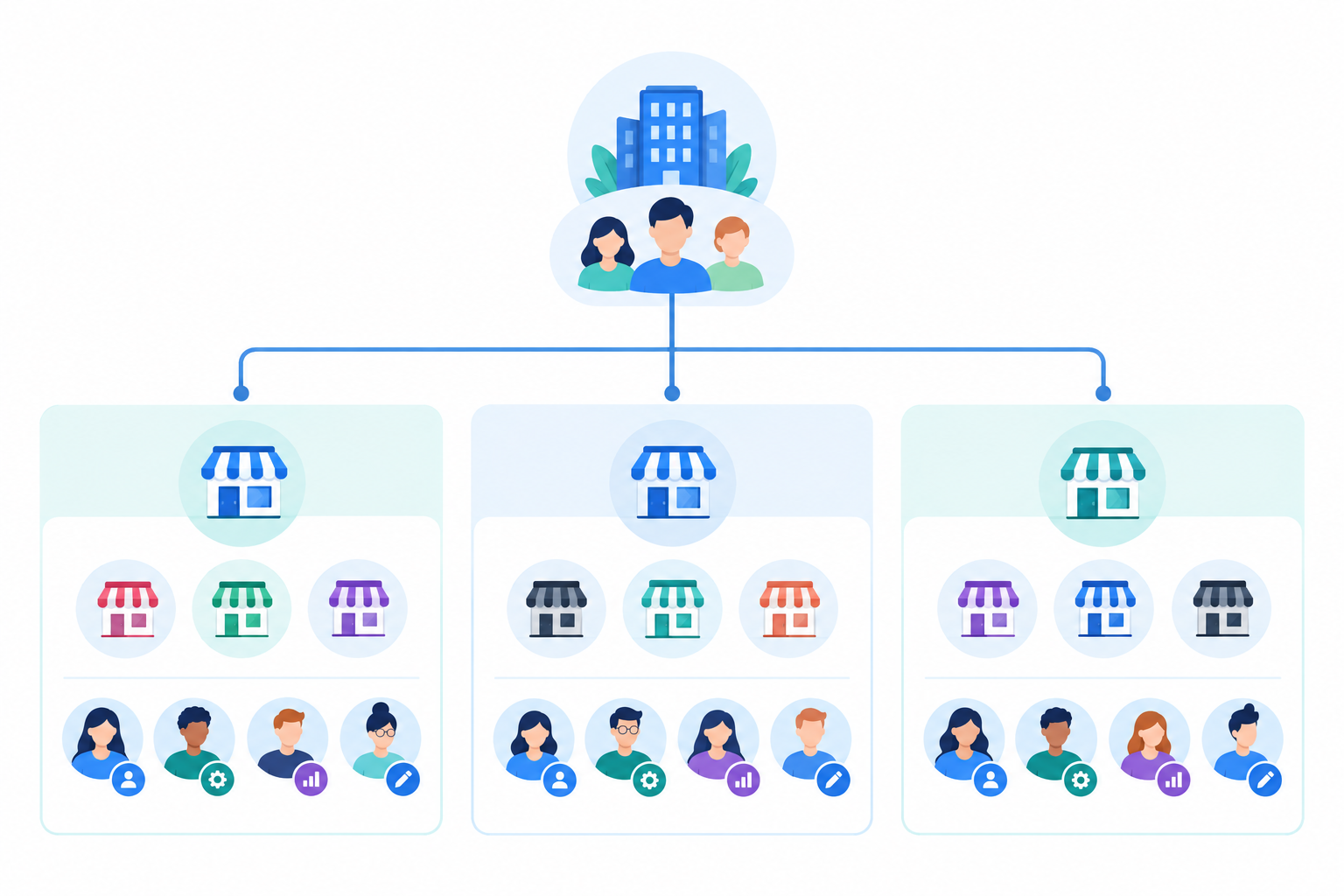
- Create a workspace for each client. One workspace per client keeps everything tidy. Add their competitors and assign team members.
- Give multiple client accounts a clear structure. Use role-based access where available so account managers only see the clients and competitor sets they're responsible for. That's the clean answer to 'how do I manage a dozen clients at once?'
- Decide who gets what. Some clients want dashboard access and will explore it. Others only ever read the email. Both are fine, as long as you decide up front.
- Add your own layer. A short human cover note on top of the AI analysis is what turns an automated report into an agency service. Two or three sentences is enough.
- Keep client data separate. Never reuse a competitor set across clients without thinking it through. Clients in the same category shouldn't discover that you've shared their strategic watchlist.
Reporting Cadence for Competitor Ad Monitoring
A reliable rhythm matters more than a clever dashboard. Clients stay engaged when they know exactly what's coming and when.
- Weekly: the automated email digest listing new, stopped and continuing ads. It takes you very little effort.
- Monthly: a 20 to 30 minute review call with a trend summary and recommended actions.
- Quarterly: a strategic deck covering messaging shifts, channel mix changes and creative themes.

Competitor ad intelligence insights worth flagging
Not every change deserves a mention. These usually do:
- A competitor pausing a long-running ad. If something ran for months and suddenly stopped, it's worth a note.
- A sudden TikTok presence from a brand that was previously Meta-only.
- A new LinkedIn offer angle, such as a free audit replacing a demo request.
- The same message appearing across several competitors at once, which may hint at a category trend.
Be careful with interpretation. 'This ad has been live for 11 weeks and is still running' is an observation. 'It's clearly their best performer' is an inference, and a shaky one, because persistence or a creative change doesn't prove spend, results or intent. Label your hypotheses as hypotheses.
Turn a weekly competitor ad update into an action in 15 minutes
- Skim the digest and pick the one or two changes that matter (3 minutes).
- Read the AI analysis and check it against the actual creatives (5 minutes).
- Ask: what would we test, copy, avoid or ignore? (4 minutes)
- Write a two-line note with one recommended action (3 minutes).
A sample client cover note
Hi Sarah, quick one from this week's digest. Two of your main rivals have both moved to 'free delivery over £30' messaging on Meta, and one has stopped its long-running discount code ad. We'd suggest testing a delivery-led variant against your current offer next sprint. Happy to talk it through on Thursday's call. Best, Tom
Short, specific and obviously written by a person.
How to Onboard Competitor Ad Monitoring Clients Fast
Monitoring works from competitor websites rather than client ad account connections, so onboarding can be unusually quick. There are no permission requests or security questionnaires to wait on, and you can go from signed proposal to first digest in days. Here's the flow I'd use:
- Run a free 'first look' before the sales call. You only need a competitor's website URL. Bring a snapshot to the meeting. It's a far better opener than a slide deck.
- Agree the competitor list in a 20-minute kickoff. Start with their shortlist and suggest your two extras.
- Send a branded welcome email with dashboard access and a plain description of what they'll receive and when.
- Deliver the first digest in week one and book the first monthly review straight away.
That same snapshot works as a pitch asset too. Prospects who aren't clients yet can see a real picture of their competitors' advertising, and that's a strong way to start a conversation.
Positioning Language and Pitch Ideas Agencies Can Borrow
One-line value statements
- Ecommerce: 'See which offers your rivals are pushing before the sale season starts.'
- B2B SaaS: 'A weekly look at how competitors are positioning themselves on LinkedIn and Google.'
- Local services: 'Know what the other firms in your area are promising, and where you can say something different.'
Describe competitor ad intelligence without jargon
Skip 'ad intelligence platform' with most clients. Try: a weekly look inside your competitors' ad playbook. Or, if you want to sound more careful: we monitor observable competitor advertising and turn it into recommendations for your next campaign. Don't promise lower acquisition costs. Performance depends on execution.
Handling 'Can't we just use the Meta Ad Library ourselves?'
Have a calm answer ready. Yes, they can, and it's a useful free tool. But what each public library shows, and how much history it keeps, varies by platform, region and ad type, and each one covers only its own platform. Someone still has to check every competitor on every platform each week and work out what changed. A managed service pulls that together in one place, keeps its own archive, tracks week-over-week differences and adds analysis. What you're selling is saved time and a consistent history, not secret data.
Where ad spy tool searches fit
Some clients will have Googled 'ad spy tool' and tried a free trial. Acknowledge it. The difference is that you're offering a managed, branded service rather than a login: someone chooses the competitors, reads the changes and tells them what to do. Be honest that observable ads aren't spend or results data. That honesty builds trust.
Proof points for competitor intelligence proposals
- Hours saved each month on manual checking.
- Number of competitors and platforms covered consistently.
- Decisions informed: tests launched, offers adjusted, briefs sharpened.
- Clear scope: platforms, markets, refresh frequency and what is observed versus inferred.
Getting Started with Agency Competitor Ad Intelligence
You don't need a grand launch. Three steps will do:
- Pick a package. For most agencies, that's the add-on.
- Choose a pilot client. Someone friendly, with an active ad programme and a competitor they're curious about.
- Set up your whitelabel workspace. Add your branding, enter the competitor websites and let the first weekly collection run.
A single-client pilot keeps risk low, though your costs will depend on the plan you choose and the time you spend. Check current Rival Ads pricing and whitelabel options on its website, then run a pilot and see how it feels under your own brand.
FAQ: Agency Competitor Ad Intelligence
How much can agencies charge for competitor ad monitoring?
There's no standard rate. As an illustration, many UK agencies could position it at roughly £150 to £600 per month, with higher prices for larger competitor sets or strategy calls. Margins depend on your plan, workload and delivery costs, so run your own numbers.
Do clients need to connect their ad accounts?
No. Rival Ads works from a competitor's website, so there are no client ad account connections to arrange. Check the current documentation for which platforms are covered.
Can I put my own branding on the dashboard and emails?
Rival Ads offers whitelabel options, but specifics such as custom domains and sender identity can depend on your plan. Confirm what's included before you promise it to clients.
How do I manage several client accounts at once?
Use separate client workspaces with role-based access and competitor assignment, so account managers only see the clients they're responsible for.
Is this different from using the Meta Ad Library?
Yes, mainly in convenience and continuity. A managed service brings several platforms together, keeps a history and adds analysis. See the objection-handling section above for the fuller comparison.