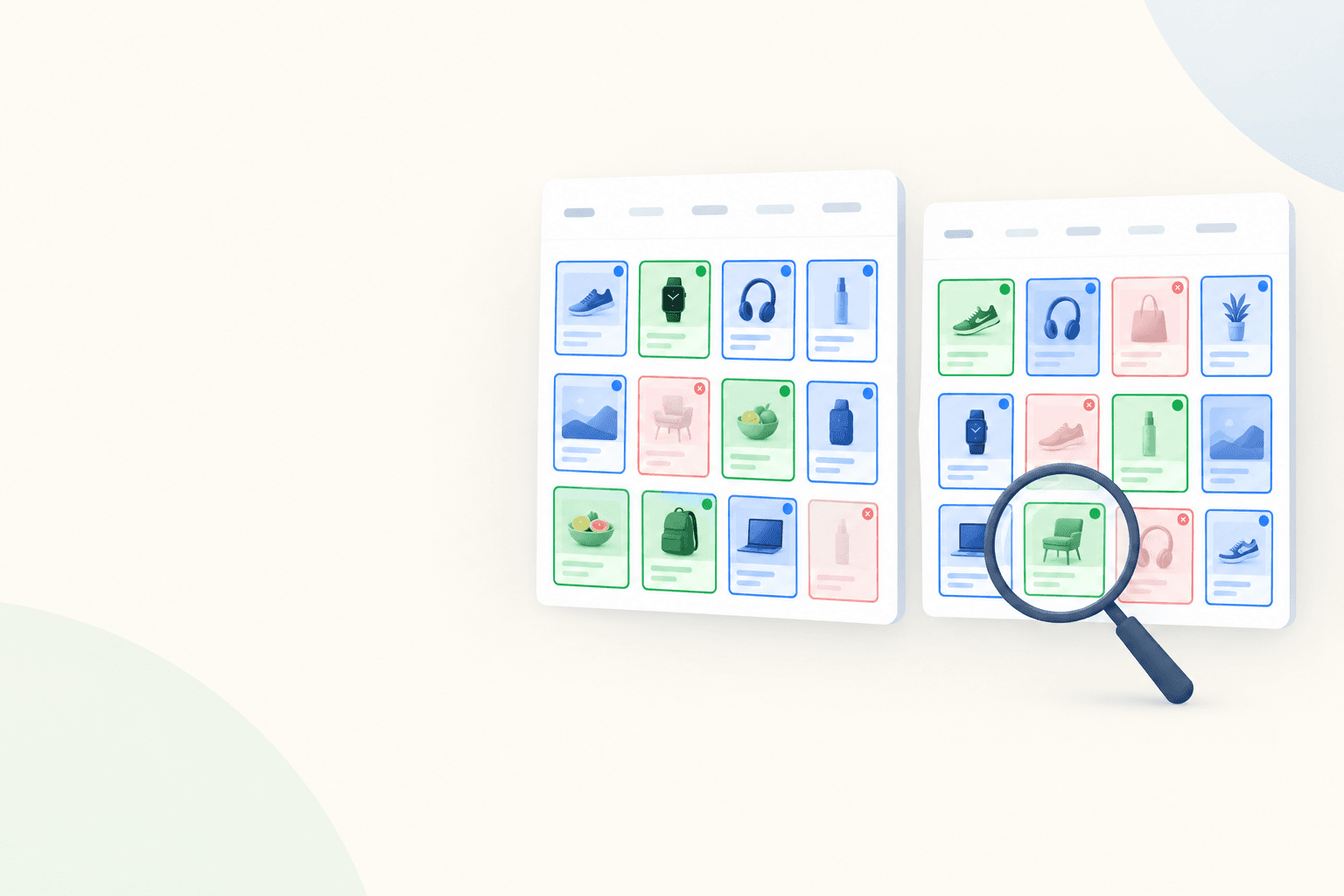
How to Counter a Competitor Launch: A Marketer's Playbook
Competitor launch? Use 48 hours of evidence to decide whether to ignore, match, counter-position or out-test—without reacting in panic.
Chris Edington
15 min read

A rival has just launched something loud, and your phone is already buzzing. Here's the short answer: don't react to every competitor launch. Spend 48 hours gathering facts on what your rival is actually running across Meta, Google, TikTok and LinkedIn. Then pick one of four responses: ignore, match, counter-position or out-test. Let evidence decide which one fits, not panic or a nervous boardroom.
This guide is a decision tree built on evidence rather than gut feel. It covers how to gather the facts, how to read them (and what public ad data can't tell you), how to choose a response, and how to get your team moving without chaos.
Full disclosure: I'm part of the team behind Rival Ads, an ad monitoring tool, so you'll see it mentioned in a few places. The framework works with any monitoring method, including free manual checks.
How to Respond to a Competitor Launch: First, Don't Panic 😮💨
You know the message. It lands in Slack at 9:12 on a Tuesday: 'Have you seen what they just launched?' Within minutes there are three screenshots, a LinkedIn post with 400 likes, and someone suggesting we rewrite the homepage by Friday.
Here's the thing: loud is not the same as successful. A press release, a founder post and a slick landing page can all appear in a week. Real commitment shows up later, in a product that works, a clear offer, and marketing that carries on after the launch-day glow fades.
Threads is a handy illustration. Meta said the app passed 100 million sign-ups within five days of its July 2023 launch. Meta later reported 130 million monthly active users in its Q4 2023 results. Those two numbers measure different things, so they don't prove retention on their own. But they show why early attention and lasting adoption are separate questions, and why your response should depend on the second one.
That's why I recommend the 48-hour rule: observe first, decide second. The usual knee-jerk mistakes are all avoidable:
- Copying their creative. You look like a follower and weaken your own brand cues.
- Slashing prices. Margin is easy to give away and very hard to win back.
- Rewriting your homepage overnight. You change what's working based on an assumption.
None of these are decisions. They're reflexes. Let's replace them with a process.
How to Research a Competitor Launch Across Platforms
Use the first 24 hours to build a clear, dated picture of what the rival is really doing. Launches rarely stay on one channel, so look widely.
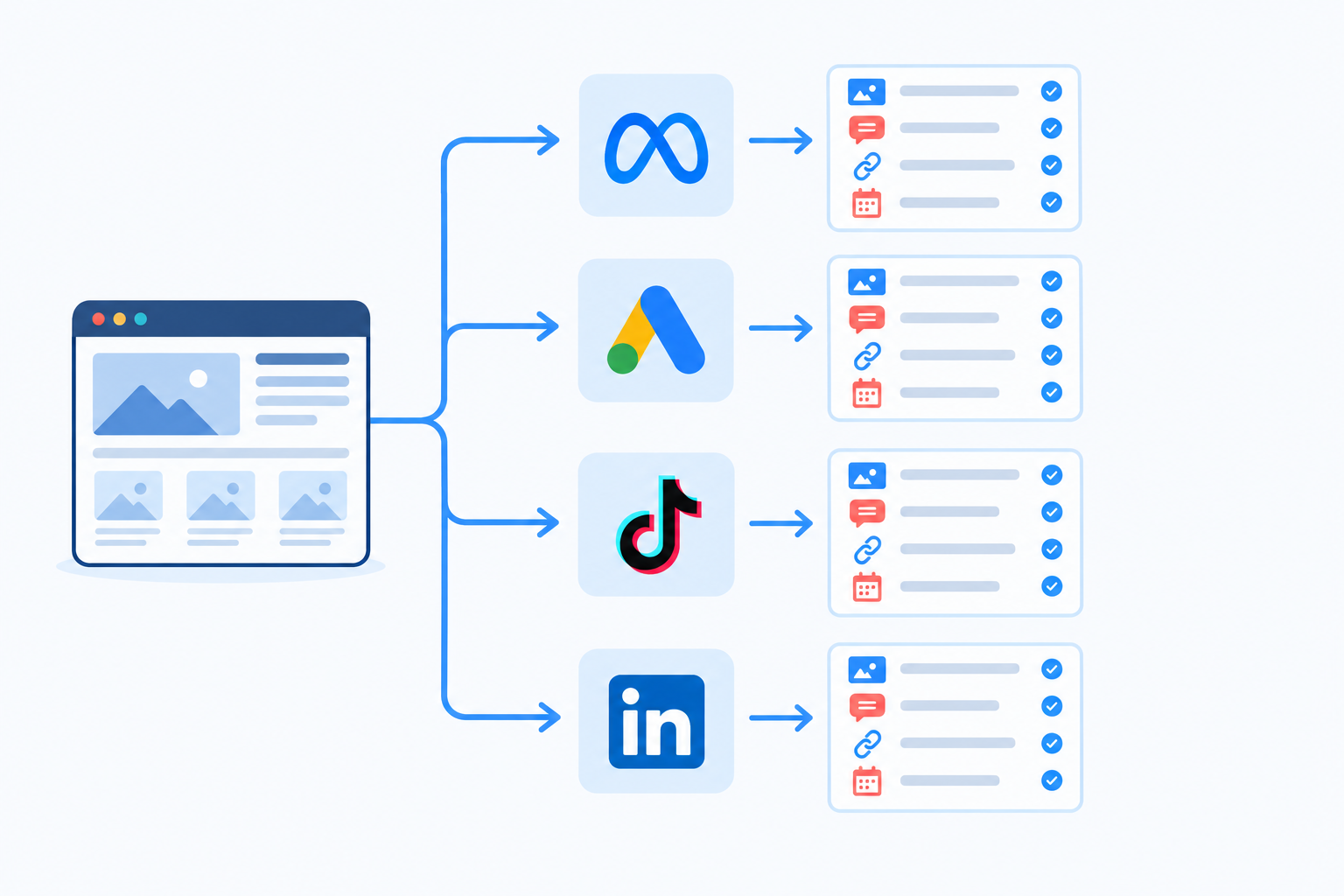
- Map where they're advertising. Check Meta, Google Ads, TikTok and LinkedIn. If you only check one platform, you'll miss part of the story.
- Capture the real creatives, exact copy and landing page links. A colleague's screenshot isn't evidence. You want the actual ad, the wording, the call to action and where it points.
- Separate new ads from long-running ones. Recently started ads are likelier to be part of the launch, while older ads show their existing baseline.
- Note volume and variation. How many variants are live? Are they running video against static, or short hooks against long ones? Heavy variation can suggest a team that's actively testing, though it's only a clue.
- Treat platform choice as a hint about channel strategy. LinkedIn presence might point to a B2B push, and TikTok to broader reach. That's a hypothesis, not proof of who they're targeting, because public ad tools don't reliably show audience settings.
What public ad libraries can and can't tell you
The Meta Ad Library and Google's Ads Transparency Center are genuinely useful. They show what's running, and they can reveal messaging, creative variations and timing that a product announcement won't. But the limits matter:
- They can't confirm spend, conversions or profitability. Ad counts, run time and platform presence are directional indicators only.
- They're a snapshot. You see what's live today, with little sense of what changed last week.
- Coverage differs by platform and ad type. Meta, for example, keeps certain political and social-issue ads for seven years, but that doesn't apply to ordinary commercial ads. So don't treat any library as a full history.
- They're slow to use manually, since you're searching platform by platform and rival by rival.
Good practice is to keep a source log: dated screenshots, links, and a label for each finding (confirmed, estimated or unverified). Tools like Google Trends can add context, but only as a directional signal of rising or falling interest, never an exact search volume.
When competitor ad monitoring tools can help
If you're tracking several rivals, a monitoring tool saves the legwork. Rival Ads, for example, starts from a competitor's website URL, looks for their presence on Meta, Google, TikTok and LinkedIn without needing access to your ad accounts, and collects their active ads weekly. Coverage depends on what each platform makes publicly available, so check what's supported for your rivals before relying on any tool.
The feature I find most useful in practice is the week-over-week diff: what's new, what's been stopped and what's continuing. Whatever tool you use, that comparison tells you more than a single snapshot.
How to Decide Whether a Competitor Launch Deserves a Response
Once you have the facts, ask whether there's real weight behind them. Treat an announcement as an early signal, not proof. Here's what I look for, and what each signal does and doesn't suggest:
- Ad volume rising week after week. This may indicate growing investment, but ad count isn't budget. A few ads can carry big spend, and many ads can carry very little.
- Ads that stay live for weeks. Longevity hints that something hasn't been switched off, not that it's profitable. Some teams leave weak ads running.
- Ads that disappear quickly. They may be tests that were retired, or simply a planned burst. Look for a pattern before concluding anything.
- Presence on several platforms. It suggests broader ambition, but it doesn't prove a full-funnel strategy without other evidence such as pricing, content and sales activity.
- Consistent messaging between ads and landing pages. A clear, repeated story suggests a deliberate positioning bet.
- Direct comparison language aimed at you. If their copy names your category, your strengths or your customers' pain points, pay closer attention.
Also look for operational proof beyond advertising. Netflix's ad-supported plan, for instance, launched with a named technology partner and went live in 12 countries in November 2022, which is stronger evidence of commitment than a press release. Ask the same of your rival: is the product live, is pricing public, can customers actually sign up?
A worked example: how to assess a competitor launch
Imagine a rival announces a flashy new service tier. The founder posts about it and your leadership team is anxious. Here's how I'd run the 48 hours.
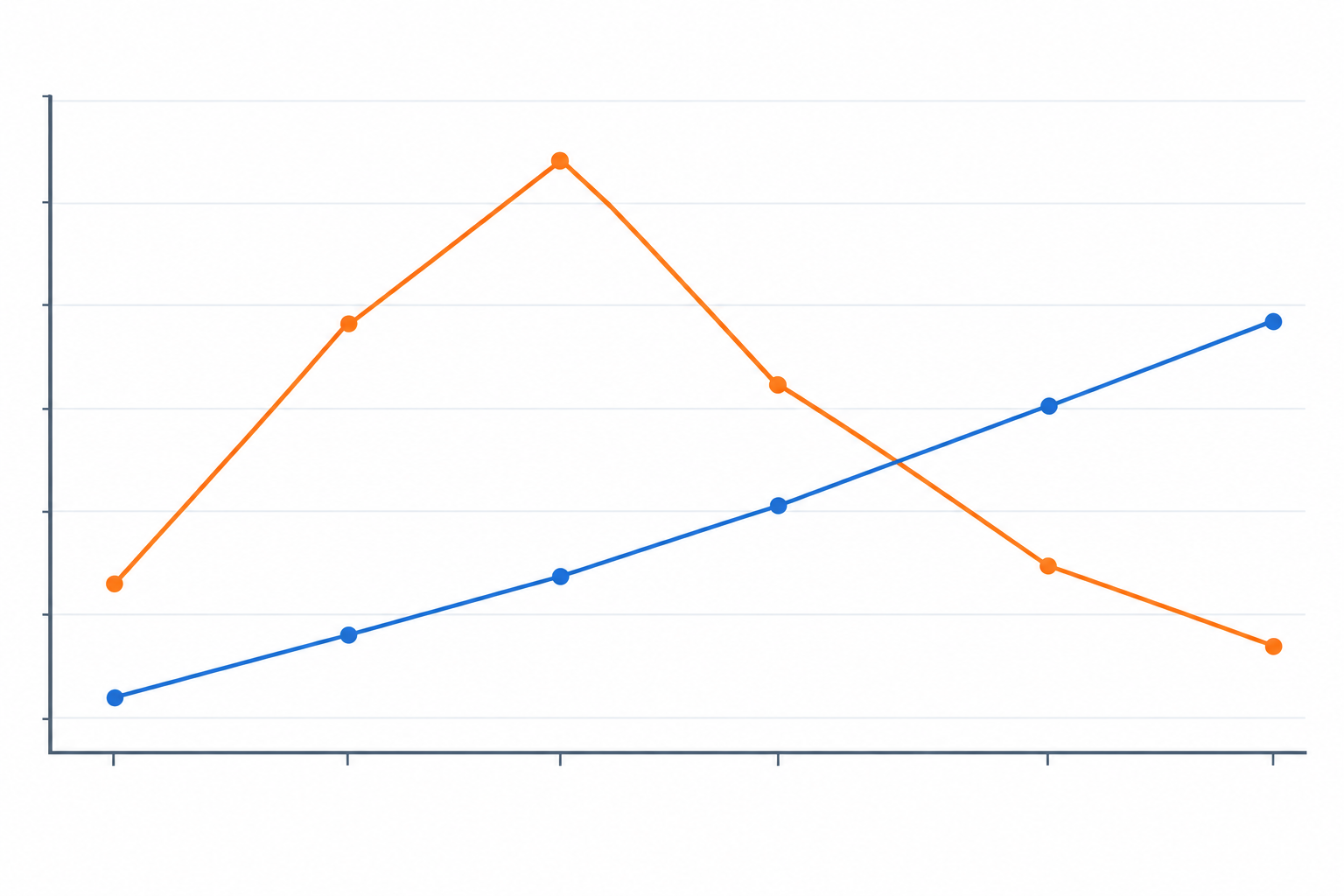
The evidence: ad monitoring shows 30 new ads in week one. By week two, 18 have been switched off and nothing new has replaced them. By week three, only a handful of retargeting ads remain. Their pricing page doesn't mention the new tier, and the sign-up link goes to a waitlist.
The inference (and I'd label it as inference): they may be testing interest rather than scaling. We can't see their spend or results, so we hold that view loosely.
The decision: audience overlap is high, but the threat to our core offer is low, because the tier covers a segment we don't serve. Activity is fading. So we ignore the launch, set a re-check for three weeks' time, and leave the homepage alone.
The measured result: we judge it by our own numbers. Win rate and qualified leads stayed steady across those weeks, and sales logged no new objections about the tier. Reacting in week one would have meant rewriting messaging for a campaign that cooled off.
That's the payoff of a week-over-week view. Tools with AI-generated analysis, such as the one in Rival Ads, can help summarise those changes, but a human should always check the reading against the other evidence.
The Ignore, Match, Counter-Position or Out-Test Framework
Now for the decision. Answer three questions, each with a simple high or low:
- Audience overlap: do they target the buyers you're trying to win?
- Threat to your core offer: does the launch change why customers choose you?
- Sustained activity: do the ad and operational signals suggest the launch is continuing rather than fading? (Directional only, as above.)
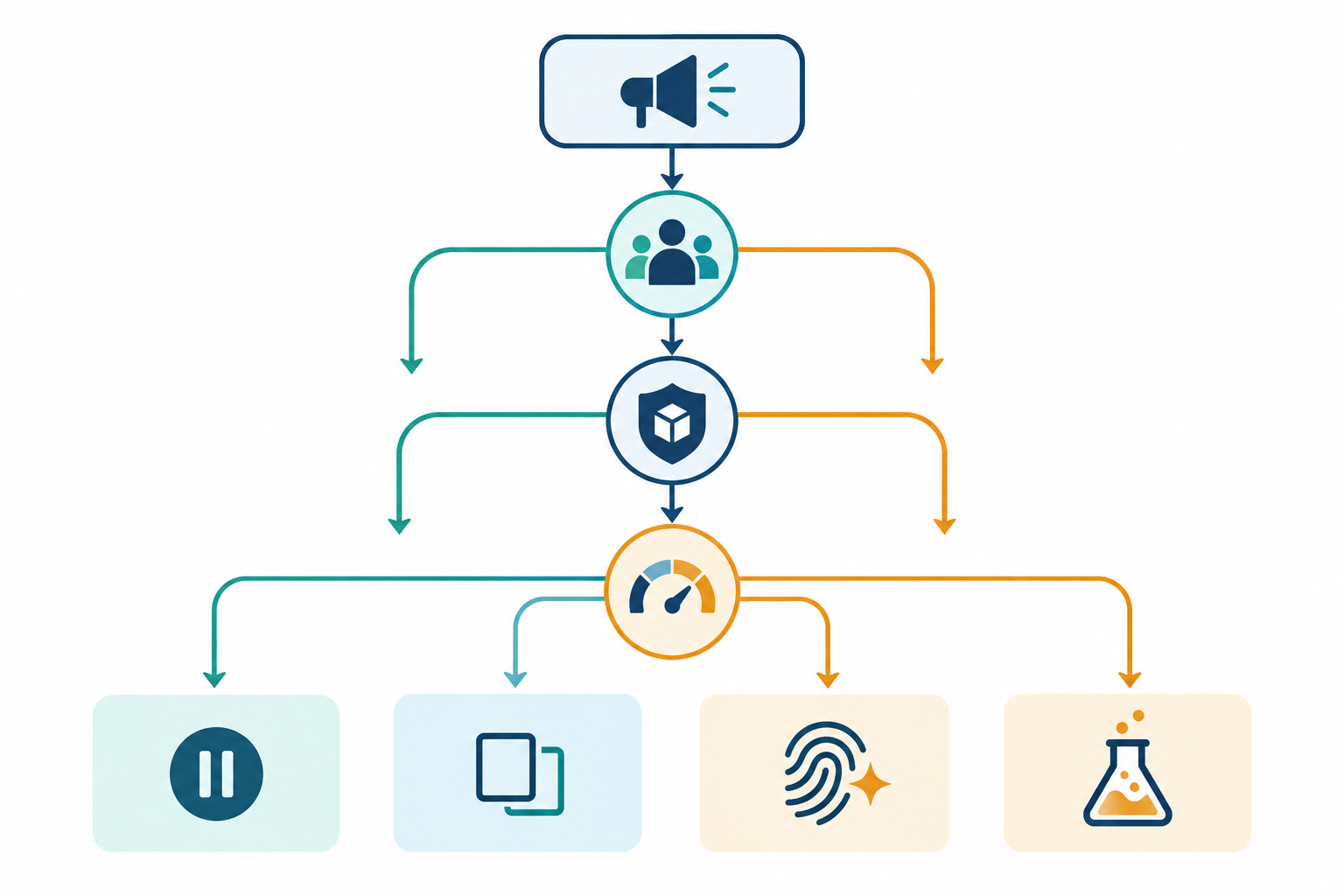
Then use these rules to pick a response:
| If this is true... | Choose | Why |
|---|---|---|
| Overlap is low and threat is low | Ignore | Keep monitoring and re-check in two to four weeks |
| Overlap or threat is high, but activity is thin or fading | Ignore (with a watch) | Don't spend budget on something that may not last. Re-check in two weeks |
| Customers keep asking for what they launched, it's a genuine gap, and you can deliver credibly | Match | Closing a real gap beats ignoring it. Only match what you can honestly provide |
| You have a distinct strength you can prove (service, trust, specialism, results) | Counter-position | Compete on what they can't easily copy |
| Their angle looks unproven, and you can run fast, measurable experiments | Out-test | Learn quicker than they do, rather than guessing |
Two extra rules keep this honest. First, a single 'yes' isn't enough to act. You need a clear reason to move, such as customer demand or a proof-led advantage. Second, sustained activity sets the urgency, not the response. If the signals are strong, decide within 48 hours and get a proportionate test live within five to seven days. If they're weak, schedule a re-check instead. When more than one response fits, I'd favour them in this order: match a genuine gap first, then counter-position if you have proof, then out-test.
| Response | Main risk | Typical first action | Measure it against your own goals |
|---|---|---|---|
| Ignore | Missing a slow-building threat | Set a watch and a re-check date | Win rate and qualified leads hold steady |
| Match | Looking like a follower or overpromising | Brief product and sales on an honest, credible answer | Fewer lost deals citing that gap |
| Counter-position | Claims that aren't backed by proof | Build messaging around your evidence | Conversion rate and lead quality on proof-led ads |
| Out-test | Burning budget on tests with no clear metric | Run three hooks across two formats with one success metric | Cost per qualified lead or demo bookings |
Competitor activity is useful context here, but it isn't proof your response worked. If their ads vanish while your numbers improve, that's encouraging, not causal. Judge success by your own metrics.
How to avoid a competitor discount war
Price cuts are the default panic move, and they're rarely the right one. A pricing move is only warranted when a rival has genuinely repriced the category, with a price-led offer they promote consistently, and your own data shows you're losing deals on price alone. Otherwise, compete on value, proof and positioning.
Messaging Moves That Work Without Discounting
A competitor launch is a chance to sharpen your own position, not echo theirs. These are the moves I'd reach for first:
- Lead with your proof. Case studies, reviews, results and years of experience are things a new entrant can't replicate. Nielsen's 2015 Global Trust in Advertising survey found 83% of respondents trusted recommendations from people they know. It's an older, broad finding rather than a rule for your market, but it supports putting customer evidence front and centre.
- Reframe the criteria. Rather than debating the feature they just launched, shift the conversation to what matters most to your buyers.
- Own a niche. Specialism beats competing on everything. Avis did this memorably with 'We Try Harder', accepting its number-two position and making service the point of difference rather than cutting price.
- Use customer-voice copy. Build ads from real objections and sales call insights. It sounds human and speaks to actual doubts.
- Test comparison-style ads carefully. Keep claims factual and substantiated. In the UK, comparative advertising must comply with the ASA and CAP Code, so have someone check claims against evidence before they go live. When in doubt, ask compliance or legal.
- Add value rather than cutting price. Think bundles, onboarding, guarantees or extended support.
- Don't forget the long game. The LinkedIn B2B Institute's '95-5 rule' suggests only about 5% of business buyers are in-market at any time. It's a planning model rather than a universal law, but it's a good reminder that a response made only of short-term conversion messaging neglects the other 95%.
A simple creative testing plan for your response
Keep it tight: three hooks, two formats, one clear metric. That's six variants, enough to learn something without drowning in data. Pick the metric before you launch, whether that's cost per lead, click-through rate or demo bookings. Seeing which of your rival's hooks and formats have stayed live can spark ideas of your own, but don't copy something that may already be fading.
How to Coordinate Teams After a Competitor Launch
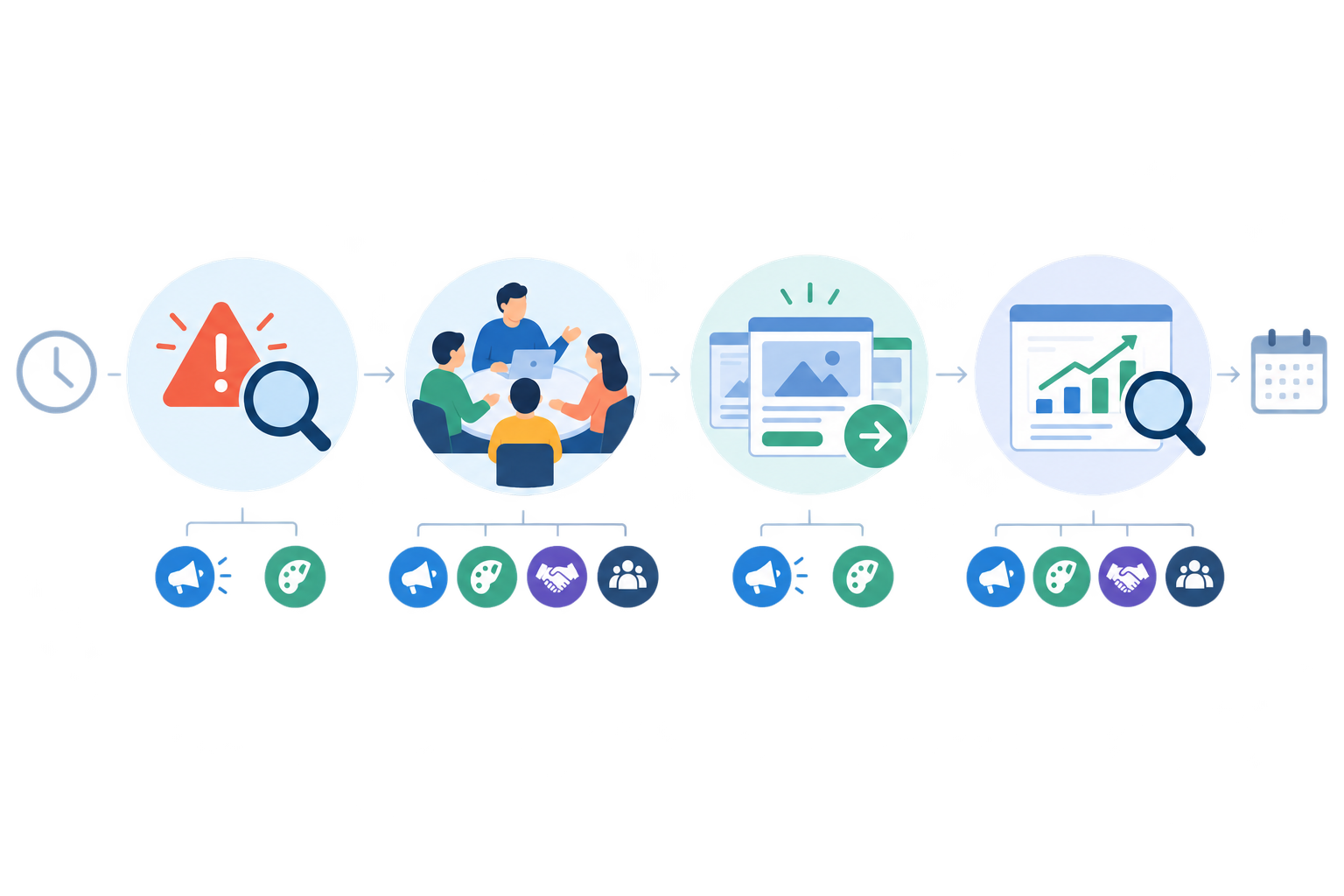
Speed without coordination just creates a mess. Here's the timeline I suggest, and it's one expectation, not several: decide within 48 hours, then launch a proportionate test within five to seven days if the evidence warrants one.
- Hour 0-24: Triage. Assign one owner for the competitor. Share a single dashboard or digest and ban scattered screenshots.
- Hour 24-48: Huddle. Hold a 30-minute meeting with paid media, creative, product, sales and leadership. Review the facts, walk the decision tree and pick a response.
- Day 3-7: Brief and launch. Creative gets briefed, first tests go live, and sales gets updated objection-handling.
- Week 2: Review. Look at early results against the metrics you agreed beforehand.
A simple RACI template for competitor response
| Task | Responsible | Accountable | Consulted | Informed |
|---|---|---|---|---|
| Competitor fact-gathering | Competitive analyst / paid media | Marketing lead | Product | Leadership |
| Choosing the response | Marketing lead | Head of marketing | Paid media, product, sales | Whole team |
| Creative briefs and tests | Creative / paid media | Paid media lead | Sales, compliance | Leadership |
| Sales objection-handling | Sales enablement | Sales lead | Marketing | Account teams |
| Results review | Paid media | Marketing lead | Leadership | Whole team |
Whether you keep this in a spreadsheet or a tool with roles and competitor assignment, what matters is that everyone knows who's watching which rival.
If you work at an agency, a branded, evidence-based briefing delivered within a couple of days of a client spotting a rival's launch is the kind of calm professionalism that keeps accounts. If you want to send those briefings under your own brand, look for monitoring tools that support white-label reporting.
How to Build an Early Warning System for Competitor Launches 🔔
By the time a competitor launch is public, you've already lost some of your head start. So monitor continuously rather than only after the launch lands:
- Pick the right rivals. Watch your top three to five competitors, plus one or two emerging challengers.
- Review a weekly digest. New creatives, landing pages and platform expansions often show up before launch day.
- Watch for pre-launch tells. Teaser ads, waitlist pages, partnership announcements and new landing pages often come first.
- Combine signals. Layer ad data with press, pricing pages and social, and treat any single source as a clue rather than confirmation. A hiring push can mean many things.
- Set a baseline. Know what normal looks like for each rival, such as typical active ad counts and usual platforms, so a genuine change stands out.
On cost, monitoring tools vary widely. Rival Ads plans start from $29 a month (priced in US dollars, and tiered by the number of competitors you monitor), so check the current pricing page for UK currency and VAT details before you budget.
How to Review Whether Your Competitor Response Worked
Define success before you act. Is it pipeline, cost per acquisition, share of search, win rate or brand lift? Pick one or two, and write them down.
After 30 days, run a short post-mortem with three questions: what did we assume, what did the data show, and what would we do differently? Log the launch and your response in a playbook so the next one is faster and calmer. Check your results against the rival's ad trajectory for context only. If they pull back while your numbers hold, that's encouraging, but your own metrics are the verdict.
Here's my takeaway: before your next launch alert, agree your three questions and your success metric now. Then when the Slack message lands, you'll already know what to do. 🎯
FAQ: Responding to a Competitor Launch
Should I respond to every competitor launch?
No. Most launches deserve a watchful eye rather than a campaign. Use the three questions (audience overlap, threat to your core offer, sustained activity) and the decision table above. If overlap and threat are both low, keep monitoring and carry on.
How quickly do I need to move after a competitor launch?
Aim to decide within 48 hours, then launch a proportionate test within five to seven days if the evidence warrants one. Accuracy matters more than speed, because a rushed response built on assumptions can cost more than a short delay.
How do I counter a competitor without discounting?
Compete on value, proof and positioning instead of price. Lean on case studies, reviews, specialism, service quality and guarantees, and test messaging that reframes what buyers should care about.
How do I get early warning of a competitor launch?
Set up continuous ad monitoring for your key rivals across Meta, Google, TikTok and LinkedIn, and review weekly changes alongside press, pricing pages and social. Teaser ads and new landing pages often appear before the official announcement.
Can I track competitor ads without access to their accounts?
Yes, to a point. Public ad libraries and ad intelligence tools such as Rival Ads let you see competitor ads without access to their accounts, but they show what's publicly visible, not spend, conversions or results.