How Media Buyers Read Competitor Ad Account Activity: A Practical Guide
Decode competitor ad account activity by tracking new, stopped and continuing ads to spot testing, scaling and strategic pivots across platforms.
Chris Edington
12 min read
Competitor ad account activity gets readable once you sort every change into three buckets: new ads (what they're testing), stopped ads (what failed or ran its course), and continuing ads (what's earning its keep and probably scaling). Read those buckets week over week and together, and you can tell testing from scaling from a full strategic pivot. Then write it down so your team can act on it.
That's the whole framework. The rest of this guide covers how a senior media buyer reads competitor ad activity, where the approach breaks down, and how to turn it into something more useful than a folder of screenshots.
Why Competitor Ad Account Activity Is Worth Reading Properly 👀
Here's what usually happens. A buyer opens the Meta ad library, scrolls through a wall of creatives, nods at a few clever hooks and closes the tab with vibes instead of conclusions. Fair enough. A single snapshot tells you very little. You can see what's live today, but not whether it launched yesterday or has been running since spring.
The insight lives in the change over time. Every ad a competitor runs is the visible result of private performance data. Their team sees the spend, the conversions and the cost per acquisition, then decides what to keep paying for. So when an ad survives, that's a signal. When it disappears, that's a signal too. You don't need access to their ad account to read either one. You just need public ad data and a consistent way of comparing it.
Consistency is the catch. Ads get switched off, libraries change, and nobody remembers what the competitor's homepage promo looked like six weeks ago. That's why we built Rival Ads to archive every active ad weekly across Meta, Google, TikTok and LinkedIn. The history is there when you need it, and nobody had to remember to screenshot anything.
One honest note before we go further. Public ad libraries show observable activity, not a competitor's full media plan. For ordinary commercial ads they don't show spend, targeting or results. So everything below is about reading probability, not certainty, and I'll flag where that matters.
The Three Buckets for Reading Competitor Ads: New, Stopped and Continuing
The first thing we look at on a Monday isn't the full ad library. It's the diff, meaning what changed since last week. That one habit saves hours and sharpens your thinking.
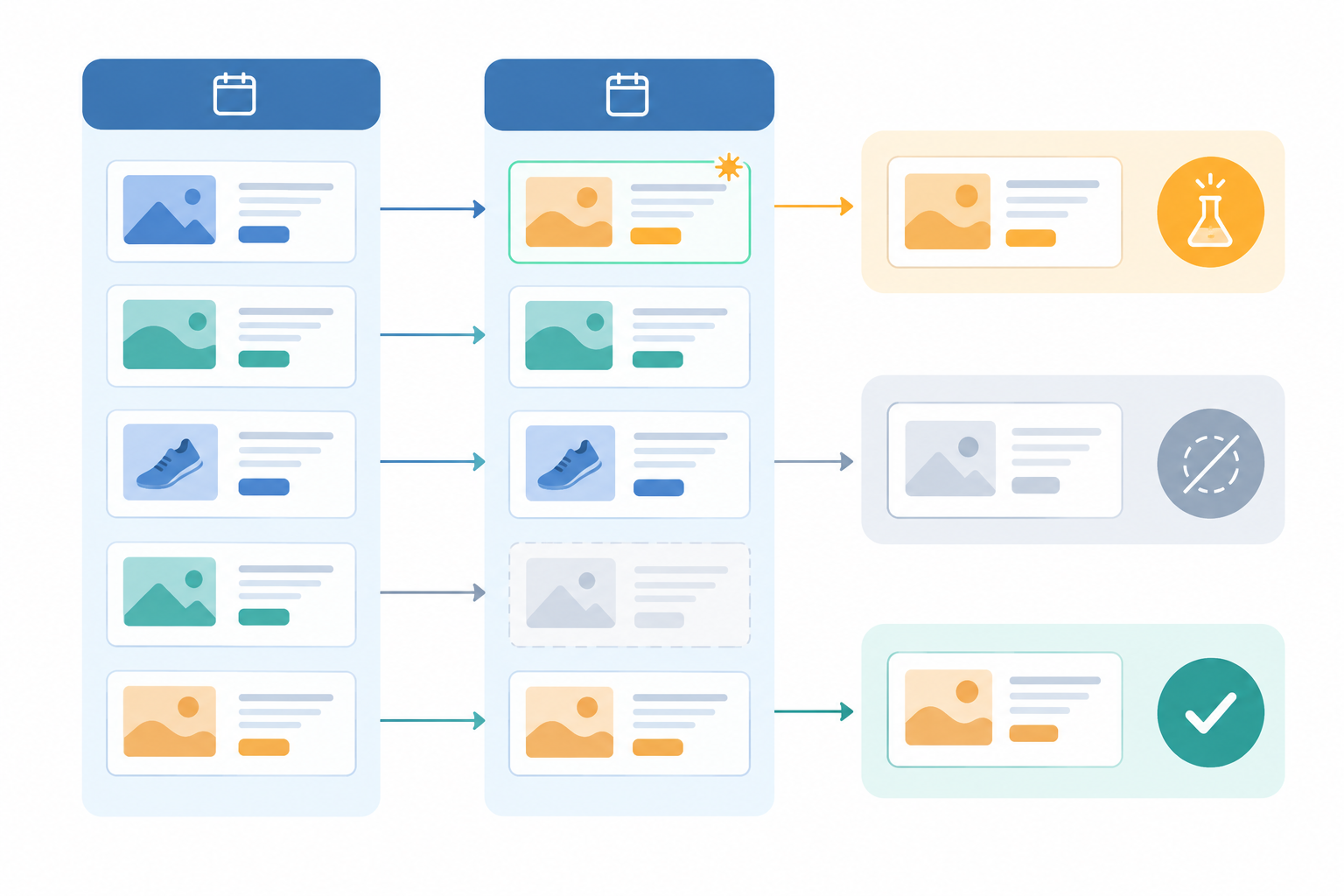
- New ads appeared since the last check. They could be a test, a product launch, a seasonal push or a fresh angle. On its own, a new ad is a hypothesis, not a winner.
- Stopped ads disappeared. Maybe they underperformed, maybe a promotion ended, maybe the creative got stale or the budget moved elsewhere. Stopped doesn't always mean failed. An ad that ran for ten weeks and got replaced by a variation was probably a success.
- Continuing ads are still live from previous weeks. This is the strongest quiet signal in the whole exercise, because nobody keeps paying for losers for long.
Why does the week-over-week diff matter more than any single week? Because one week can't tell a brand-new test from a long-running workhorse. The diff gives every ad a timeline, and the timeline gives it meaning.
Three common mistakes when analysing competitor ads
- Treating every new ad as a winner. Most new ads are experiments, and most experiments get switched off.
- Ignoring what was switched off. The stopped bucket often tells you more than the new one, especially when a long-running ad suddenly vanishes.
- Judging by ad volume alone. A competitor with 200 live ads isn't automatically outspending one with 20. Volume tells you about visibility, not spend or success.
What Does a New Ad Batch Mean? Reading a Testing Phase
So what does a new ad batch actually mean? Usually a hypothesis, not a verdict. Here's how we read one.
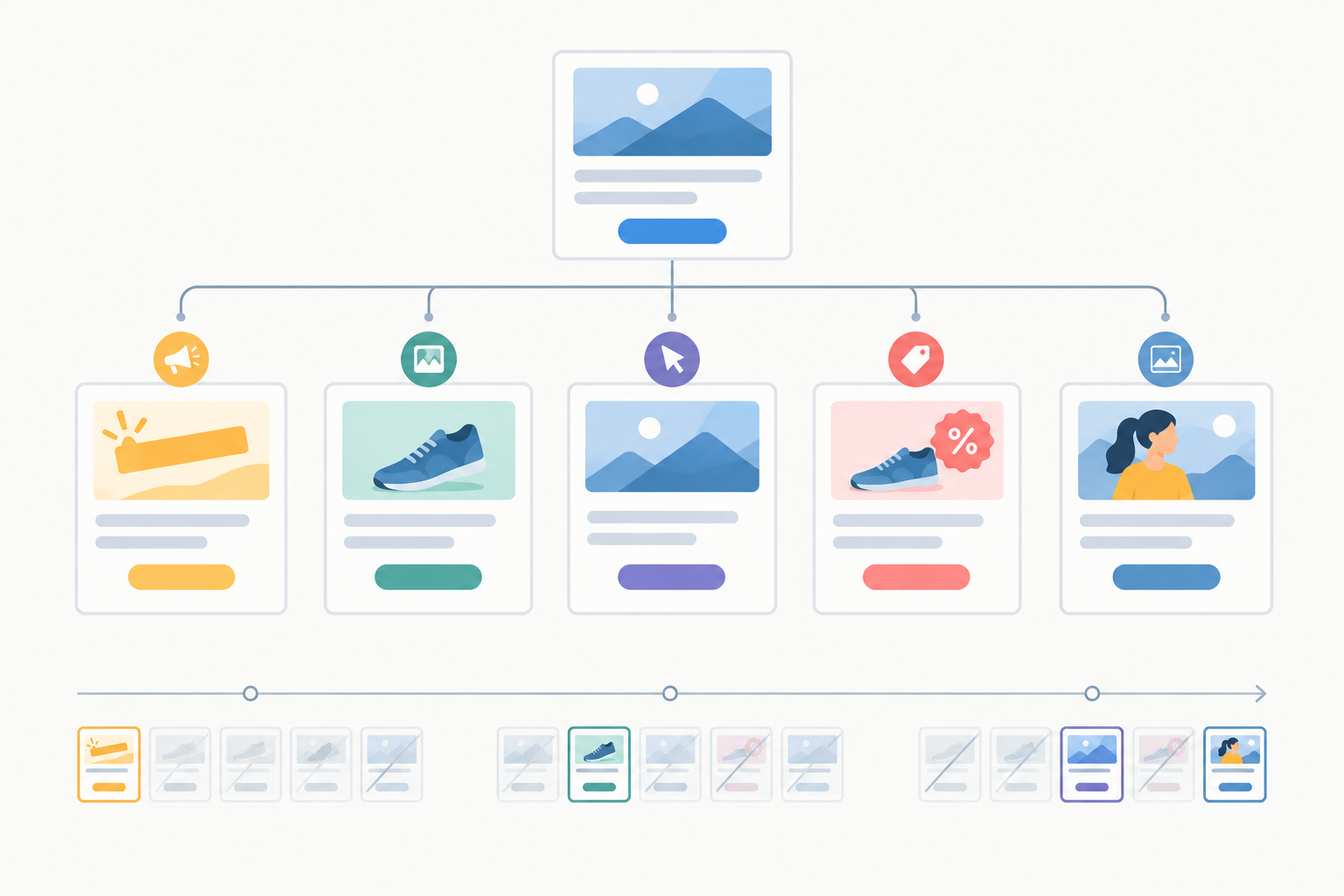
- Look for a cluster. A testing phase often shows up as 3 to 10 new variants launched within days of each other, all clearly related.
- Check what varies. Is it the hook, visual format, offer, headline, landing page or audience angle? If only one variable changes, that points to a structured test. If everything changes at once, it's more likely a broad creative refresh.
- Study the copy. Same body copy with different opening lines is a hook test. Same creative with different calls to action is an offer or CTA test.
- Watch the follow-up. In a typical test, a few variants survive and the rest vanish within one to three weeks. That drop-off is the verdict arriving.
- Flag the survivors. They're the competitor's early winners. Add them to your watchlist and see whether they're still there a month later.
- Stay humble. A burst of near-identical ads could also be a seasonal campaign or platform-generated variation, and public libraries can't confirm which. Treat it as consistent with testing, not proof of it.
How to Tell Whether a Competitor Is Scaling or Testing
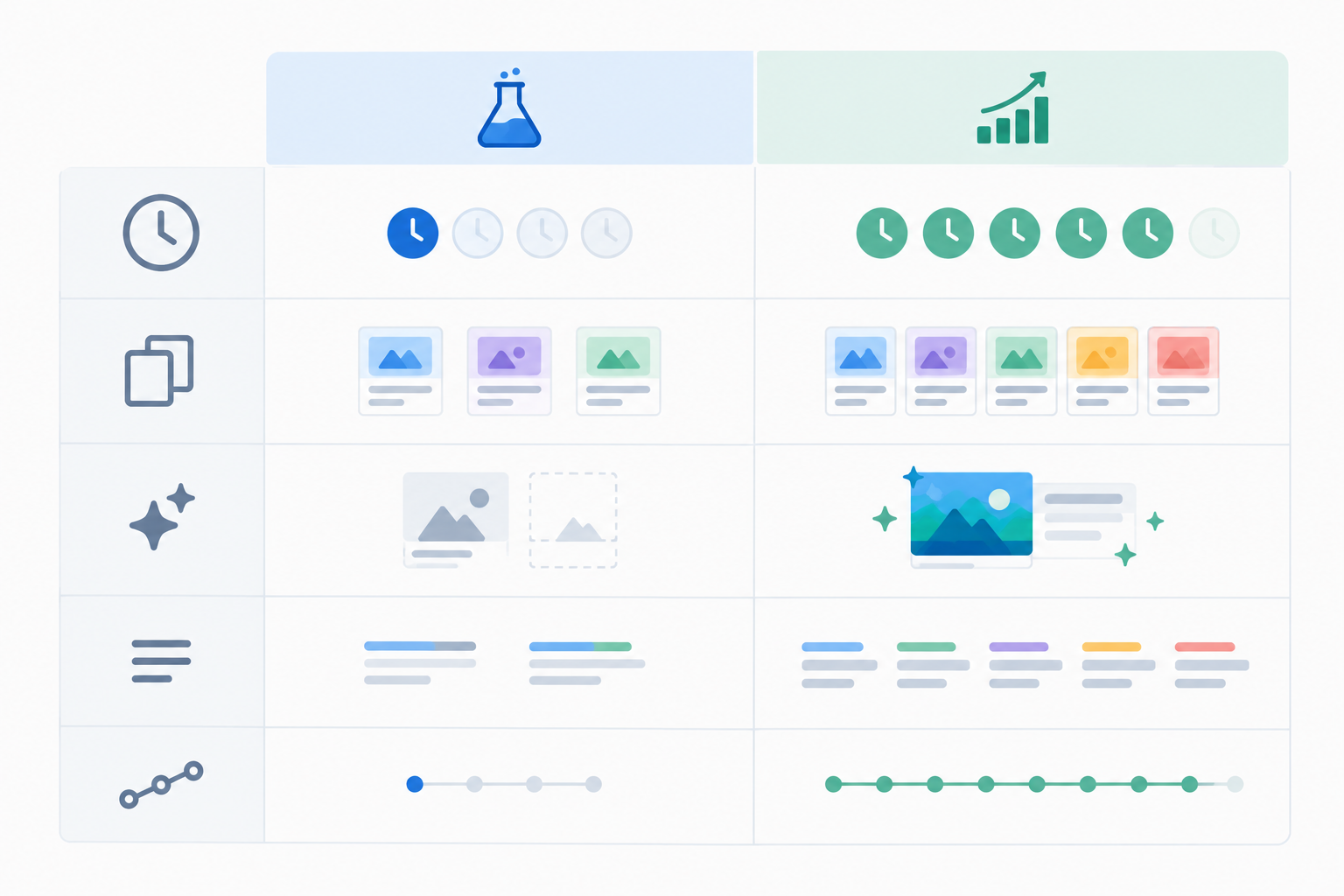
This is the question we get asked most. Testing and scaling can look alike on day one, but they pull apart fast. Here's the comparison we keep in our heads.
| Signal | Looks like testing | Looks like scaling |
|---|---|---|
| Time live | Days to two weeks, then many vanish | Three to four weeks or more, surviving several weekly diffs |
| Number of variants | Large cluster of different ideas | A smaller core of survivors, plus duplicates of the winner |
| Creative polish | Rougher, quicker-to-produce assets | More refined versions and new formats of one angle |
| Copy variation | Different hooks and angles | Same angle, minor wording tweaks |
| Landing page | Often varied per ad | Consistent destination |
| Follow-up activity | Winners not yet obvious | New ads built around the survivor, or the winner left alone to run |
How long should an ad run before it looks like a winner?
Ads that keep running beyond three to four weeks, especially across several weekly diffs, are more likely to be profitable. Treat that as a rule of thumb, not a guarantee. Plenty of ads run for months at break-even, and some strong ads get paused for reasons that have nothing to do with performance.
What does scaling often look like?
- The same winning creative duplicated with minor variations
- New formats of the same angle, such as static to video, or 1:1 to 9:16
- Wider placements, or the same concept showing up in additional markets
- Ongoing launches around the winner, which suggests the team is feeding a proven idea
Creative variation alone isn't proof of scaling, because advertisers test hooks while holding spend low. Persistence is the stronger evidence: a concept that looks like a winner stays live while related variants and distribution grow. Even then, you're inferring, not measuring. Without spend data, you're reading probability.
Account for the UK retail calendar 🇬🇧
Seasonality skews everything. Q4 ramp-ups, Black Friday, January sales and bank holiday promotions all produce bursts of new ads and tidy, date-driven stops. Before you call something a strategy shift, ask whether it just followed the retail calendar.
How to Spot a Strategic Pivot in Competitor Ads
A pivot isn't a single event. It's a pattern across the buckets: a big wave of stopped ads plus a new batch that speaks differently. Tests change details. Pivots change the story.
Here's what we look for:
- New messaging themes, such as 'save time' becoming 'cut costs'
- A different audience or persona in the creative
- A shift from product-led to brand-led creative, or the reverse
- New landing page destinations
- Pricing or offer changes
Take a scenario. A SaaS competitor pauses its feature-led LinkedIn ads, which had been running for months. Two weeks later it launches ROI case-study creatives with gated reports and demo CTAs. The old bucket emptied, the new one speaks to finance buyers rather than end users, and the landing pages have moved. That reads like a push upmarket.
To tell a pivot from seasonal rotation, check whether the old ads come back. If last year's January creative returns on cue, it's rotation. If the old angle stays gone for six to eight weeks and the new theme keeps growing, you're probably looking at a genuine change of direction.
What does that mean for you? Usually one of three things: a gap in the market, a defensive move you need to make, or a chance to own the angle they just dropped. Our weekly strategic analysis in Rival Ads, powered by Claude, is designed to interpret these shifts the way a senior media buyer would. It reads the new, stopped and continuing ads together and tells you what the pattern probably means, so you don't have to piece it together yourself.
How Competitor Ads Differ Across Meta, Google, TikTok and LinkedIn
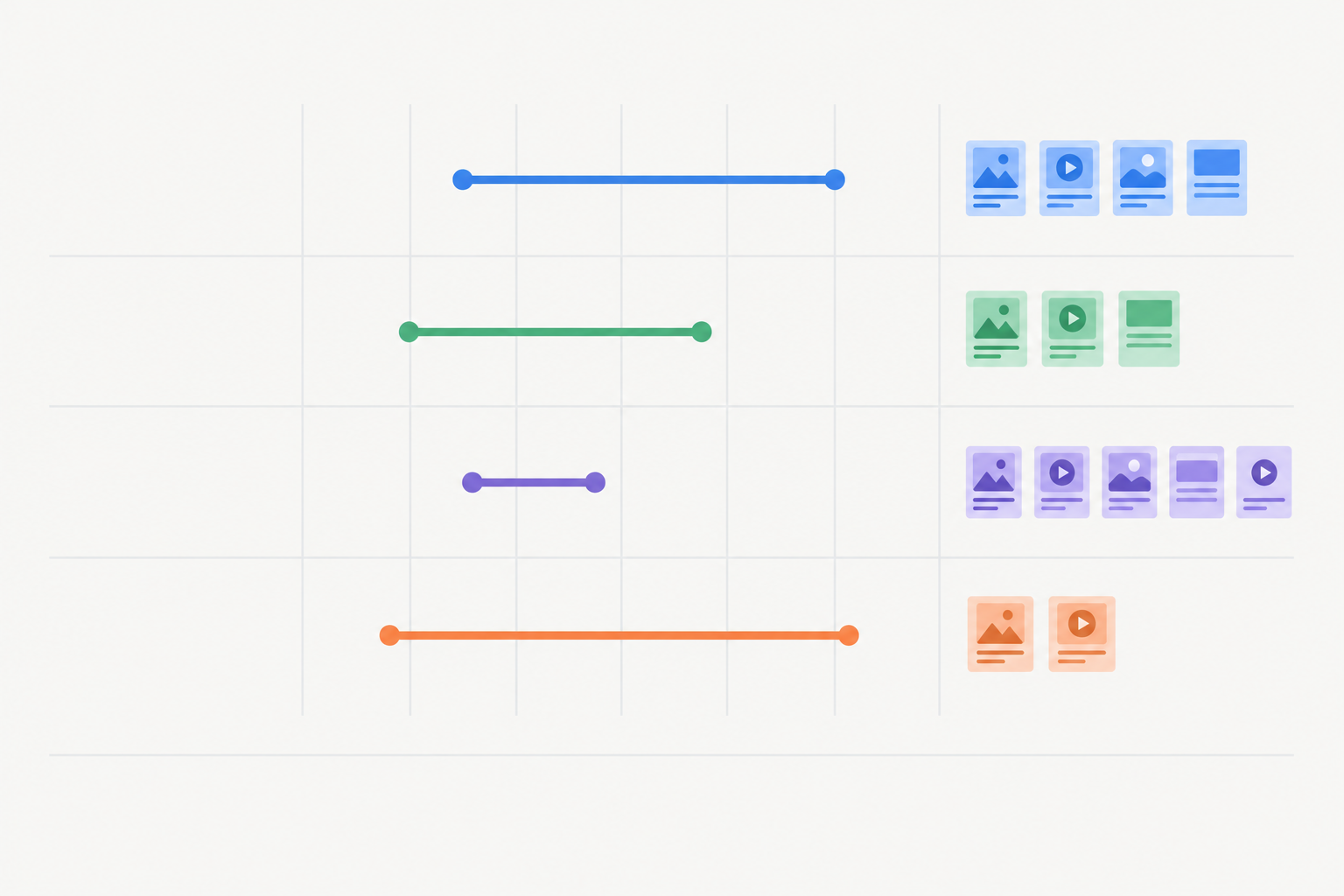
How do platforms differ? Mostly in lifespan norms and in what each library exposes, so calibrate your read per platform. A four-week run means something different on TikTok than on LinkedIn.
| Platform | What to look for | Lifespan read (rule of thumb) |
|---|---|---|
| Meta | High variant volume, format and hook experiments. The Meta ad library makes active ads easy to see. | Moderate. Survivors past a few weeks are worth flagging. |
| Headline rotation, offer positioning and destination URLs. Search copy reveals keyword intent. | Often longer, with incremental copy tweaks rather than total replacement. | |
| TikTok | Native-style, UGC-feel creative and fast hook testing. | Shorter. Faster fatigue means a brief run can still be a win. |
| Fewer ads, with offers like gated content, demos and webinars. The CTA shows funnel stage. | Longer. Short lifespans here are more notable. |
These lifespans are illustrative, not universal. Your category and your competitor's habits matter more than any benchmark.
Know what each ad library shows
Platform libraries don't all cover the same ground. Meta's general commercial view emphasises active ads. Google's Ads Transparency Center is organised around verified advertisers and ad appearances. TikTok's Creative Center Top Ads is a selected showcase, not a full census, and is separate from its Commercial Content Library. LinkedIn's Ad Library is a searchable archive. So a gap in visible ad counts between platforms isn't evidence of a gap in spend. That's why we pull every active ad per platform and compare like with like.
How to read competitor messaging across channels
- Same angle on three channels at once: a high-conviction bet. The team believes in this message enough to put it everywhere.
- Angle only on TikTok: likely an experiment, or a creative style that suits the platform.
- Angle only on LinkedIn: probably audience-specific, such as a B2B pitch for decision-makers.
Looking at Google Ads, TikTok and LinkedIn together tells you far more than any one platform alone.
How to Document Your Competitor Ad Analysis
An insight that lives in your head, or in a Slack thread from March, isn't an asset. Here's the process we recommend.
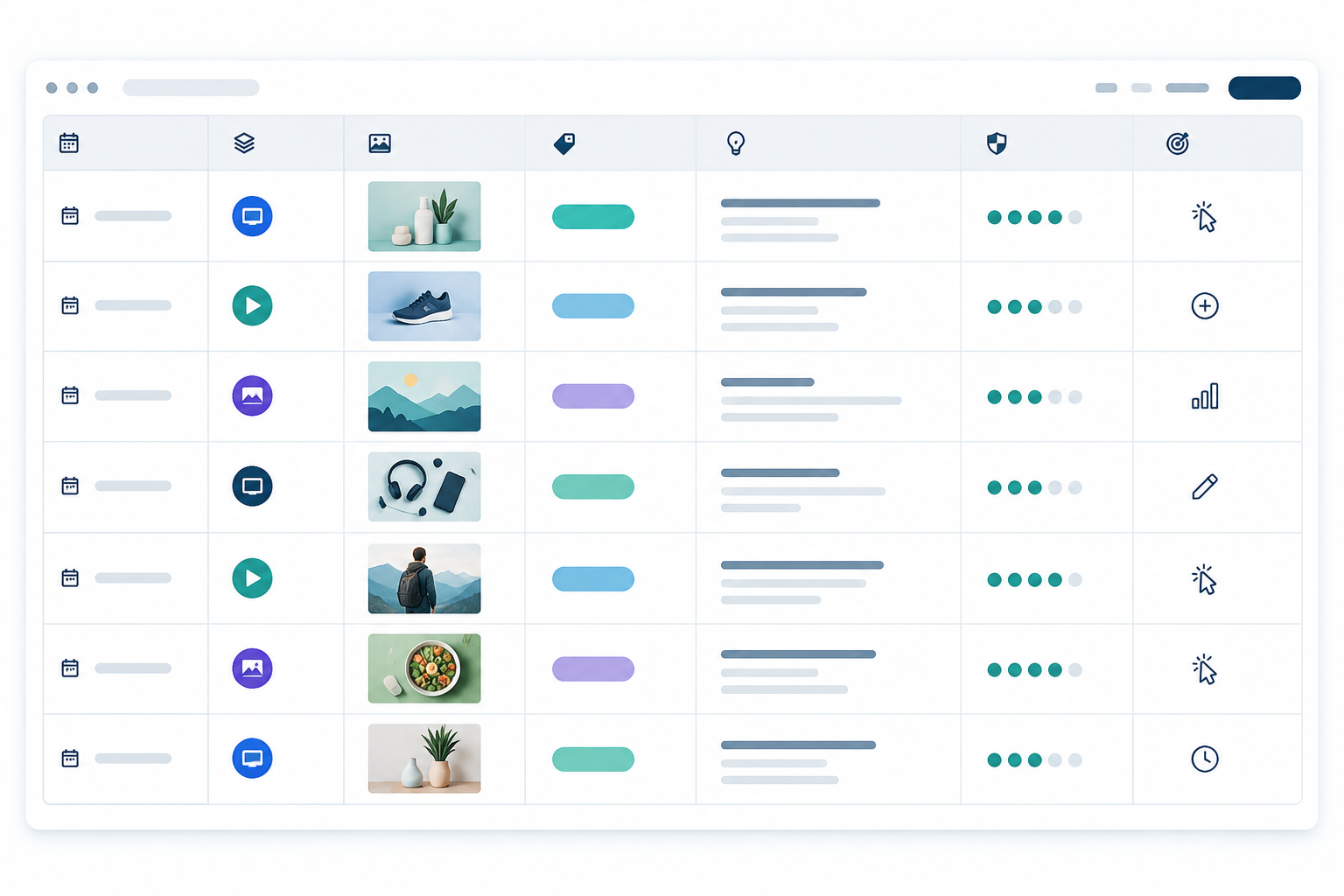
- Capture the evidence. Archive the creative, exact copy and link, with the date. Library records change, so dated snapshots matter.
- Log the bucket and your interpretation. New, stopped or continuing, then testing, scaling, pivot or noise.
- State your confidence. Low, medium or high, and why. Keep what you observed separate from what you're inferring.
- Write a one-line 'so what'. What does this mean for your own accounts?
- Keep a running timeline per competitor. Patterns show up over months, not days.
- Share a short weekly summary. Keep it brief, and use role-based access so the right people see the right competitors.
- If you're an agency, package the read as a client-ready report. Rival Ads supports full whitelabel, so you can deliver it as your own product.
If you'd rather not build this by hand, the dashboard and weekly email digest do the archiving and diffing for you. You bring the judgement.
Turn Competitor Ad Insights into Action
Reading competitor ad account activity only matters if it changes what you do on Monday afternoon. A few ways to close the loop:
- Turn reads into test hypotheses. Borrow the structure of a competitor's winning angle, not the creative itself. If their survivor leads with a price guarantee, test your own version of risk reversal.
- Pick a response. Ignore, monitor, counter or differentiate. Not every move deserves a reaction.
- Brief creative with the pattern, not just the example. 'They're moving to founder-led video' is more useful than a single screenshot.
- Set a cadence. A 15-minute Monday competitor huddle is plenty.
- Avoid the traps. Don't copy blindly, don't overreact to one week of data, and don't ignore your own performance numbers.
Ad intelligence feeds your marketing strategy. It doesn't replace it, and your own results always outrank a hunch about someone else's account. Use competitor reads to come up with better hypotheses, then let your data decide.
And if you'd rather skip the weekly diffing, Rival Ads automates detection, archiving and analysis from just a competitor's website, with plans from $29/month. No ad account connections needed.
FAQ: Competitor Ad Account Activity
Does a stopped ad always mean it failed?
No. Ads stop for plenty of reasons: a promotion ended, the budget moved, the creative fatigued after a strong run, or the team swapped in a refreshed version. Judge a stopped ad by how long it ran and what replaced it. A short run followed by nothing similar suggests a flop. A long run followed by a variation suggests a winner that was refreshed.
How long does an ad need to run before I treat it as a winner?
There's no universal number, but ads that survive several weekly checks, often three to four weeks or more, are more likely to be profitable. Adjust for platform, since TikTok ads tend to burn out faster than LinkedIn ads, and for seasonality, since short promotions will naturally have short lives.
Can I learn about a competitor's ads without access to their ad account?
You can learn a lot, just not everything. Public ad data shows what's live, the creative, the copy and where it links. It doesn't show spend, conversions or audiences, so treat your conclusions as informed probabilities and state your confidence when you document them.
How often should I review competitor ad activity?
Weekly works for most teams. It's frequent enough to catch new tests and stopped ads, and spaced enough to separate real patterns from daily noise. During peak periods like Black Friday, you might add a mid-week check.
Is it legal and ethical to monitor competitor ads?
Yes, when you're looking at ads that are publicly visible, such as those in platform ad libraries. The ethical line is in how you use what you find. Learn from patterns and strategy, but don't copy creative or copy word for word.