
How to Pitch Competitive Intelligence to Agency Clients (Without It Sounding Like an Upsell)
A practical, script-style guide for agencies on how to pitch competitive intelligence to clients—when to bring it up, what to say in QBRs, and how to
Chris Edington
11 min read

If you've ever tried to introduce a new service to an existing client, you know that awkward moment when it starts to feel like you're just padding the invoice. The good news? You can pitch competitive intelligence without triggering that reaction. The trick is framing it as useful insight, not as a new product you're trying to sell.
Bring competitive intelligence into conversations about a client's results, especially when performance has dipped or plateaued. Show them what competitors are doing that might explain the change, and lead with curiosity rather than a sales pitch. When clients see the value first, they're far more likely to ask for ongoing competitor analysis themselves.
That's the core idea. But the details matter: when you introduce it, how you frame it, what you actually show the client. This guide walks through how UK agencies can pitch competitive intelligence as a genuine strategic deliverable rather than an upsell.
Why timing matters when you pitch competitive intelligence
I've watched agencies undercut a genuinely useful idea by introducing it at the wrong moment. Dropping "competitive intelligence reporting" into an invoice email as a new line item is one of the fastest ways to make it look like padding. Clients can read that as "they're running out of ideas and now they're upselling me," even when that's nowhere near the intention. Perception matters more than accuracy here.
A simple rule: introduce the insight when the client is already reviewing a real change in their results, and tie the observation directly to a decision they need to make. That's the moment it stops feeling like a sales conversation and starts feeling like part of the strategic work you already do for them.
In practice, that usually means:
- During a QBR, when you're already walking through performance trends and there's a natural gap to fill
- When explaining a dip, because clients want reasons, not just numbers. "A competitor launched an aggressive new campaign" is a more satisfying explanation than "the algorithm shifted" - just be careful not to overstate the connection
- When a client mentions a competitor by name, which happens more often than you'd think, usually with a slightly worried tone
If a client has just lost market share, or a rival brand has launched a splashy new campaign that's showing up in their LinkedIn feed, that's your opening. Don't wait for them to ask, "What is everyone else doing?" Agencies that get ahead of that question with a credible answer come across as strategic partners rather than order-takers.
How to frame competitive intelligence as insight, not an upsell
Language does a lot of the heavy lifting here. The same information can sound like a sales pitch or a genuine discovery, depending on how you phrase it.
Here's the shift I'd encourage:
- Say "here's something we noticed" instead of "here's something we sell." One is a gift; the other is a transaction.
- Say "we've been tracking your competitors' ads" rather than "we have a new service available." The first implies the work is already under way on the client's behalf.
- Lead with the finding, not the method. Show them the insight first - "Competitor X has just launched a discount campaign across Meta and Google" - then explain how you found it if they ask.
- Keep the technology in the background. Clients want to hear about their business, not your software stack. Whitelabelling a monitoring platform under your own agency brand helps, because the client sees your insight and strategic take rather than a third-party tool name.
- Tie everything back to something the client already cares about. Whether it's ad spend efficiency, conversion rate, or market position, connect the competitive insight directly to the metric that matters to them.
Framed this way, you're not introducing a new expense. You're revealing more depth in the work you're already doing for them.
A sample competitive intelligence talking track for QBRs
It helps to script this out the first few times, until it becomes second nature. Here's a sequence that works well in a quarterly business review:
- Open with a result. "Your CPA went up 12% last month - here's one possible contributor." Numbers grab attention, especially when framed as a mystery you're helping to solve rather than a conclusion you've already reached.
- Show one competitor ad screenshot and one line of context. "Competitor X launched three new Meta ads promoting a discount offer." Keep it visual and specific; don't overload the slide with data.
- Connect it to strategy, carefully. "This may be part of why their traffic spiked and yours dipped slightly. Might be worth testing a similar offer for two weeks to see if it moves the needle." You're not claiming certainty, just offering a credible explanation and a next step to test it.
- Introduce the ongoing service naturally. "We can track this weekly so we're never caught off guard again." This isn't a hard pitch - it's a logical next step.
- Close with a low-pressure ask. "Want us to set this up as part of your monthly reporting?" This gives the client an easy yes rather than forcing a hard decision.
Many clients are already leaning in by step four, because you've shown value before asking for anything. That said, results vary. Some clients will want more proof before committing, and that's a fair response worth respecting.
What to include in a first competitive intelligence report
The first report you send sets the tone for everything after it, so keep it tight and sharp rather than exhaustive. I'd include:
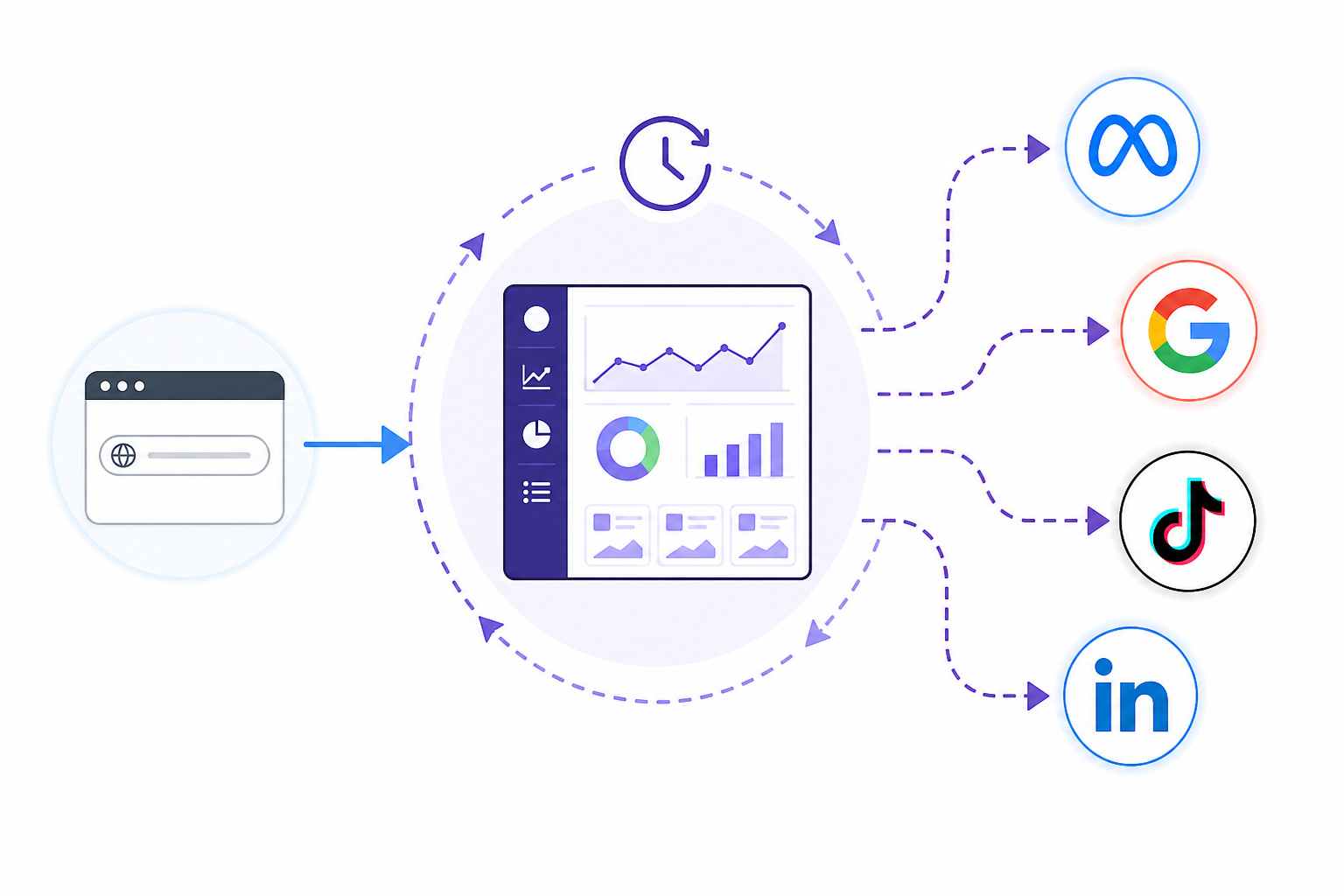
- Three to five direct competitors, identified by website. Some competitor-monitoring tools, including Rival Ads, let you add a competitor by URL and check their public presence across Meta, Google, TikTok, and LinkedIn. Coverage and detection speed vary by platform, so verify results before presenting them as fact.
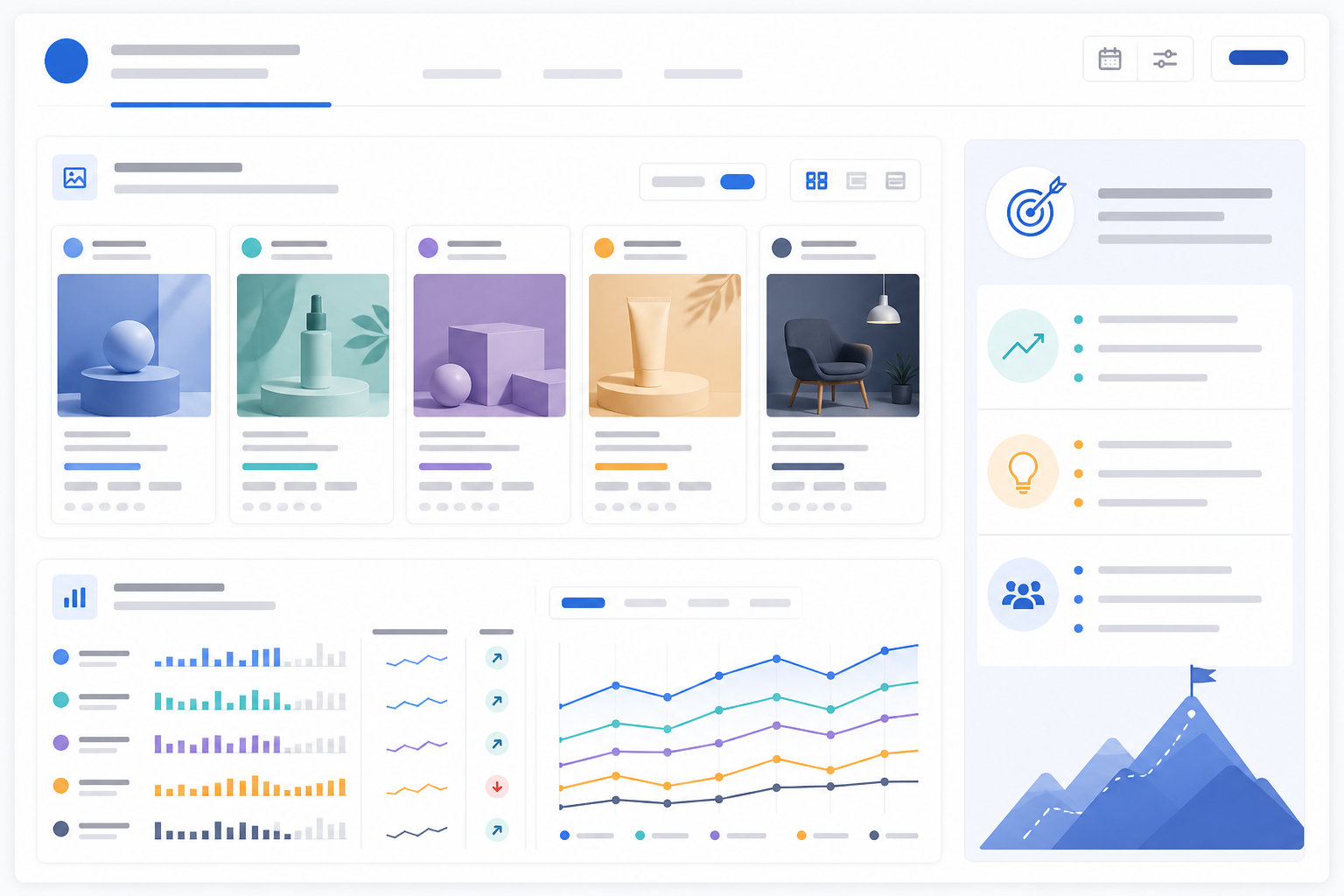
- A snapshot of active ads across the relevant platforms - actual creatives and copy where publicly available, not vague descriptions like "they're running a promotion." Clients respond better to seeing the real ad than a summary of it.
- One or two "what changed this week" highlights, such as a new creative angle or a campaign that appears to be scaling. Include a rough confidence note, like "likely new, first seen this week," rather than presenting an inference as certainty.
- A short strategic take, written like notes from a senior media buyer rather than a data dump: what changed, why it might matter, and what you'd recommend doing about it. If you use AI-assisted analysis to help draft this, treat it as a starting point to edit and sanity-check, not a final answer.
- A clear next step, explaining what you'll monitor going forward, how often the client will hear from you, and who owns the insight internally.
Keep the whole report skimmable. Nobody wants to wade through 15 pages to find the two insights that actually matter.
How to explain competitive intelligence data sources to clients
Once clients see a report like this, the first question is almost always some version of "wait, how do you even see their ads?" Take this as a good sign - it usually means they're engaged, not sceptical in a bad way.
Here's how I'd answer:
- Explain it simply. Meta's Ad Library and Google's ad transparency tools make many active ads publicly viewable. Tools like Rival Ads automate that collection on a regular schedule across Meta, Google Ads, TikTok, and LinkedIn, so you're not manually checking multiple ad libraries yourself.
- Reassure them about access. None of this requires connecting their ad account or their competitor's. It's based on publicly available information, triggered by a competitor's website URL rather than private data.
- Be honest about limitations. If they ask how you know something is genuinely new or scaling, explain that the tool flags likely changes based on what's publicly visible week to week. It's a strong signal, not a guarantee, since public libraries don't always show full spend or targeting details.
- Handle the "is this legal?" question with a properly qualified answer. The underlying ad data is publicly disclosed by the platforms, which is meaningfully different from accessing private accounts. That said, public visibility isn't automatically the same as unrestricted permission to store, repackage, or commercially present that data. Check each platform's terms of service, be mindful of copyright and database rights relating to creative assets, and consider UK GDPR implications if personal data appears in ad content. If you're unsure, check with your agency's legal or compliance contact before making this a standard offering.
Most clients relax once they understand the basic mechanics. It's not a hack or a grey-area trick; it's a more organised use of information that's already available, used with reasonable care.
How to turn competitive intelligence into a recurring line item
Once the first report lands well, you've got a natural opening to formalise it - though "lands well" depends on relevance and timing, not a guaranteed reaction. It's worth separating three things that often get bundled together by mistake: how you package the offer, how you price it, and how you invoice it.
Here are three models worth considering:
- Bundle it into an existing retainer. No new invoice line - competitive reporting is simply described as an expansion of the strategic work already covered. This avoids the "new cost" conversation and suits clients who are price-sensitive about extra fees.
- Use a modest, clearly named add-on line. A small monthly fee appears on the invoice as "competitive intelligence reporting," separate from media spend or core retainer hours. This works well once the client has seen enough value to expect and welcome the line.
- Offer a standalone strategic reporting package. For clients where competitive pressure is a recurring theme, this can be pitched and priced as its own service, distinct from day-to-day account management.
Whichever model you choose, a few things help it stick:
- Propose it as a standing deliverable - monthly or quarterly - rather than a one-off favour, once the client has responded well to the first version.
- Use short update emails between formal reports to keep competitive intelligence part of the ongoing relationship, rather than something that only surfaces once a quarter.
- Assign clear ownership internally. Competitor tracking quickly falls through the cracks if it's nobody's explicit job. Whatever tool you use, name someone responsible for each tracked account.
- Price around the value delivered, not the underlying platform cost. Rival Ads' starting tier is $29 per month - roughly £23 at current exchange rates, plus VAT where applicable - but that's the cost of the tool, not necessarily what you should charge the client. Many agencies price this as strategic reporting rather than software access, though margins vary by client size and scope.
Done well, this becomes one of the stickier parts of a client relationship. It's harder to walk away from an agency that's visibly keeping an eye on the competitive landscape while the client focuses on running the business.
Frequently asked questions about pitching competitive intelligence
How do I introduce a new reporting service without it feeling like an upsell?
Lead with a specific insight, not an offer. Show the client something you noticed about a competitor's ads and tie it directly to a result they already care about, such as a CPA change or traffic dip. Be clear that it's a possible contributor, not a proven cause. The service conversation should come after the value is obvious, not before.
What should be in the first competitive intelligence report I send a client?
Keep it focused: three to five relevant competitors, actual ad creatives and copy where publicly available, one or two clear "what changed" highlights with a rough confidence note, and a short strategic summary with a recommended next step. Don't overwhelm the client with raw data - the goal is a quick, sharp first impression.
How do clients typically react to competitive intelligence reporting?
Clients are usually most receptive when the reporting is introduced during a meaningful performance conversation and connected to a decision they need to make. Some will immediately see the value; others may want a sample report or more evidence before committing. A low-pressure first report gives both sides a chance to figure out whether the insight is genuinely useful.
How should I price competitive intelligence if the client asks directly?
Avoid quoting the cost of the underlying software as your price. Instead, frame it around the strategic reporting and analysis you provide: the time spent interpreting the data, writing the recommendations, and connecting them to the client's goals. Many agencies fold it into an existing retainer at first, then introduce clearer pricing once the client has seen a few reports and understands the value.
What if the public ad data is incomplete or a competitor isn't genuinely comparable?
Be upfront about it. If a competitor has a limited ad presence, say so rather than stretching thin data into a false narrative. Suggest swapping in a more active or genuinely comparable competitor instead. Clients generally respect honesty about limitations more than a report that overreaches.
Final takeaway: make competitive intelligence useful before you make it billable
Learning how to pitch competitive intelligence well isn't really about pitching at all. It's about noticing something useful, being honest about what it does and doesn't prove, and being generous enough to share it before the client has to ask.
Do that consistently, with reasonable care around data sources and claims, and you give yourself a genuine shot at turning a one-off insight into a recurring part of the relationship. Not a guarantee - but a considerably better starting point than a cold upsell email.